







Families of 6,150 Missing Demand Government Declare Them Dead as Relief Stalls
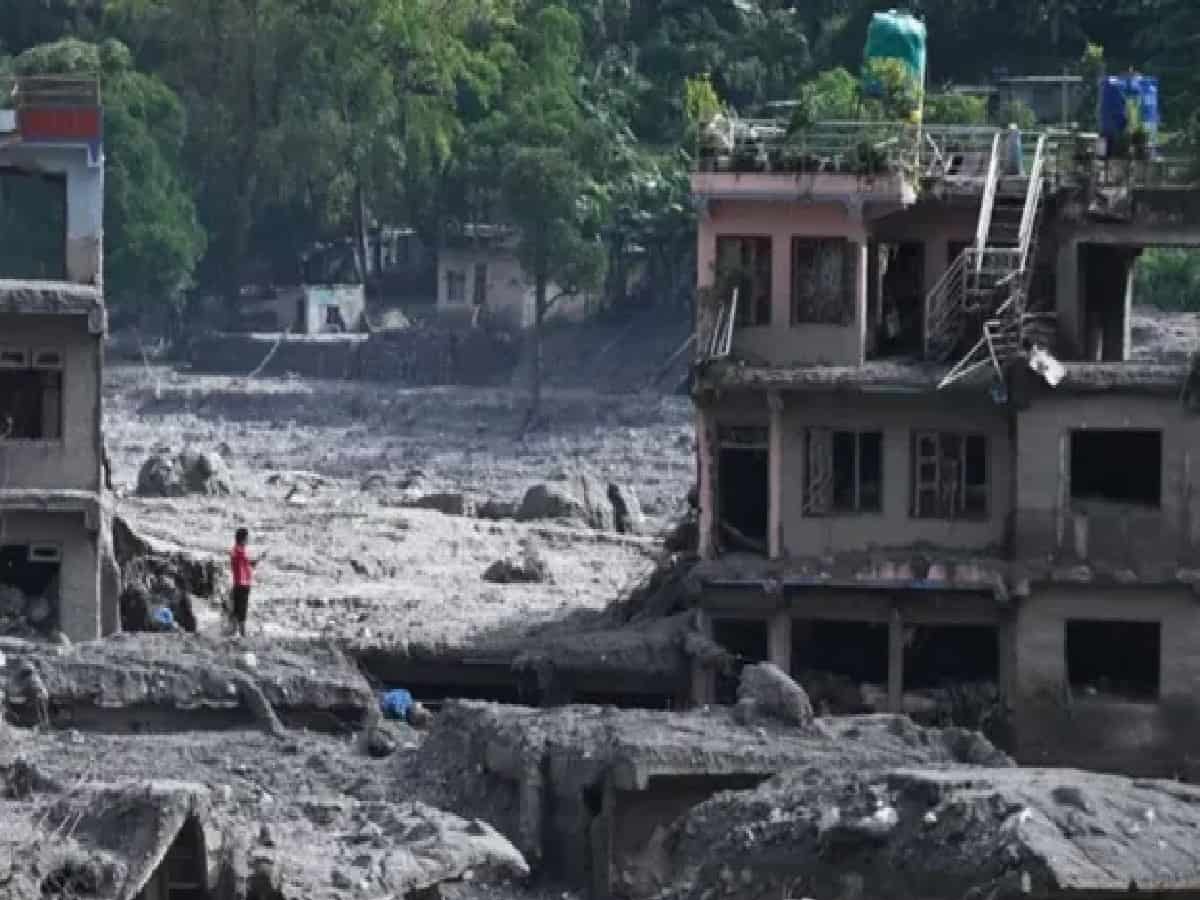
Following the catastrophic Himalayan flash floods and glacial collapse that decimated northern Nepal on August 26, 2026, thousands of grieving households find themselves trapped in an agonizing legal impasse. With missing casualty figures revised sharply upward from 5,179 to 6,150, families have formally petitioned the federal government in Kathmandu to formulate an emergency fast-track mechanism declaring the missing individuals officially dead. Although the recorded death toll stands at 1,403, forensic search teams have recovered and identified only 158 bodies due to the sheer ferocity of the glacial torrent. In the absence of physical remains, local ward offices and municipalities are unable to issue statutory death certificates, effectively freezing vital government compensation, insurance settlements, bank account operations, inheritance distribution, and ancestral land transfers.
Symbolic Last Rites with Kusha Grass Effigies as Bureaucratic Hurdles Block Aid
Having abandoned hope of recovering the physical remains of loved ones submerged under metric tons of river silt and rock, numerous families across affected districts have performed symbolic last rites by burning effigies woven from sacred Kusha grass. Despite carrying out these solemn cultural farewells, relatives remain legally hamstrung. Relatives such as Prem Pokharel, whose brother Durga Prasad disappeared while stationed at the Timure immigration border post, emphasize that survival is impossible given the destruction. In Nuwakot, displaced residents like Sabitri Tamang pointed out that local authorities cannot disburse emergency funeral relief funds without an official certificate of mortality, leaving vulnerable survivors struggling to finance daily sustenance and reconstruction needs.
Nepal Civil Code Dilemma: Navigating the 12-Year Presumption vs. Judicial Declarations
The legal bottleneck stems from the rigid frameworks of Nepal's Civil Code, which conventionally requires an individual to remain unaccounted for over 12 consecutive years before being legally presumed dead. While Section 40(4) provides an exceptional pathway permitting courts to grant a judicial declaration of death when circumstances of a cataclysmic disaster make survival improbable, the process demands individualized evidentiary hearings. Local administrators, including Uttargaya Rural Municipality Chief Administrative Officer Jairam Upreti, affirmed that municipal ward offices are legally barred from issuing certificates without recovered bodies. Nuwakot Chief District Officer Shambhu Prasad Regmi indicated that inter-departmental discussions are underway to treat missing cases on equal footing with confirmed fatalities, as directing over 6,000 traumatized, impoverished families through lengthy district court litigation would create crippling legal burdens.
The Lawatang Lirung Collapse: How a 188 km/h Glacial Torrent Devastated Rasuwa
The humanitarian disaster originated on August 26 when a colossal mass of bedrock, permafrost, and glacial ice sheared off the Lawatang Lirung mountain massif near the Nepal-China border at an altitude of approximately 5,150 meters. The resulting hyper-concentrated debris avalanche produced seismic shockwaves and funneled millions of cubic meters of pulverized ice and mud into the Trishuli and Bhote Koshi river basins. Roaring downstream at velocities reaching 188 km/h, the unstoppable surge leveled the Rasuwagadhi international transit checkpoint, wiped out riverine settlements across Timure, obliterated major hydroelectric installations, and severed transit arterial corridors, leaving thousands buried under deep alluvial mud. Glaciologists attribute the slope failure to warming Himalayan temperatures destabilizing high-altitude permafrost foundations.