







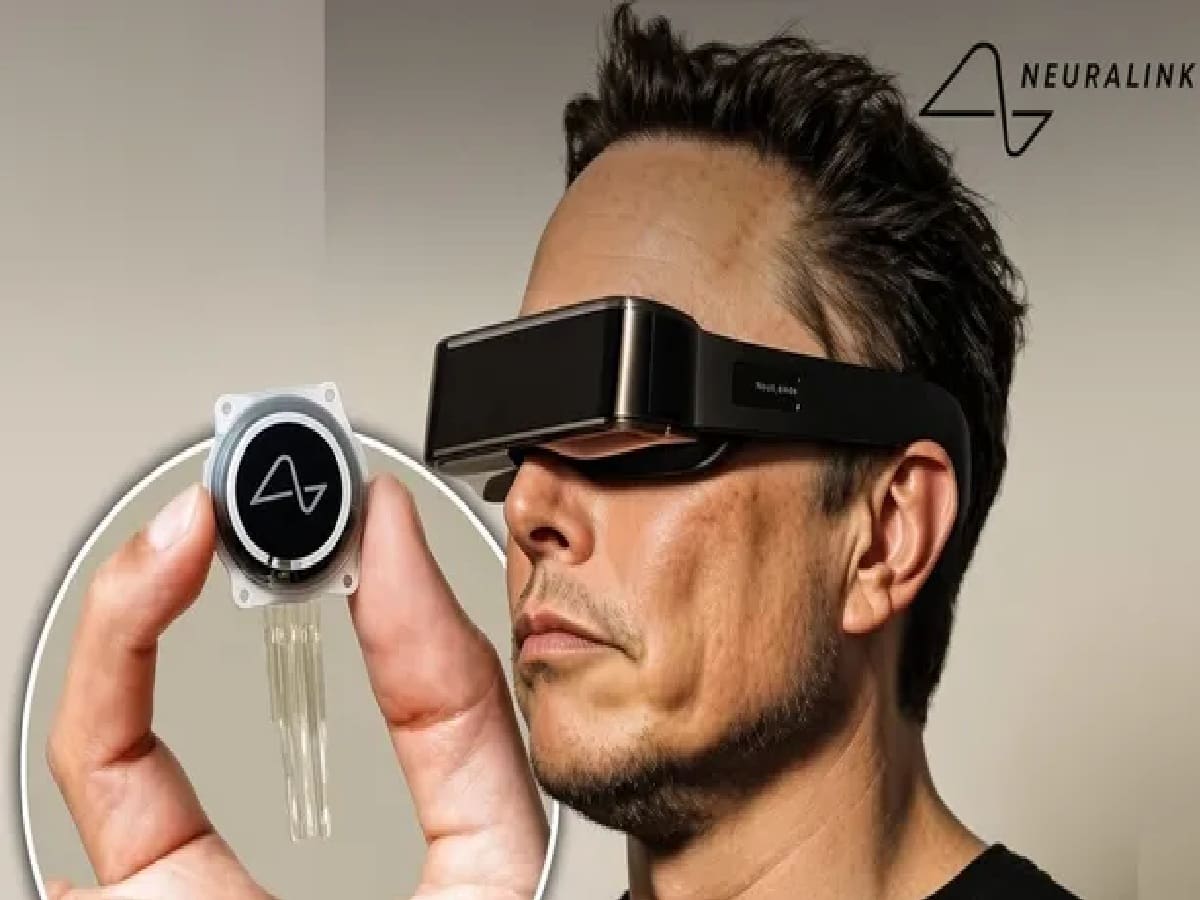
Elon Musk’s Neuralink Readies ‘Blindsight’ Brain Implant to Restore Vision
Elon Musk announced that Neuralink’s experimental ‘Blindsight’ brain-computer interface is technically complete and pending US FDA regulatory clearance, designed to bypass damaged optic nerves by beaming external camera imagery straight to the visual cortex.
In a landmark leap for neurotechnology and assistive healthcare, Elon Musk revealed that his brain-computer interface startup Neuralink has completed technical development on its experimental "Blindsight" device and is now awaiting formal regulatory clearance from the US Food and Drug Administration (FDA) to commence human clinical evaluations. Disclosing the milestone on his social media platform X, Musk detailed that the company is simultaneously scaling two transformative neural implants—"Blindsight," engineered to restore synthetic sight to the visually impaired, and "Telepathy," which enables individuals with severe physical paralysis to operate computing interfaces and digital peripherals purely through cognitive intent. The announcement signals an ambitious expansion of Neuralink's clinical roadmap from motor rehabilitation to complex sensory restoration, positioning commercial neural prosthetics at the forefront of modern medical science.
Direct-to-Brain Visual Streams: How Blindsight Bypasses Damaged Optic Nerves
The architectural framework of the Blindsight implant relies on bypassing biological pathways that have suffered irreparable damage, such as defective retinas or severed optic nerves. The system utilizes an external sensor or head-mounted camera to capture ambient visual environments in real time, translating photographic inputs into specialized electrical frequency patterns that are wirelessly transmitted to a micro-electrode array surgically placed in the patient's visual cortex. By stimulating neurons directly in the occipital lobe, the implant generates artificial visual perceptions or phosphenes, theoretically enabling the brain to process spatial orientation and shapes even in cases where biological vision has been completely absent since birth. While Musk highlighted the immense therapeutic potential for patients suffering from congenital and acquired blindness, biomedical researchers note that rigorous human safety trials and peer-reviewed clinical benchmarks remain vital to determine the functional resolution and long-term clarity of the digitally induced vision.
Thought-Powered Computing: Telepathy Trial Success and the Future of Neural Interfaces
Alongside the vision restoration initiative, Neuralink continues to expand testing for its primary human application, "Telepathy," which translates mental intention into seamless digital actions. Built around ultra-fine, flexible electrode threads embedded adjacent to motor control neurons, Telepathy captures electrical spikes generated when a person intends to move, converting those neural firing patterns into low-latency computational commands via specialized decoding algorithms. Early clinical participants affected by severe quadriplegia and spinal cord trauma have demonstrated the ability to navigate computer mice, interact with digital interfaces, type messages, and play real-time video games entirely through thought control. Musk projected that as neural signal decoding speeds increase, direct brain-to-machine communication will eventually outpace traditional spoken speech and physical keyboard typing, unlocking unprecedented independence for patients navigating neuromuscular disabilities and redefining the intersection of human cognition and artificial intelligence.




