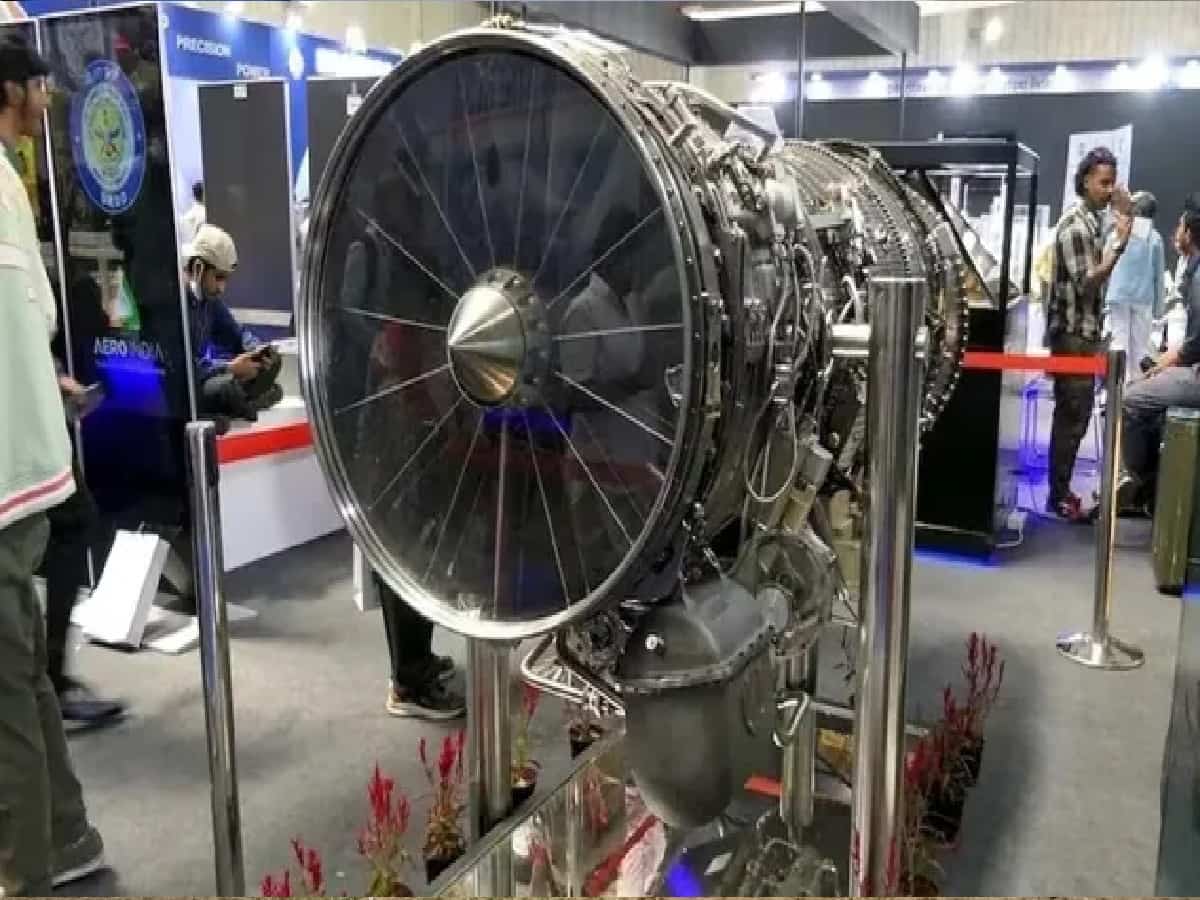
DRDO Kaveri Engine Aces Russia Trials for Ghatak Stealth Drone
In a landmark milestone for Indian indigenous military aeronautics, the Kaveri Dry Engine—developed by the Defence Research and Development Organisation (DRDO)—has completed high-altitude flight and endurance evaluations in Russia. Tested across the testbeds of the Central Institute of Aviation Motors (CIAM) and the Gromov Flight Research Institute, the indigenous power plant exceeded all operational benchmarks. According to defense officials, the engine delivered a peak dry thrust of 48.5 kilonewtons (kN), outperforming the projected 46 kN target. The flight evaluation data is now undergoing analysis by the Bengaluru-based Centre for Military Airworthiness and Certification (CEMILAC) to award formal airworthiness clearance, clearing the path to integrate the engine into India's flagship unmanned combat aerial vehicle (UCAV) program within the next two to three years.
Powering 'Ghatak': India's Autonomous Flying-Wing Deep Strike Combat Platform
The successful validation of the Kaveri Dry Engine delivers the core propulsion system required for 'Ghatak', India’s stealth combat drone designed for precision deep-penetration strike operations. Built with a tailless flying-wing configuration, serpentine air intakes, and a flush exhaust architecture, Ghatak is engineered to minimize radar cross-section (RCS) and evade contemporary air defense networks. The drone's airframe incorporates 80 to 90 percent advanced carbon-fiber prepreg composite materials, combining lightweight structural integrity with radar-absorbent properties. Equipped with internal weapons bays to maintain an uninterrupted stealth profile, Ghatak is built to strike high-value enemy command hubs, early warning radar stations, and surface-to-air missile installations, operating autonomously as well as in tandem with manned combat aircraft like the Tejas Mark 1A and the Advanced Medium Combat Aircraft (AMCA) under future loyal wingman concepts.
Evolution of Kaveri: Engineering Pivot from Tejas Fighter to Unmanned Combat Aviation
Originally conceived in the late 1980s by the Gas Turbine Research Establishment (GTRE) in Bengaluru, the Kaveri program was initially envisioned to power the indigenous Light Combat Aircraft (LCA) Tejas. While challenging thrust-to-weight ratios and high-altitude afterburner complexities prevented the baseline engine from entering operational service on early Tejas production variants, aerospace scientists adapted the architecture by removing the afterburner section. This evolution produced a dedicated, non-afterburning dry turbofan optimized specifically for long-endurance stealth platforms. The successful trials in Russia validate decades of domestic turbine research, equipping Indian defense aviation with an indigenous military aero-engine foundation and reducing reliance on foreign propulsion imports.