China Accelerates Nuclear Expansion: Satellite Imagery Reveals Major Activity Across 7 Strategic Sites
International defense monitors and intelligence analysts have raised fresh alerts over the scale and velocity of China’s nuclear weapons buildup following new satellite-based investigative findings. High-resolution orbital imagery detailed in an investigative report by The Telegraph indicates coordinated infrastructure construction, subterranean tunneling, and facility upgrades across at least seven strategic military sites across mainland China. The rapid modernization push arrives as global security frameworks face deep strain from ongoing regional conflicts, sparking intense scrutiny regarding Beijing’s long-term deterrence posture and strategic intentions.
Satellite Data Flags 7 Sensitive Locations Across Western and Central China
The commercial satellite imagery analysis points to active construction work concentrated in seven sensitive hubs: Pingtong, Jitong, Lop Nur, Jiuquan, Miyang, Jinta, and Guangyuan. Historically associated with nuclear test facilities, solid-propellant production, ballistic missile manufacturing, and rocket testing corridors, these locations are undergoing visible structural expansions. According to the 2026 Nuclear Notebook published by the Federation of American Scientists (FAS), China's nuclear arsenal has grown to an estimated 620 operational warheads. To ensure these warheads have reliable delivery pathways, the People’s Liberation Army (PLA) is simultaneously constructing hundreds of hardened silo fields while modernizing legacy underground launch bays.
Rapid Upgrades Across the Full Nuclear Triad: Land, Sea, and Air
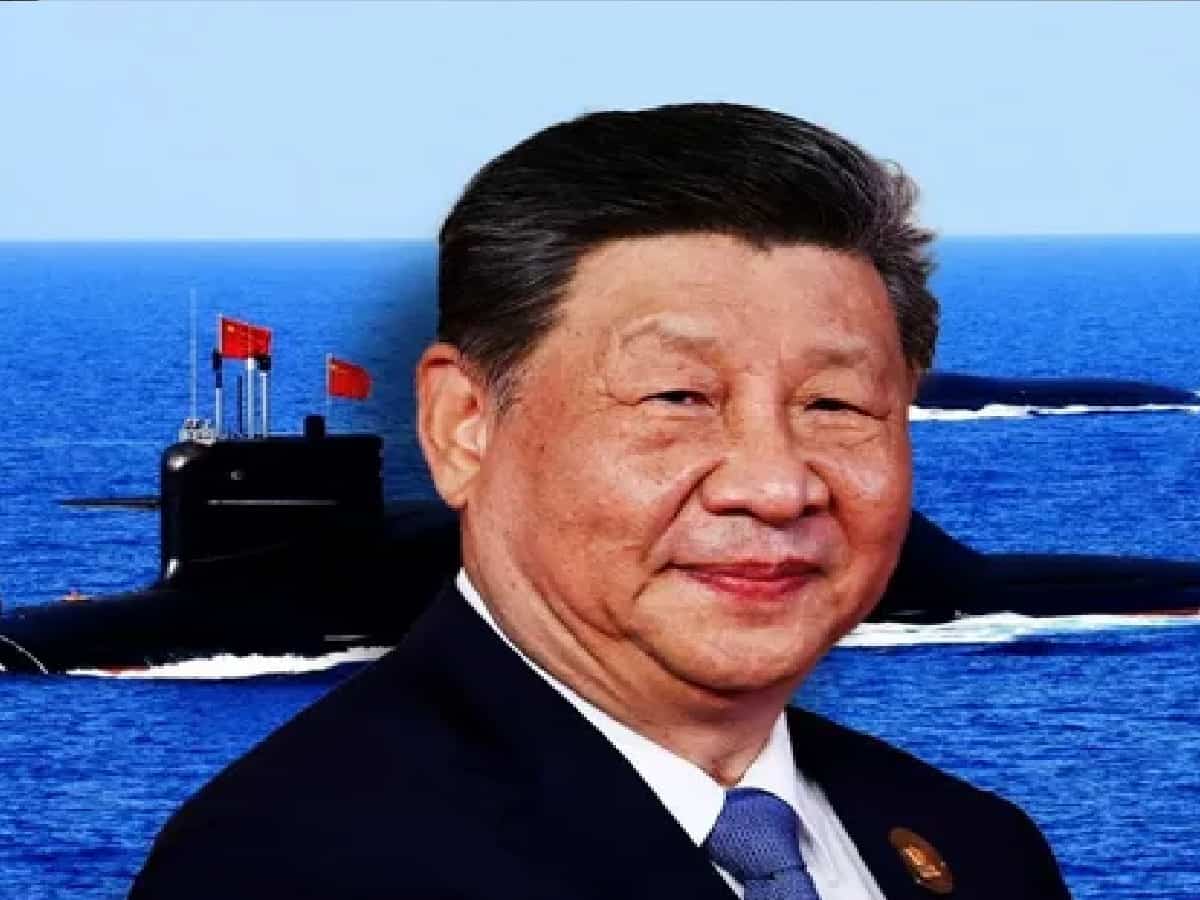
Beijing's strategic investment extends beyond fixed land-based silos housing Dongfeng-5 (DF-5) and next-generation road-mobile intercontinental ballistic missiles (ICBMs). The People's Liberation Army Navy (PLAN) is integrating extended-range JL-3 submarine-launched ballistic missiles onto its fleet of operational Type 094 (and modified Type 094A) nuclear-powered ballistic missile submarines, while engineering work advances rapidly on the quieter, next-generation Type 096 class. Concurrently, the People's Liberation Army Air Force (PLAAF) has expanded the operational readiness of its Xian H-6 strategic bombers, outfitting modernized variants with air-launched, nuclear-capable ballistic missiles to complete a survivable, redundant nuclear triad capable of rapid second-strike responses.
Diplomatic Optics in Washington vs. Nuclear Realpolitik
The emergence of these satellite revelations coincides with a delicate diplomatic summit in Washington, where Chinese President Xi Jinping is holding high-level discussions with US President Donald Trump. In formal written remarks released during the state visit, President Xi framed the bilateral relationship around cooperative coexistence, arguing that the world’s two largest powers should act as economic partners rather than adversaries. Throughout international security discussions, Beijing’s diplomatic corps has maintained that its nuclear enterprise remains purely defensive. Reaffirming positions taken during the Nuclear Non-Proliferation Treaty (NPT) review sessions, Chinese Foreign Ministry spokesperson Guo Jiaqun and arms control representative Sun Xiaobo emphasized earlier this year that China adheres to a strict "no-first-use" doctrine and keeps its nuclear forces at the minimum threshold required for national survival.
Shifting Doctrinal Balance and Global Strategic Concerns
Despite Beijing’s stated commitment to a minimum deterrence posture, Western defense planners and independent think tanks note that the sheer pace of the expansion alters the strategic balance in the Indo-Pacific. While the Federation of American Scientists confirms there is no formal declaration indicating Beijing has rescinded its "no-first-use" policy, the deployment of rapid launch-on-warning capabilities, multi-warhead delivery vehicles (MIRVs), and hardened silo architecture provides the Chinese military with unprecedented strategic flexibility. As Washington and Beijing navigate volatile trade agreements and geopolitical competition, China's accelerating nuclear footprint ensures that strategic parity will remain central to future superpower diplomacy.