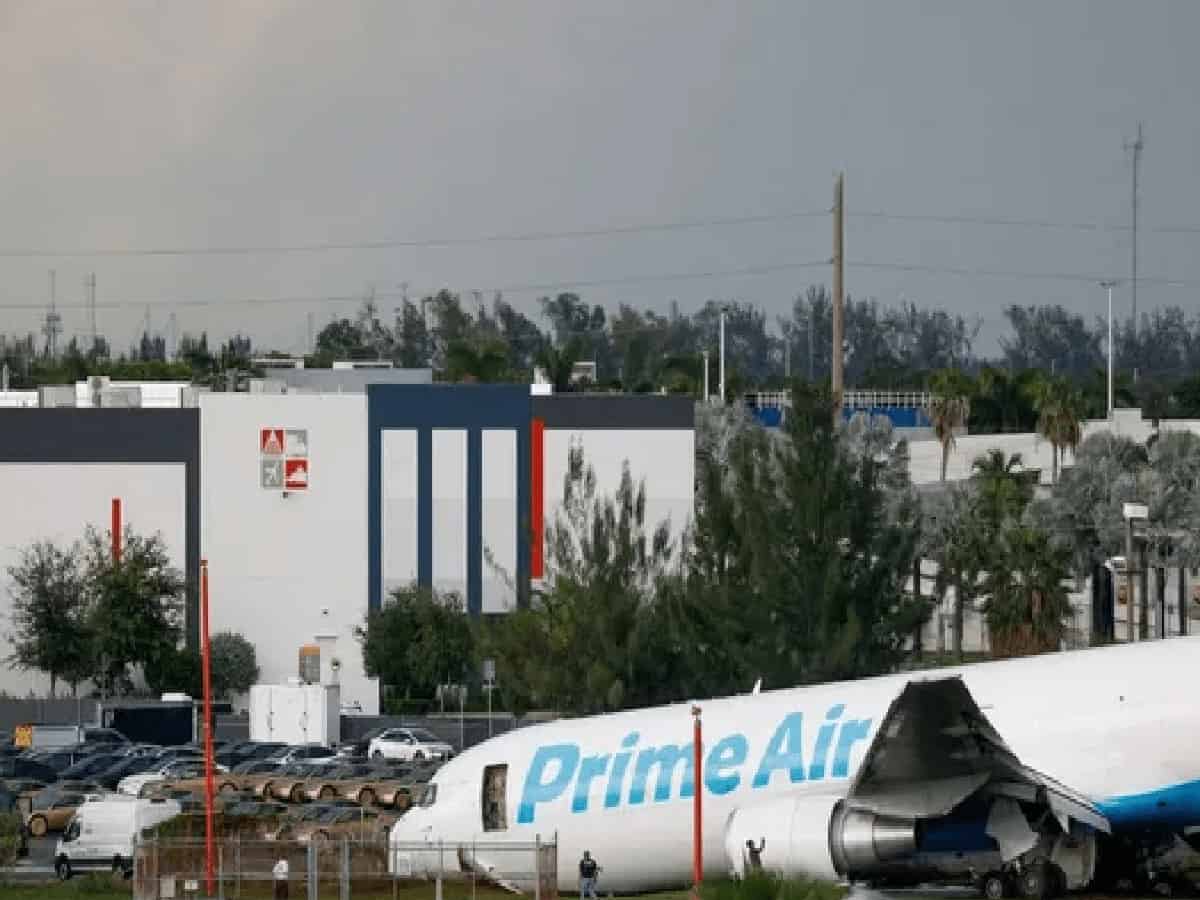
America: 208 km/h speed, runway excursion and massive fire, how did the Amazon plane crash in Miami?
A routine cargo operation turned into a catastrophic disaster at Miami International Airport in the United States when an Amazon-operated Boeing 767-300 aircraft suffered a severe runway excursion during landing. Traveling at a high speed of 208 km/h (129 mph) as it left the pavement, the cargo jet overshot the runway boundary, plowed into a nearby commercial area used by local warehouse workers, and erupted into a massive fireball. The horrific crash claimed the lives of five people and left five others injured, with three victims currently fighting for their lives in critical condition.
The Crash Sequence: Overshooting the Runway and Impact
According to flight tracking data from Flight Radar 24, the aircraft was moving at 112 knots when it breached the runway limits. Chilling video footage captured the plane violently overshooting the tarmac, slamming into ground-level vehicles and commercial structures near the airport perimeter, and instantly catching fire with thick, billowing black smoke filling the sky. The mangled aircraft ultimately came to a rest upside down and completely engulfed in roaring flames near a roadway flanked by semi-trucks, overwhelming local emergency response and rescue units.
Understanding 'Runway Excursions' and Underlying Aviation Hazards
In aviation terminology, such devastating incidents are classified as "runway excursions," which occur when an aircraft loses control during takeoff or landing. Experts categorize these into two types: a veer-off, where a plane slides off the side into unpaved terrain, and an overshoot, where the aircraft runs out of tarmac space at the end of the strip. Landings carry significantly higher risks because pilots must rapidly decelerate massive, heavy machines from cruising speeds to a complete halt. Such catastrophic events are typically triggered by a combination of adverse weather conditions, slick runways caused by heavy rain or standing water, technical malfunctions, unsafe landing approaches, or excessive touchdown speeds. To mitigate these inherent dangers, modern aviation infrastructure increasingly utilizes engineered material arresting systems (EMAS) at runway ends to safely absorb and decelerate runaway aircraft, while pilots undergo rigorous training to execute safe "go-arounds" whenever a landing profile becomes compromised.