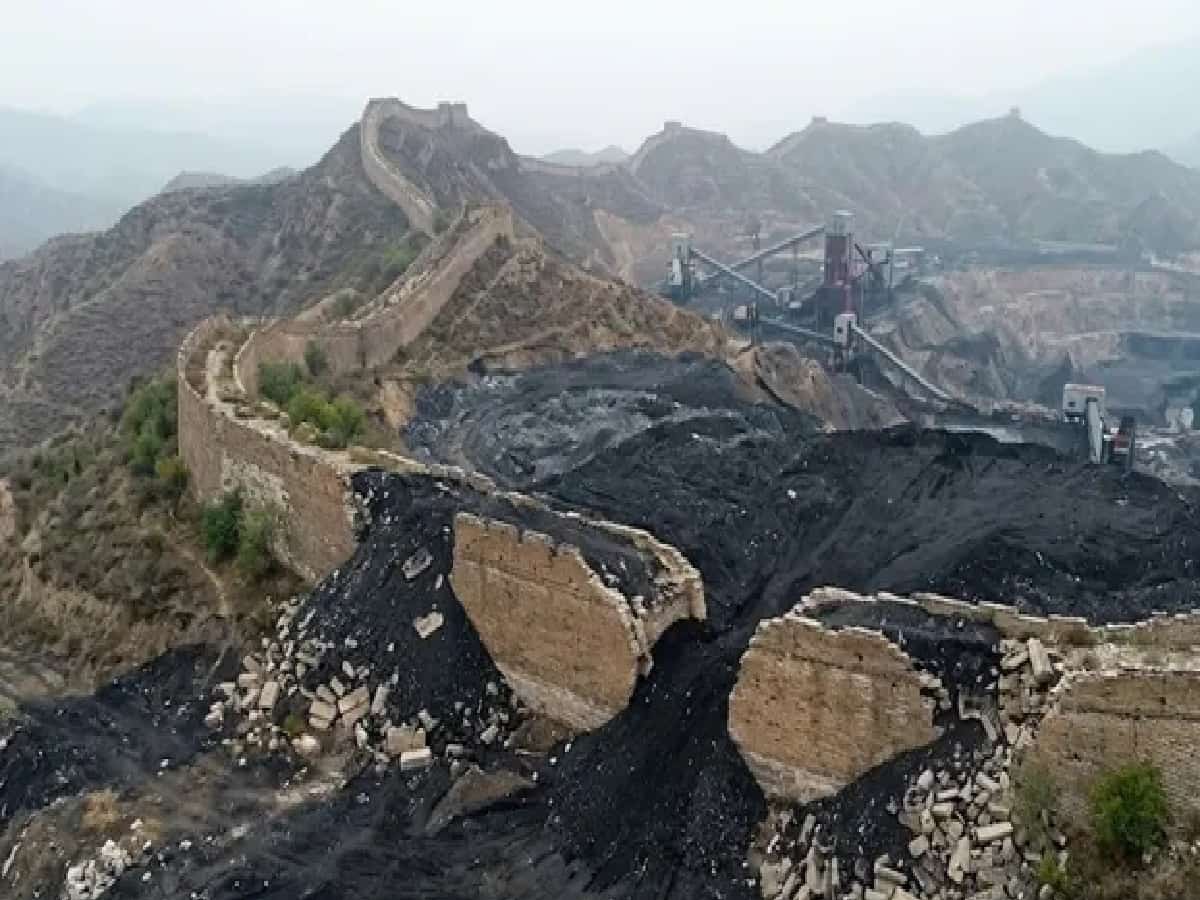
20 Years of Illegal Coal Mine Waste Dumping Leaves 6-Metre Gap in Ancient Relic
A remote section of the Great Wall of China, widely regarded as the ultimate architectural symbol of Chinese civilization and a premier global UNESCO World Heritage site, has suffered catastrophic structural devastation due to continuous industrial waste dumping spanning nearly twenty years. State broadcaster CCTV reported that an ancient section dating back to the historic Ming Dynasty in Ningwu County, Shanxi Province, was repeatedly breached and used as an unauthorized disposal ground for quarry debris and coal tailings. The prolonged dumping has compromised the integrity of the ancient stonework, culminating in an irreparable, jagged six-metre-wide gap carved directly through the ancient fortifications.
Unlicensed Demolition: How Ningwu Chaokai Coal Flattened Historic Ramparts
Investigative disclosures reveal that the physical desecration began as early as 2007, when an unlicensed mining enterprise identified as Ningwu Chaokai Coal Industry commenced illegal operations in the immediate vicinity of the protected cultural ramparts. To clear logistics corridors and discard high-volume mine overburden without incurring legitimate processing costs, the enterprise deliberately demolished sections of the historic wall, systematically burying ancient masonry beneath piles of industrial spoil. Despite continuous documentation and repeated formal complaints lodged by civic whistleblowers and preservationists since 2015, local municipal and administrative bodies failed to halt operations or enforce heritage protection statutes, allowing the destructive dumping to proceed unhindered for almost two decades.
Conservation Reckoning: Global Outcry Over Weak Grassroots Protection of Ancient Relics
The exposure of the Ningwu County destruction has ignited intense debate across Chinese social platforms and international heritage preservation circles regarding the vulnerability of remote, non-tourist stretches of the Great Wall. While famous sections near metropolitan centers enjoy intense security, round-the-clock surveillance, and strict conservation budgeting, isolated frontier ramparts remain acutely exposed to commercial exploitation, rural infrastructure incursions, and illegal mining ventures. The failure of grassroots regulatory oversight to heed nearly a decade of whistleblower warnings highlights persistent enforcement gaps, prompting cultural heritage authorities and central inspectors to re-evaluate monitoring frameworks to prevent industrial enterprises from permanently destroying irreplaceable historical monuments.