







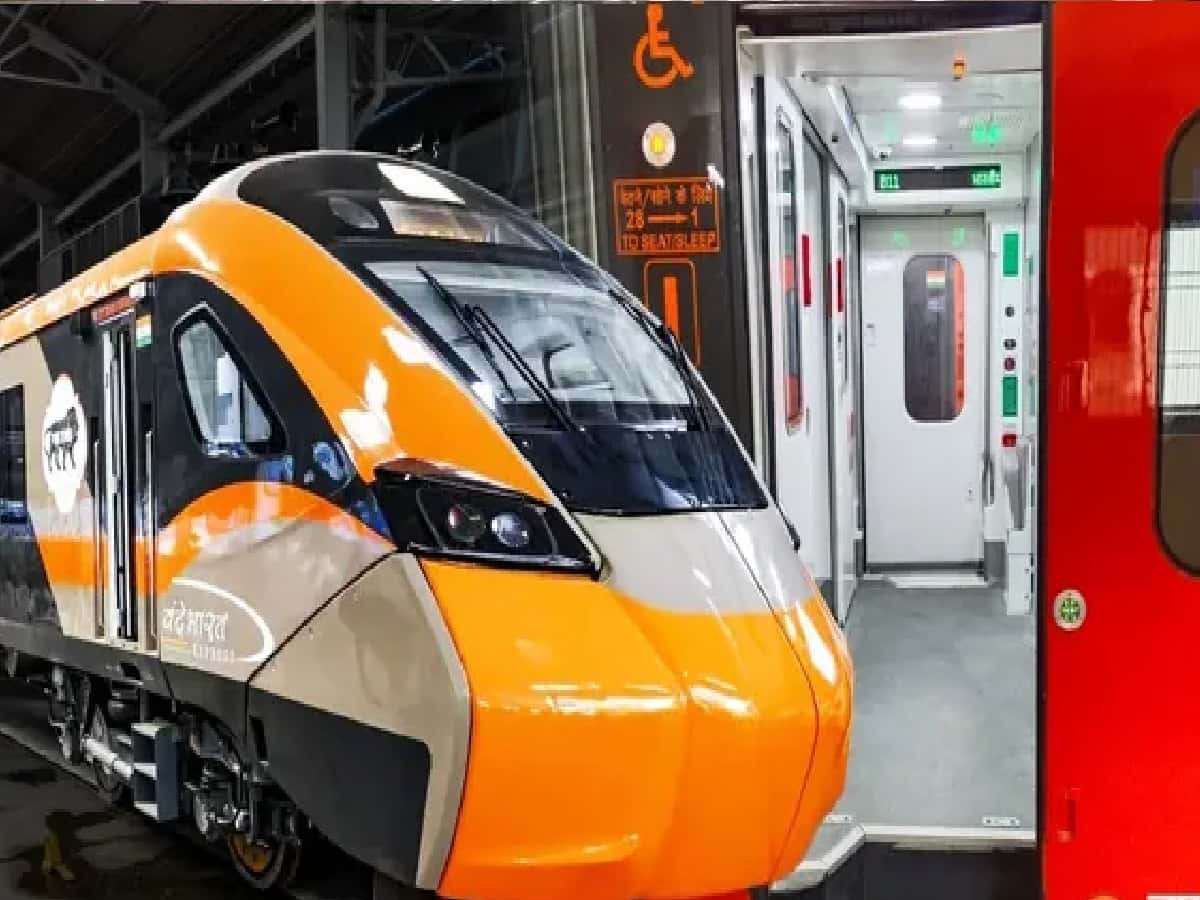
Varanasi-New Delhi Vande Bharat Sleeper Express: Flag-Off on Oct 31
Connecting the spiritual capital of Kashi with the national capital in unprecedented speed and comfort, Indian Railways is set to launch the much-anticipated Varanasi–New Delhi Vande Bharat Sleeper Express on Saturday, October 31, 2026. Designed to redefine long-distance overnight rail journeys across Purvanchal and Northern India, the state-of-the-art semi-high-speed train will be officially flagged off at Varanasi Junction during a landmark ceremony presided over jointly by Union Railway Minister Ashwini Vaishnaw and Uttar Pradesh Chief Minister Yogi Adityanath. The high-profile launch marks the operational debut of the sleeper variant of India's flagship indigenous train platform, serving as a festive gift for thousands of business travelers, pilgrims, and commuters traveling between Eastern Uttar Pradesh and New Delhi. As part of the broader infrastructure rollout, the ceremonial event on October 31 will witness the simultaneous flagging off of three major passenger trains, underscoring the rapid modernization of the regional rail network.
Official Timetable & Route Map: 6-Day Schedule, 760 Km Run, and Key Stoppages
According to the official circular issued by Railway Board Director (Coaching) Sanjay R. Neelam to all zonal railway administrations, the Varanasi–New Delhi Vande Bharat Sleeper Express (Train Numbers 27421 / 27422) will run regular commercial operations six days a week in both directions. Covering an approximate distance of 760 kilometers overnight, Train No. 27421 will depart Varanasi Junction at 20:50 hrs (8:50 PM), reaching New Delhi Railway Station at 06:10 hrs the following morning. For the return service, Train No. 27422 will depart New Delhi at 21:40 hrs (9:40 PM) and pull into Varanasi Junction at 07:10 hrs the next day. To maximize connectivity across key commercial and educational hubs in Uttar Pradesh, the train has scheduled halts at Prayagraj Junction, Kanpur Central, Aligarh Junction, and Ghaziabad Junction. Operational logistics designate Varanasi Junction as the primary maintenance base, with secondary maintenance handled at New Delhi, alongside specialized en-route watering halts established at Prayagraj and Kanpur Central.
16-Coach Luxury Composition: 180 km/h Design Speed and 823 Passenger Capacity
Engineered for a maximum design speed of 180 km/h, the 16-coach rake represents a generational leap in passenger comfort and ergonomics over conventional Rajdhani and Superfast sleeper rakes. The aerodynamic trainset accommodates up to 823 passengers across a thoughtfully planned three-tier configuration, comprising 11 Third AC (3A) coaches, 4 Second AC (2A) coaches, and 1 exclusive First AC (1A) coach. Addressing the physical fatigue typical of overnight journeys, the berths are equipped with advanced multi-layer cushioning, wide legroom, and contour-molded backrests. To eliminate track vibrations and ambient travel sounds, the train incorporates modern semi-active suspension systems and acoustic insulation, guaranteeing an ultra-quiet, jerk-free transit that allows passengers to sleep undisturbed throughout the night.
Advanced Safety Architecture: Indigenous Kavach Technology, Automatic Doors, and Smart Hygiene
Passenger protection and operational integrity on the Varanasi–New Delhi corridor are anchored in world-class rail safety innovations, led by the integrated indigenous 'Kavach' Automatic Train Protection (ATP) system designed to prevent signal passing at danger (SPAD) and eliminate head-on or rear-end collisions. The rake features fully automated exterior plug doors that remain sealed during transit, inter-coach gangways with airtight sealed vestibules for safe interior movement, and comprehensive 360-degree CCTV surveillance across all corridors. Fire safety is governed by high-sensitivity smoke detection and suppression systems, while an emergency two-way talk-back intercom enables passengers to communicate directly with onboard train managers or the loco pilot during critical situations. Furthermore, the train integrates hospital-grade automated disinfection protocols for restrooms and berths alongside state-of-the-art modular pantries serving hygienic, freshly curated regional cuisines, establishing a new benchmark for premium hospitality on Indian tracks.




