







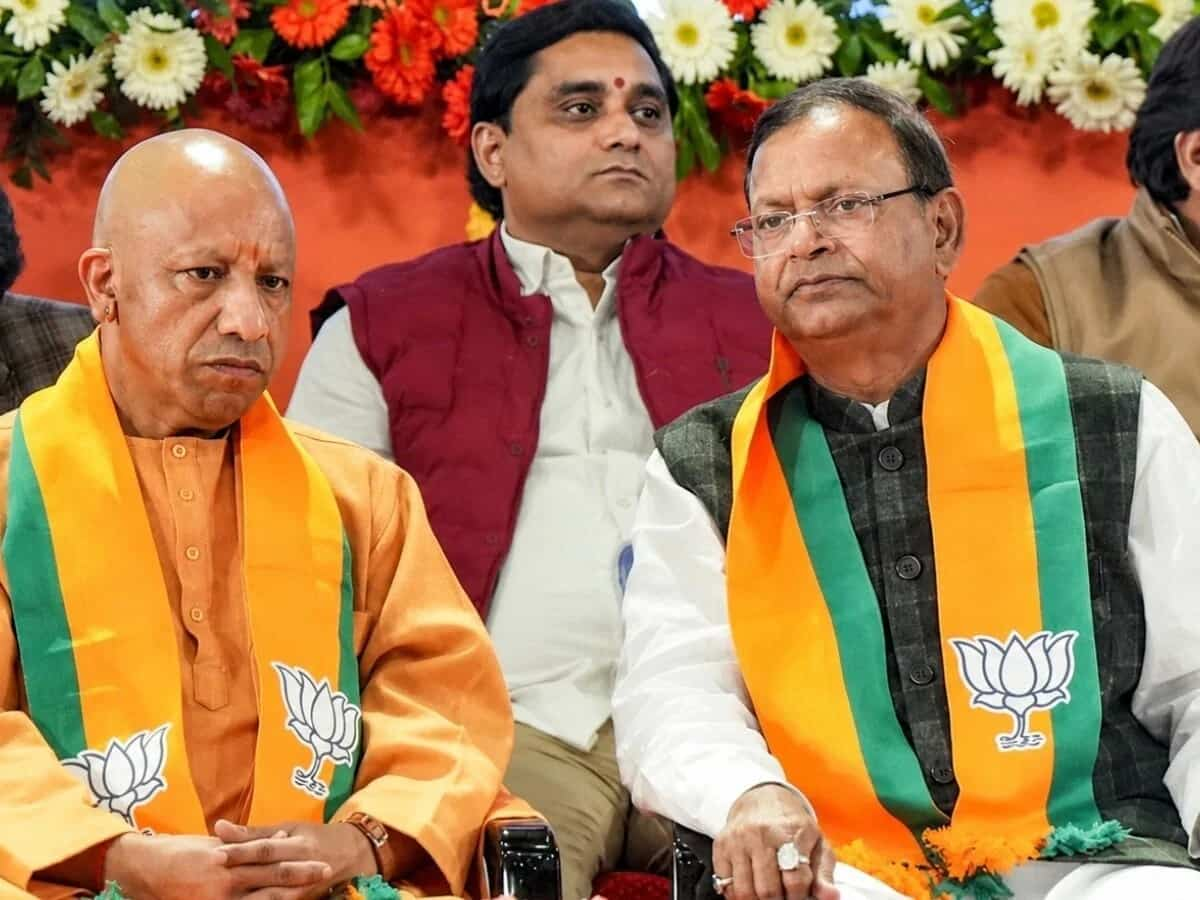
UP BJP Chief Pankaj Chaudhary Denies Finalizing 209 Poll Candidates
Amid circulating media reports claiming that the Bharatiya Janata Party (BJP) has already finalized a preliminary list of 209 candidates for the 2027 Uttar Pradesh Assembly elections, Uttar Pradesh BJP President Pankaj Chaudhary issued a categorical denial in Kannauj on Sunday, November 15, 2026. Speaking to reporters, Chaudhary stated that he had no knowledge of where the unverified reports originated and emphasized that, as State President, he had not convened any meeting to finalize candidate names. Declining to lend credence to speculative lists, the state party chief explained that the BJP has adhered to the same structured, consensus-driven organizational system for the past 50 years, under which ticket decisions are never taken behind closed doors by any single individual. While some recent political reports had speculated about an early shortlist of 209 seats being sent to Delhi ahead of the party's upcoming Mathura conclave, Chaudhary's clarification puts official party procedure on record. For voters, political observers, and grassroots party workers across Lucknow, Kannauj, Kanpur, Mathura, Agra, Varanasi, Gorakhpur, Prayagraj, Meerut, Bareilly, and New Delhi, his remarks clarify how candidate selection actually moves from local booth units up to the national leadership.
Pankaj Chaudhary Dismisses Speculation Over 209-Candidate List
Addressing journalists in Kannauj on Sunday morning, Pankaj Chaudhary addressed questions regarding reports that the BJP had locked in names for 209 out of Uttar Pradesh's 403 Assembly constituencies. Calling the claims completely unfounded, Chaudhary stated plainly that no such meeting had taken place with him in his capacity as Uttar Pradesh BJP President.
He added that the party operates strictly through institutional deliberation rather than unilateral announcements, noting that organizational workers—not rumors—carry government policies and party programmes down to the booth level.
Four-Tier Ticket Selection Process Explained by UP BJP Chief
To counter confusion among aspirants and party cadres, Chaudhary outlined the step-by-step framework through which the Bharatiya Janata Party selects its election candidates:
| Stage of Selection | Organizational Body Involved | Role in Candidate Finalization |
| Stage 1: Grassroots Feedback | District & Regional Units | Local office-bearers gather ground-level input, feedback, and name suggestions from constituencies |
| Stage 2: State Screening | UP BJP Core Committee & Election Committee | District and regional proposals are compiled and deliberated upon collectively at the state level |
| Stage 3: Central Forwarding | State Leadership to New Delhi | Screened panels of probable names are forwarded from Lucknow to the party's central leadership in Delhi |
| Stage 4: Final Approval | BJP Central Parliamentary Board | The Parliamentary Board reviews the panels and grants final approval before any official list is released |
According to Chaudhary, this multi-tier process ensures that local feedback, organizational strength, and collective consensus shape every ticket decision before any formal announcement is made.
Ideology Over Individualism: Chaudhary's Remarks on Party Structure
Contrasting the BJP's organizational model with rival political outfits, Chaudhary stated that the BJP is an ideology-driven organization rather than a family-controlled party where one leader dictates decisions alone. He attributed his own rise in public life to the party's organizational ethos, asserting that workers who remain committed to core principles grow within the system.
Referring to broader Indian political history, Chaudhary remarked that while breakaway factions from parties like the Congress—such as the Trinamool Congress (TMC) or the Nationalist Congress Party (NCP)—managed to carve out separate political identities, leaders who departed from the BJP's ideological framework historically struggled to establish lasting political footing on their own.




