







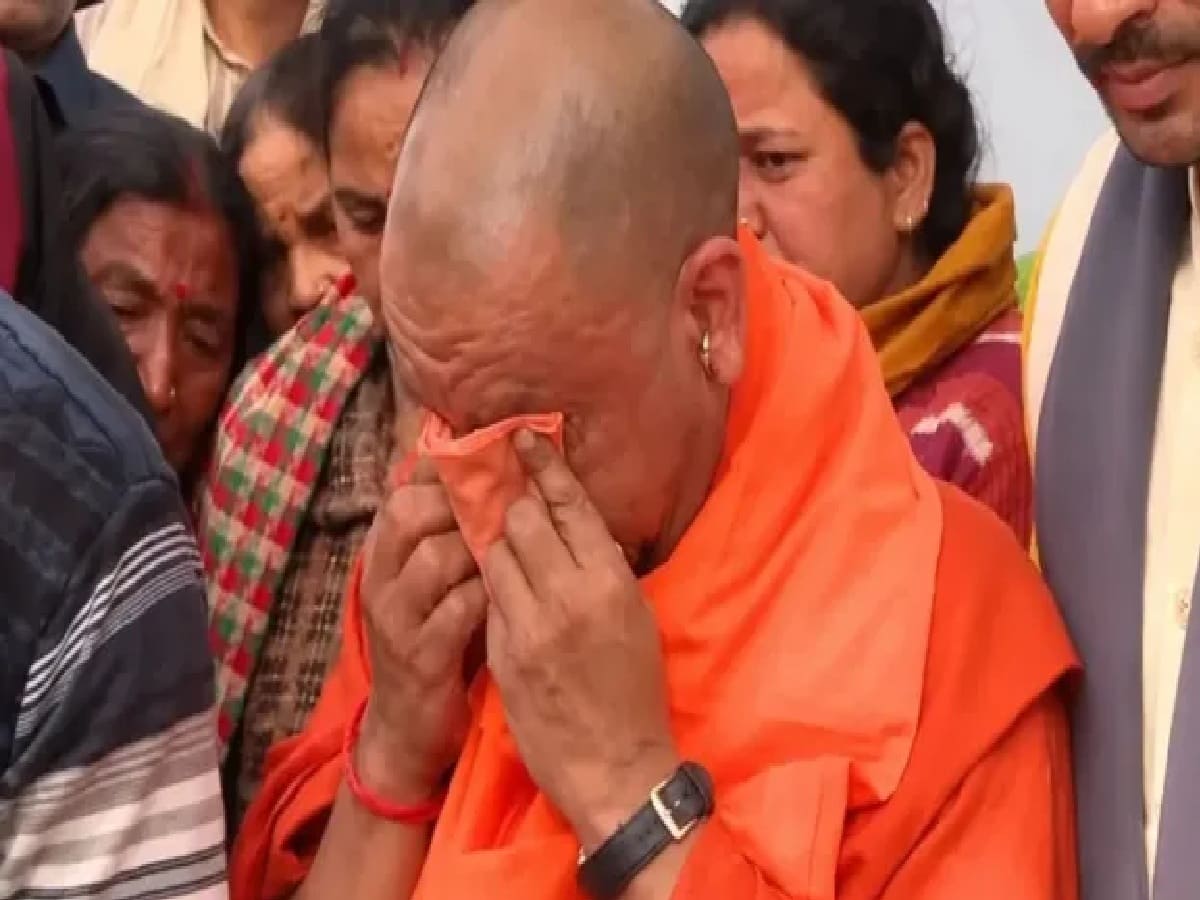
Shankaracharya's 'Matri-Panchakam': Tribute to Yogi's Late Mother
''Mother is no more"—on the surface, it is one of the heaviest sentences a human being ever speaks, yet in Indian spiritual wisdom, a mother never truly departs from her child. Published across spirituality and opinion desks on Monday, November 23, 2026, a moving reflection by Mithilesh Nandini Sharan in the wake of the passing of Uttar Pradesh Chief Minister Yogi Adityanath's mother, Savitri Devi, contemplates how a mother continues to live inside her child—not outside in a home or hospital room, but as a steady pulse in the veins, a quiet guide in conscience, and an unwavering Himalayan resolve in duty. Commending Yogi Adityanath Ji Maharaj for upholding both monastic dignity and filial devotion in honoring his late mother, the reflection invokes the classical Sanatan maxim "Sarvavandyena yatina prasur vandya prayatatah"—teaching that even an ascetic revered by the entire world must bow down with utmost reverence to the mother who gave him birth. That timeless principle finds its most heart-rending poetic expression in Shrimad Adi Shankaracharya's Matri-Panchakam, the five Sanskrit verses composed by the great Advaita philosopher when he returned to perform the final rites of his own mother, Aryamba, despite orthodox objections against a sannyasin conducting funeral rituals. Each tear shed at a mother's farewell echoes those five immortal stanzas—recounting the agonizing labor pains of childbirth, a full year of sleepless nights spent tending an infant's soiled bed, a mother's tears upon dreaming of her son in ascetic robes at the Gurukul, and a son's humble offering of dry rice grains to the very lips that once showered him with blessings. For readers, devotees, and families across Lucknow, Unnao, Kanpur, Gorakhpur, Varanasi, Prayagraj, Haridwar, and New Delhi, revisiting Adi Shankaracharya's Matri-Panchakam alongside Yogi Adityanath's tribute illuminates how grief transforms into inner strength, poetry, and lifelong service.
Adi Shankaracharya's 'Matri-Panchakam': All 5 Verses & Spiritual Meaning
To bring together the five Sanskrit verses of Adi Shankaracharya's Matri-Panchakam, their faithful English translations, and their deeper spiritual resonance in the context of Yogi Adityanath's tribute to his late mother, the tables below summarize the sacred composition:
Verse-by-Verse Meaning of Adi Shankaracharya's 'Matri-Panchakam'
| Verse | Sanskrit Transliteration (Opening) | English Meaning & Poignant Imagery |
| Verse 1 | "Muktamani tvam nayanam mameti, rajeti jiveti chiram suta tvam..." | "You are my precious pearl, the apple of my eye, my little prince—may you live long, my son!"—recalling those tender lullabies, the ascetic son laments that at the hour of farewell he can place only dry grains of rice upon those loving lips. |
| Verse 2 | "Ambeti tateti shiveti tasmin, prasutikale yadavocha uchchaih..." | Recalls the hour of childbirth when, overwhelmed by labor pain, the mother cried out "O Mother! O Father! O Shiva! O Krishna! O Govinda! O Hari! O Mukunda!"—prompting the son to fold his hands in lifelong reverence. |
| Verse 3 | "Astam tavadiyam prasutisamaye durvarashulavyatha..." | Honors the unbearable pain of delivery, the physical emaciation of pregnancy, and an entire year of sleeping beside a bed soiled by the infant without uttering a single complaint—acknowledging that no son, however accomplished, can ever repay even one fraction of a mother's sacrifice. |
| Verse 4 | "Gurukulamupasritya svapnakale tu drishtva yatisamuchitavesham..." | Remembers how, after dreaming of her young son dressed in ascetic robes, the mother ran weeping to the Gurukul, moving every teacher and student there to tears—as the son bows at her compassionate feet. |
| Verse 5 | "Na dattam mataste maranasamaye toyamapi va..." | Expresses a monk's deep remorse at arriving late—unable to offer water at the final breath, perform conventional shraddha oblations, or whisper the Taraka mantra at death—praying that his mother shower her incomparable mercy upon him nonetheless. |
Why Even an Ascetic Monk Honors His Mother in Sanatan Dharma
| Scriptural Principle | Traditional Context (Adi Shankaracharya & Yogi Adityanath) | Enduring Message for Society |
| "Sarvavandyena yatina prasur vandya prayatatah" | Even a world-honored sannyasin who has renounced worldly attachments must worship his mother with utmost devotion. | Proves that spiritual renunciation elevates gratitude rather than erasing the sacred debt (Matri-Rin) owed to one's mother. |
| Inner Presence Beyond Physical Loss | Though a mother is no longer visible at home or in a hospital ward, she lives on inside her child's vows, discipline, and courage. | Transforms personal bereavement into enduring resolve—standing firm like the Himalayas in service to family and nation. |
How Grief Turns Into Resolve and Service in Indian Spiritual Tradition
When Adi Shankaracharya stood beside his mother Aryamba's funeral pyre centuries ago, he stepped outside rigid convention to honor the human bond that made his very existence and spiritual quest possible. In the same spirit, Chief Minister Yogi Adityanath's dignified observance of his mother Savitri Devi's final rites and his call to care for destitute mothers remind society that a mother's upbringing is the unseen foundation behind every achievement—and that a true Sati-Savitri mother lives forever through the character and service of her children.
Reflections for Readers Across Lucknow, Unnao, Kanpur, Gorakhpur and Uttar Pradesh
For families and spiritual seekers across Lucknow, Unnao, Kanpur, Gorakhpur, Varanasi, Prayagraj, Haridwar, and New Delhi, reading Adi Shankaracharya's Matri-Panchakam on November 23, 2026 is an invitation to pause, express gratitude to living mothers while we still can, and carry forward the values of departed mothers with quiet strength and compassion.




