







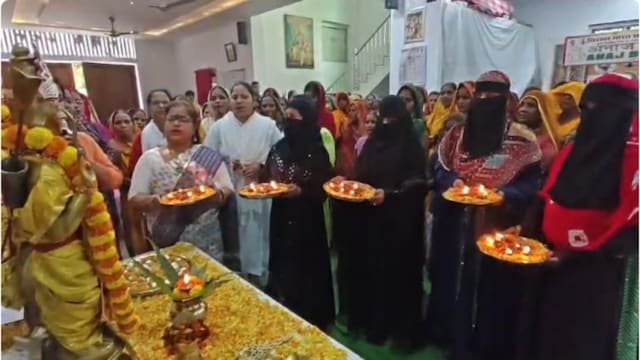
Muslim Women in Varanasi Perform Ram Aarti to Celebrate Ganga-Jamuni Tehzeeb
The ancient spiritual city of Varanasi, known worldwide as Kashi, has once again exemplified the timeless spirit of communal harmony and India’s rich Ganga-Jamuni tehzeeb. In a heart-warming celebration that bridges cultural and religious divides, a group of dedicated Muslim women gathered in the holy city to light earthen lamps and perform a symbolic Aarti in honor of Lord Rama. This inspiring gesture of inclusivity and shared heritage captivated onlookers and quickly gained widespread attention, offering a powerful message of unity, mutual respect, and secular brotherhood that transcends traditional boundaries in a nation celebrated for its deep-rooted cultural pluralism.
Embracing Cultural Harmony in the Heart of Kashi
Varanasi has historically served as a melting pot of diverse philosophical and religious traditions, where coexistence is woven into daily life. Stepping beyond sectarian lines, the local Muslim women organized a special gathering to celebrate the joyous ethos of the festive season by lighting rows of traditional clay diyas and singing devotional hymns. Participants expressed that festivals belong to everyone and that honoring cultural figures like Lord Rama reinforces the shared civilizational roots connecting all citizens of India. This heartfelt initiative highlights how grassroots communities often champion peace and brotherhood, pushing past political noise to embrace common human bonds.
The Significance of Ganga-Jamuni Tehzeeb in Modern India
The phrase Ganga-Jamuni tehzeeb represents the harmonious synthesis of Hindu and Islamic cultures that has flourished across the Indo-Gangetic plains for centuries. In contemporary times, such expressions of communal solidarity carry profound significance. They serve as a gentle reminder that India's strength lies in its ability to celebrate diverse traditions collectively. By participating in local festivities, these Varanasi women demonstrated that cultural identity and religious faith do not preclude cross-cultural appreciation. Instead, they enrich the social fabric, fostering an environment where neighbors share each other’s joys and participate in cultural milestones with genuine enthusiasm.
Inspiring the Younger Generation Through Compassion and Unity
Beyond the immediate festive celebrations, this remarkable act in Varanasi sends a strong educational message to the younger generation. In an era often marked by digital polarization and divisive rhetoric on social media, visible acts of grassroots harmony provide a corrective narrative. Schools, community leaders, and social activists frequently point to such local traditions as living examples of secularism in action. When children witness members of different communities embracing shared cultural heritage with open hearts, it instills values of empathy, tolerance, and respect that fortify the nation's democratic and social foundations for the future.
A Timeless Message of Peace Emitted From the Ghats of Varanasi
As the glowing diyas flickered along the sacred banks of the Ganges, casting golden reflections over the rippling water, the imagery captured the essence of what makes Kashi truly unique. It is a city where tradition meets spiritual inquiry, and where ordinary people continuously breathe life into ancient values of love and coexistence. The initiative led by these Muslim women stands as a shining beacon of hope and unity, reminding millions across the country and the world that humanity and mutual respect remain the strongest ties binding society together.




