







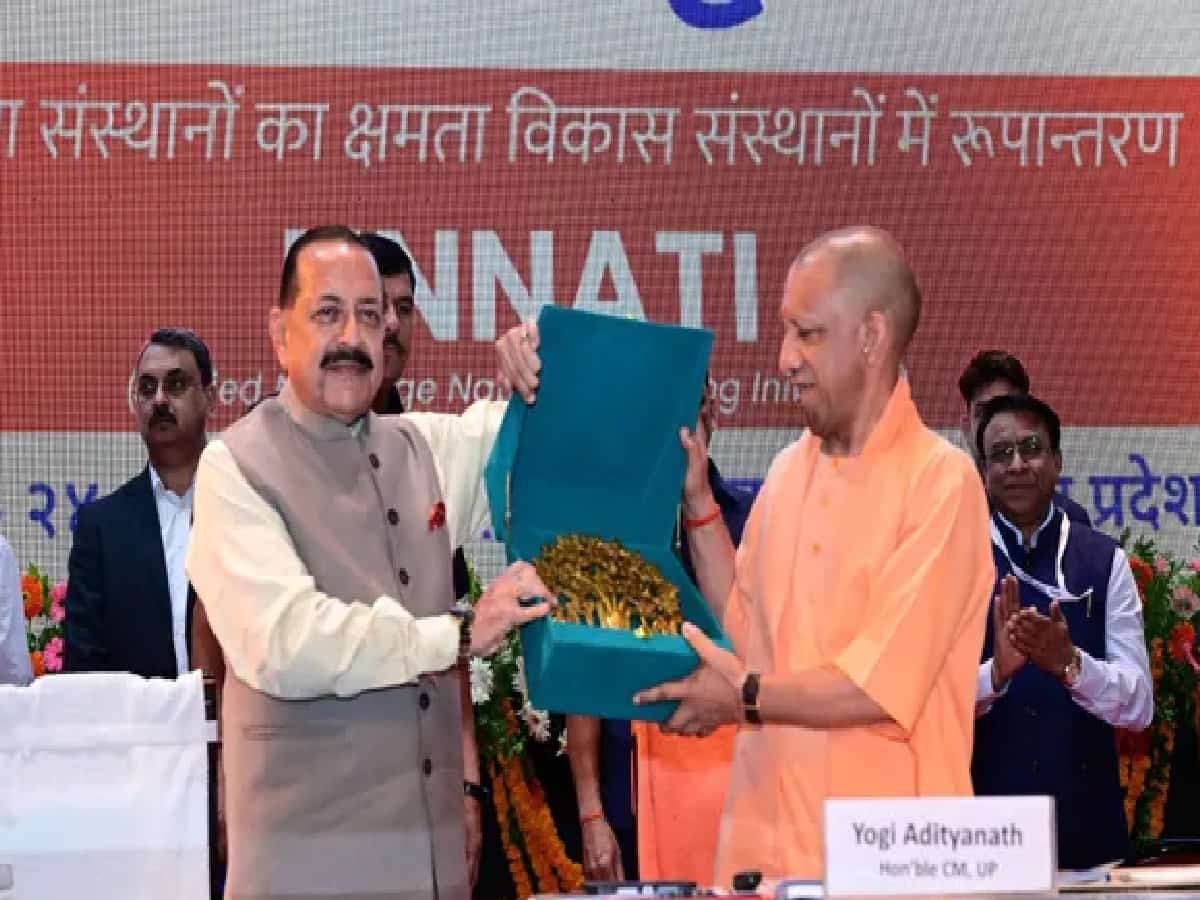
Jitendra Singh Hails UP as No. 1 in Mission Karmayogi With 19 Lakh Civil Servants
Addressing senior administrators and policy delegates at the Northern Regional Workshop in Lucknow, Union Minister of State (Independent Charge) for Personnel, Public Grievances, and Pensions Dr. Jitendra Singh commended Uttar Pradesh for emerging as the country's foremost role model in administrative reforms and bureaucratic capacity building. The Union Minister emphasized that under the leadership of Prime Minister Narendra Modi, public administration has undergone a fundamental transformation since 2014, shifting institutional priorities toward restoring citizen trust and engineering a transparent, accountable, and frictionless delivery mechanism. Under the executive leadership of Chief Minister Yogi Adityanath, Uttar Pradesh has distinguished itself by securing the first position nationally under Mission Karmayogi, successfully transitioning administrative culture from a rigid 'rule-based' regime to a dynamic, citizen-centric 'role-based' architecture.
Decades of Inertia Broken: Scrapping Interviews and Pioneering Digital Face Recognition
Detailing the broader arch of central administrative overhauls, Dr. Singh highlighted that the post-2014 reform agenda systematically dismantled unnecessary bureaucratic hurdles, starting with the abolition of mandatory document gazetting in favor of self-attestation. Following the Prime Minister's vision to curb corruption and eliminate regional discrimination in recruitment, personal interviews were discontinued for non-gazetted government appointments, paving the way for transparent merit-based hiring through regular Rozgar Melas. Complementing these staffing breakthroughs, digital grievance mechanisms such as the Centralized Public Grievance Redressal and Monitoring System (CPGRAMS) and the introduction of Aadhaar-based biometric and facial recognition technology for Pensioners’ Digital Life Certificates have revolutionized citizen engagement. The Union Minister lauded the Uttar Pradesh administration and the personal commitment of Chief Minister Yogi Adityanath for seamlessly adopting these national frameworks and setting an operational benchmark for other Indian states to emulate.
19 Lakh Registered Personnel and 47 Crore Learning Hours: UP Dominates iGOT Karmayogi
The scale of Uttar Pradesh’s civil service capacity building was placed in sharp perspective through unprecedented digital metrics unveiled during the session. While the nationwide iGOT Karmayogi platform currently hosts nearly 17 million registered public servants, Uttar Pradesh alone accounts for over 1.9 million registered personnel, making it the highest contributing state in the country. Delivering the inaugural address, Uttar Pradesh Chief Secretary SP Goyal revealed that state employees have completed approximately 37.5 million specialized courses spanning modern competencies like Artificial Intelligence, data management, and workplace wellness through Yoga, accumulating an astounding 470 million (47 crore) learning hours. Chief Secretary Goyal noted that real administrative success is measured by the equitable, transparent last-mile delivery of government schemes to ordinary citizens, pointing out that over 350 administrative academies and training units across Uttar Pradesh are now integrated onto the national Unnati portal—the highest tally of any state in India.
Building Competency-Based Civil Services: Capacity Building Commission Maps Future Governance
Reiterating the long-term vision of a developed India (Viksit Bharat), Capacity Building Commission (CBC) Chairperson S. Radha Chauhan addressed the assembly of delegates representing eight northern states and four Union Territories, stating that sustainable national development requires building an agile, highly empathetic civil service. Chauhan outlined key institutional interventions launched during April's Sadhana Week, notably the Unnati Abhiyaan, the Karmayogi Kartavya Program—tailored specifically to instill a proactive spirit of public service among frontline personnel—and the Karmayogi Quality Framework designed to audit and standardize training across regional centers. Emphasizing that modern governance challenges require moving beyond traditional classroom lectures, the Lucknow regional convention established a unified collaborative framework for training academies across North India to exchange digital methodologies, leverage emerging technology, and cultivate public servants equipped to lead India’s administrative future.




