







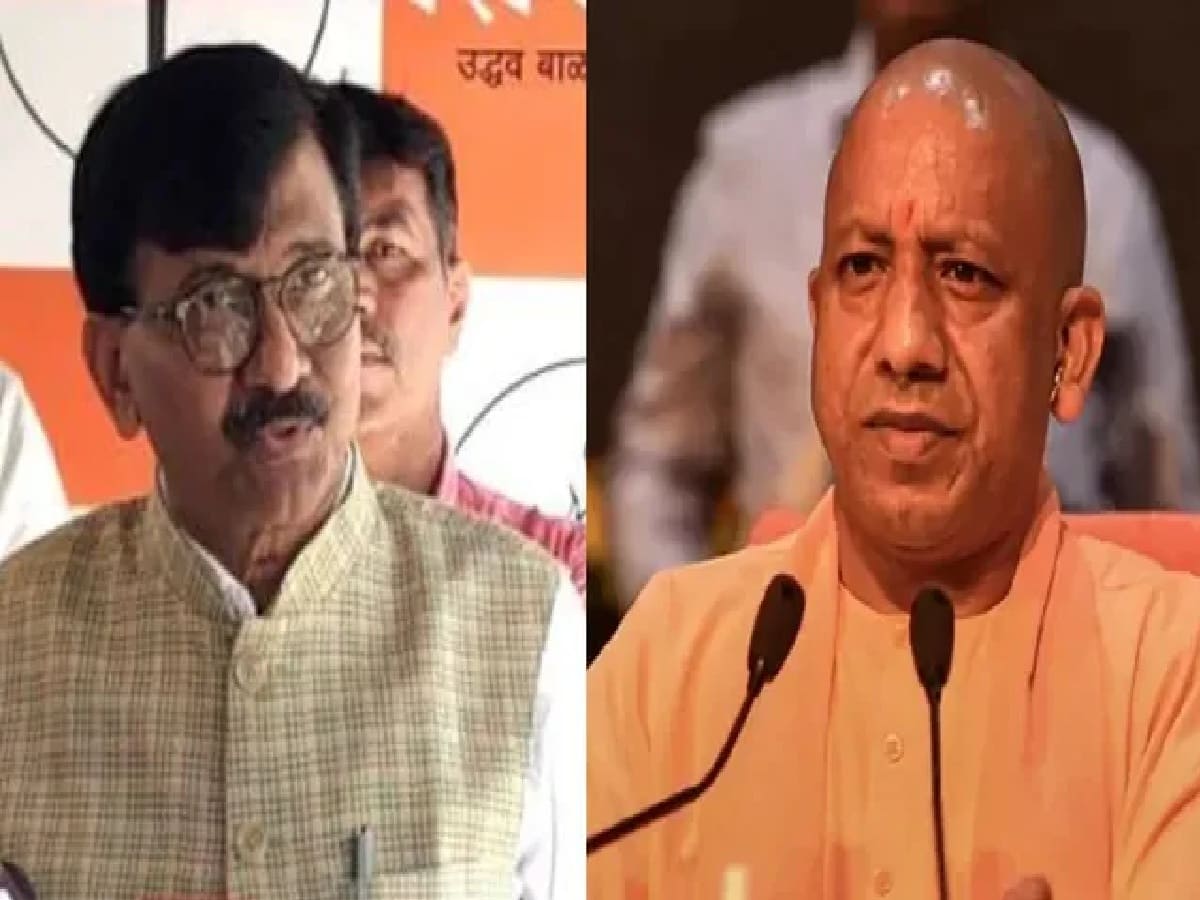
'If No Yogi, No UP': Sanjay Raut's Remark Sparks Debate on 2027 CM Face
Political discussions surrounding leadership ahead of the 2027 Uttar Pradesh Assembly elections gained fresh momentum following an unexpected intervention from across party and alliance lines. Highlighted across political, state-election, and national desks on Friday, November 27, 2026, Shiv Sena (UBT) Rajya Sabha MP Sanjay Raut—whose party is an ally in the opposition INDIA bloc alongside the Samajwadi Party—drew widespread attention after praising Uttar Pradesh Chief Minister Yogi Adityanath during a media interaction in Mumbai on Thursday, November 26, 2026. According to news agency ANI, Raut described Adityanath as a capable administrator and a prominent face of Hindutva, stating, "If Yogi ji has declared himself (as CM face), it is commendable. He is a capable man, and we too love Yogi ji. Yogi ji is a face of Hindutva that stands at the very top, and if there is no Yogi, there is no UP". Raut further remarked that if Adityanath had expressed readiness to lead again, it reflected confidence that the Bharatiya Janata Party (BJP) would secure a majority and that most elected legislators would support him. His comments came against the backdrop of earlier statements within the Uttar Pradesh BJP leadership: on Wednesday, November 25, 2026, UP Deputy Chief Minister Keshav Prasad Maurya told reporters in Jaunpur that the BJP enters elections with the lotus symbol as its face and that after results are declared, elected MLAs meet in the presence of central observers to unanimously select the legislative party leader. Responding to questions on that exchange, Chief Minister Yogi Adityanath underscored that the lotus flower represents the identity of every BJP worker and stands above any individual leader, framing an active pre-poll debate across Lucknow, Mumbai, New Delhi, Gorakhpur, Varanasi, and Prayagraj.
UP 2027 Assembly Elections: Statements From Sanjay Raut, Keshav Prasad Maurya & Yogi Adityanath
To bring together the exact remarks made by Shiv Sena (UBT) MP Sanjay Raut regarding Chief Minister Yogi Adityanath, how UP Deputy Chief Minister Keshav Prasad Maurya and CM Yogi Adityanath outlined the BJP's organizational process, and the broader political context heading toward the 2027 Uttar Pradesh Assembly polls, the tables below organize attributed statements from verified news reports:
Attributed Statements on Uttar Pradesh Leadership Ahead of 2027 Polls
| Political Leader & Affiliation | Attributed Statement & Source Context | Key Point Highlighted |
| Sanjay Raut (Rajya Sabha MP, Shiv Sena UBT — INDIA bloc ally) | Speaking to ANI in Mumbai on November 26, 2026, Raut said: "If Yogi ji has declared himself (as CM face), it is commendable. He is a capable man, and we too love Yogi ji... if there is no Yogi, there is no UP," adding that Adityanath appeared confident that a majority of elected MLAs would back him. | Cross-aisle commentary recognizing Adityanath's political standing in Uttar Pradesh while noting the legislative party selection mechanism. |
| Keshav Prasad Maurya (Deputy Chief Minister of Uttar Pradesh, BJP) | Speaking to ANI on November 25, 2026, Maurya stated: "BJP goes into elections with 'lotus' as its face. After the result, MLAs, in the presence of central observers, decide the leader. At present, our CM is Yogi Adityanathji. I cannot decide who would be the CM in future," while confirming his support for Adityanath and contrasting the BJP's internal system with opposition parties. | Emphasized collective organizational procedure, the primacy of the party symbol during campaigning, and post-election consensus among elected MLAs. |
| Yogi Adityanath (Chief Minister of Uttar Pradesh, BJP) | Reacting at a media conclave on November 25, 2026, Adityanath stated: "Everyone has to fight on the lotus symbol. I will also fight on the Lotus symbol. The lotus flower is everything for us. Who is who and who is not, that is known to all," adding he would contest from whichever seat the party directs. | Reaffirmed party discipline around the lotus symbol while signaling readiness to contest wherever the central leadership assigns. |
Political & Electoral Context in Uttar Pradesh Ahead of 2027
| Dimension | Verified Context | Significance for Voters & Observers |
| BJP's Standard Post-Poll Procedure | As outlined by Keshav Prasad Maurya, the BJP's parliamentary board sends central observers after Assembly results are declared to hold a legislative party meeting where newly elected MLAs choose their leader. | Explains why leaders routinely cite the lotus symbol as the formal electoral face even when an incumbent Chief Minister is in office. |
| NDA Coalition vs. Opposition Lineup | In Uttar Pradesh—expected to go to polls in February–March 2027—the BJP contests alongside NDA partners Apna Dal (S), Rashtriya Lok Dal (RLD), SBSP, and Nishad Party, facing the Samajwadi Party led by Akhilesh Yadav and INDIA bloc allies. | Highlights how statements from an INDIA bloc partner in Maharashtra (Shiv Sena UBT) attracted scrutiny in Lucknow and New Delhi. |
| Simultaneous Opposition Seat-Sharing Chatter | Alongside leadership remarks within the ruling camp, public exchanges between Samajwadi Party and Congress leaders over 2027 seat-sharing expectations have also drawn headlines in Uttar Pradesh. | Shows that both the ruling alliance and the opposition are actively calibrating messaging months ahead of the election schedule. |
Why Cross-Party Remarks Draw Close Attention Before State Elections
Political observers across Lucknow, New Delhi, Mumbai, Varanasi, and Prayagraj note that statements praising a rival coalition's Chief Minister—particularly from a prominent spokesperson of an opposition alliance partner like Sanjay Raut—inevitably spark debate over messaging discipline and electoral strategy. At the same time, analysts point out that Keshav Prasad Maurya's reference to post-election legislative meetings and Yogi Adityanath's emphasis on contesting under the lotus symbol both reflect established BJP organizational convention rather than a formal policy announcement.
What Voters and Political Watchers Are Monitoring Next
As political activity accelerates across Lucknow, Gorakhpur, Varanasi, Prayagraj, New Delhi, and Mumbai ahead of the 2027 Uttar Pradesh Assembly elections, voters and analysts will watch how the BJP's central leadership frames its campaign narrative in the state, how NDA allies coordinate booth-level outreach, and how Samajwadi Party, Congress, and Bahujan Samaj Party finalize their respective electoral platforms and candidate strategies.




