







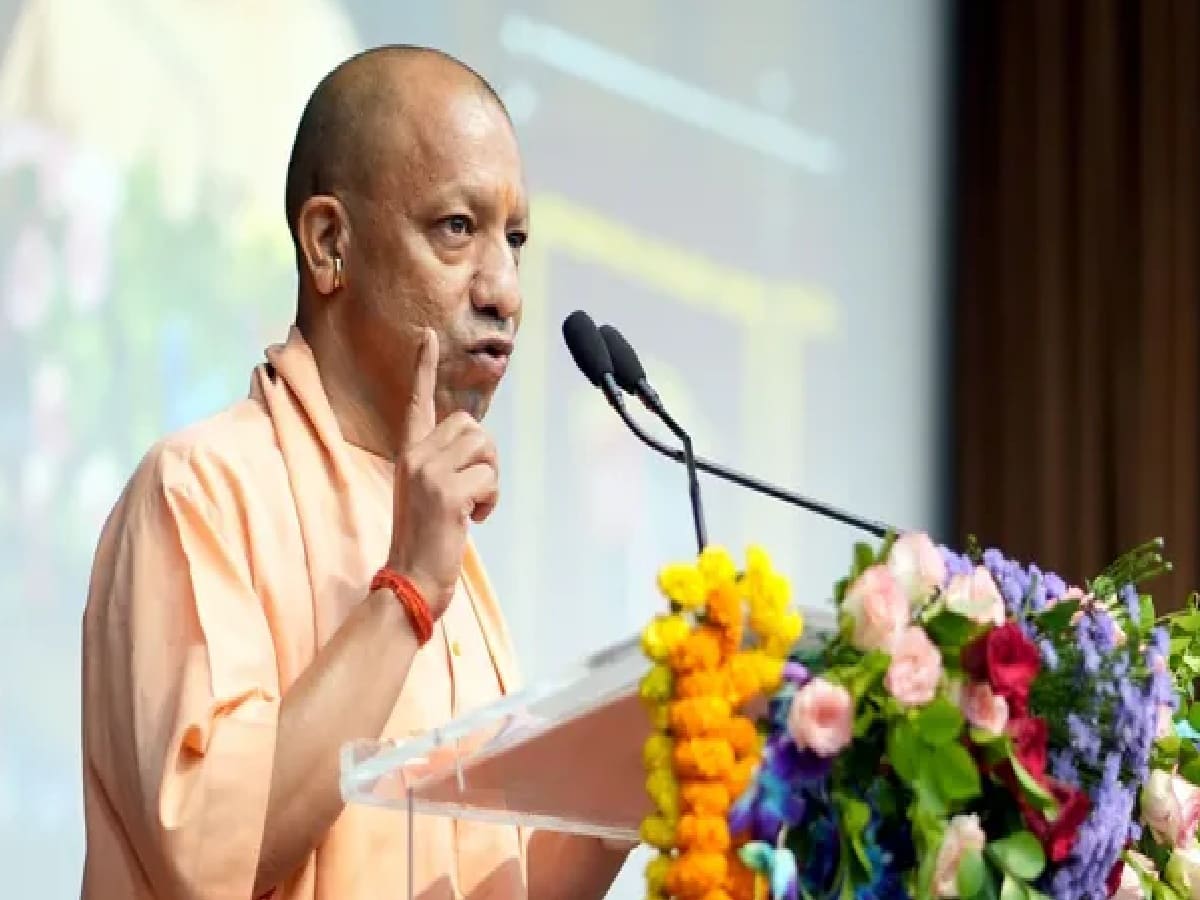
Constitution Pride Day in UP: 1.42 Cr Students Recite Preamble Together
When Uttar Pradesh Chief Minister Yogi Adityanath, dignitaries, and officials stood together at Lok Bhavan in Lucknow to recite the opening pledge of the Indian Constitution—"We, the People of India"—the moment resonated far beyond a formal state ceremony. Highlighted across governance, education, and civic desks on Friday, November 27, 2026, the observance of Constitution Day (Samvidhan Diwas / Constitution Pride Day) across Uttar Pradesh combined institutional tribute with unprecedented grassroots classroom participation. Parallel to the state-level function in Lucknow, where Chief Minister Yogi Adityanath administered a collective reading of the Preamble (Uddeshika) and launched beautification and preservation works under the Dr. B.R. Ambedkar Statue Development Scheme, an extraordinary civic exercise unfolded across 1.33 lakh government council (Parishadiya) schools statewide: 1.42 crore students stood alongside their teachers to recite the Preamble in unison and participate in educational workshops tracing the drafting of the Constitution and the contributions of Constituent Assembly members. Anchored in Babasaheb Dr. Bhimrao Ambedkar's foundational call to "Be Educated," the initiative links democratic awareness—justice, liberty, equality, and fraternity—with tangible classroom reforms, expanded composite school campuses, strengthened teacher welfare and Shikshamitra honorariums, and balanced instruction on both constitutional rights and Fundamental Duties (Article 51A) across Lucknow, Varanasi, Prayagraj, Gorakhpur, Ayodhya, Kanpur, and Agra.
Constitution Pride Day in Uttar Pradesh: School Participation, Education Reforms & Civic Schemes
To bring together the scale of student and school participation during Uttar Pradesh's Constitution Pride Day observance, the key school infrastructure and teacher-welfare reforms supporting constitutional access to education under Article 21A, and the heritage and civic initiatives launched from Lok Bhavan in Lucknow, the tables below organize verified figures and program highlights:
Statewide Constitution Day Participation & Lok Bhavan Initiatives (Nov 26–27, 2026)
| Initiative / Milestone | Verified Scale & Details | Civic & Educational Impact |
| Mass Preamble Recitation in Schools | 1.42 crore students across 1.33 lakh council schools in Uttar Pradesh collectively recited the Preamble of the Constitution alongside teachers. | Instills early familiarity with democratic ideals—justice, liberty, equality, and fraternity—as well as Fundamental Duties (Article 51A). |
| Creative Classroom & Legal-Literacy Activities | Students engaged in discussions, poster making, bookmarks, badges, and collages exploring the Constituent Assembly, Constitution framers, and civic responsibilities. | Moves constitutional learning beyond passive wall posters into active student comprehension and conduct. |
| Lok Bhavan Ceremony & Preamble Oath | CM Yogi Adityanath led the collective reading of the Preamble (Uddeshika Path) at Lok Bhavan, Lucknow, underscoring that sovereignty rests with India's citizens rather than any single family or group. | Reinforces constitutional supremacy, rule of law, and non-discriminatory delivery of public welfare. |
| Dr. B.R. Ambedkar Statue Development Scheme | Launched from Lok Bhavan with a ₹403 crore framework covering 4,030 identified sites statewide, commencing immediate beautification at 3,955 locations (canopies, boundary walls, CCTV, lighting, greenery, and informational boards). | Preserves public monuments dedicated to Dr. B.R. Ambedkar and social reformers while educating citizens on constitutional history. |
Education & Educator Reforms Advancing Constitutional Consciousness in UP
| Reform Area | Verified Data & Policy Measure | Ground-Level Impact for Families & Educators |
| Composite Schools Expansion (Article 21A) | Grown from 225 composite schools in 2017–18 to 24,605 in 2025–26, integrating kindergarten through Class 8 within single campuses. | Eliminates fragmented primary/upper-primary transitions and lowers dropout risks for children of farmers and daily-wage laborers. |
| School Modernization Drives | State-backed Operation Kayakalp and Project Alankar upgraded basic amenities, classrooms, sanitation, and campus infrastructure across council schools. | Creates dignified, safe learning spaces where nearly 1.5 crore council-school students study daily. |
| Shikshamitra & Instructor Honorariums | Announced in the Assembly in February 2026 (effective April 2026), raising Shikshamitra honorariums to ₹18,000 and instructors to ₹17,000 (up from earlier ₹3,000-era baselines). | Restores financial stability and professional dignity to educators serving rural and semi-urban schools. |
| Teacher Welfare & Digital Governance | Cashless medical coverage up to ₹5 lakh for teachers, structured training modules, and transparent Human Resource Portal administration. | Treats teachers as respected partners in nation-building rather than administrative cogs. |
Balancing Constitutional Rights With Citizen Duties in Public Education
Policy observers across Lucknow, Varanasi, Prayagraj, Gorakhpur, and Kanpur note that a central theme of Uttar Pradesh's Constitution Pride Day outreach is restoring balance between Fundamental Rights and Fundamental Duties (Article 51A). For decades, civic discourse often framed the Constitution purely as a ledger of state entitlements while overlooking citizens' shared responsibilities toward public property, social harmony, environmental stewardship, and national integrity—a gap that modern school curricula and statewide Preamble recitations aim to close early in a student's formative years.
What Students, Teachers, and Citizens Across Uttar Pradesh Can Expect Next
Following the statewide November 26 observance and the launch of the Dr. B.R. Ambedkar Statue Development Scheme, education departments and district administrations across Lucknow, Varanasi, Prayagraj, Gorakhpur, Ayodhya, Kanpur, and Agra will continue integrating constitutional literacy clubs, civic-duty modules, and heritage-site upgrades into regular academic and municipal calendars.




