







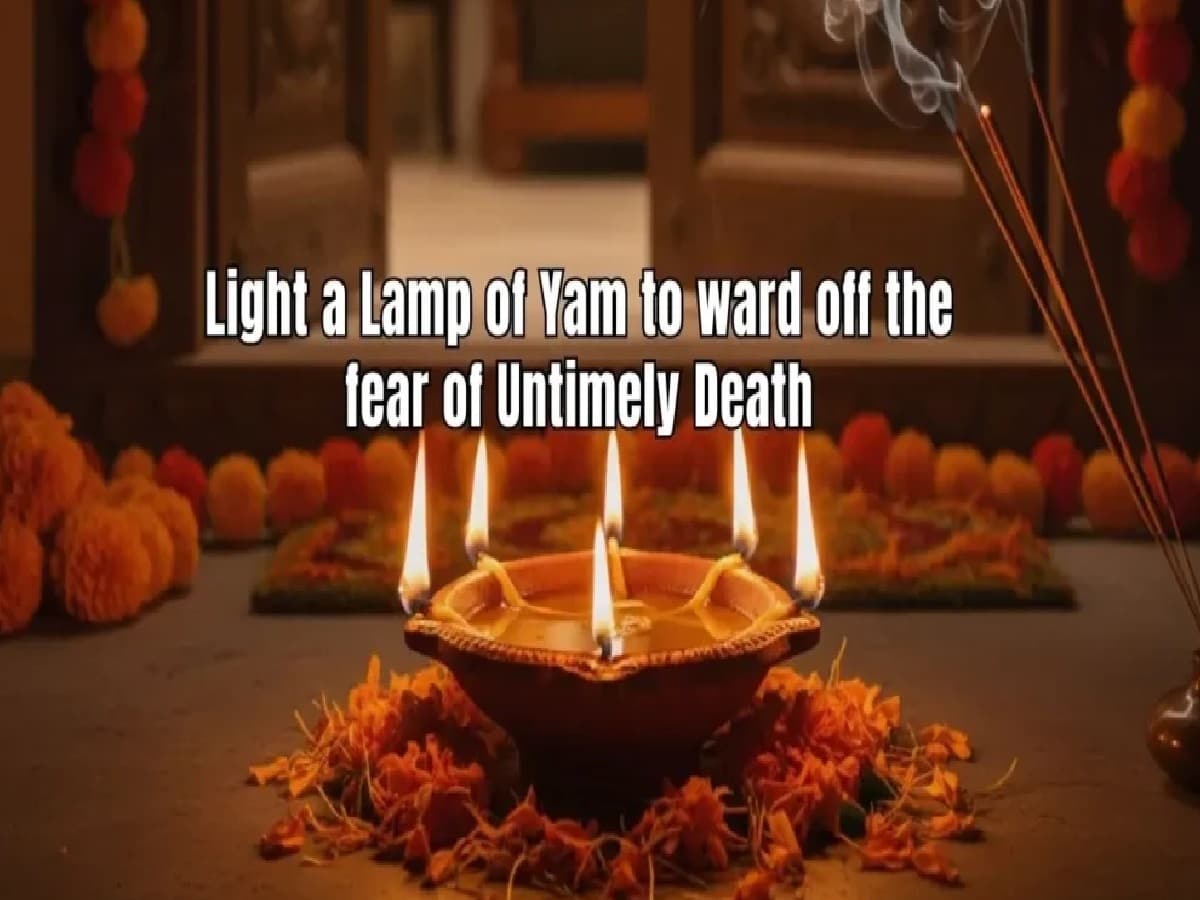
Yama Deepam 2026: Why a 4-Faced Diya Alone Won't Ward Off Untimely Death
During the sacred five-day festive window of Diwali—beginning with Dhanteras on Friday, November 6, 2026, and continuing through Narak Chaturdashi—millions of households across Indian cultural epicenters from Ujjain, Varanasi, and Mathura to Delhi-NCR and Mumbai perform the solemn dusk ritual of Yama Deepdaan to dispel the terrifying specter of untimely death (Akaal Mrityu) and invoke longevity for family members. Dedicated to Lord Yamaraj, the divine custodian of justice and mortality, this potent Vedic rite centers on illuminating a four-faced earthen lamp (Choumukhi Diya) at the southern threshold of the homestead. However, religious scholars and traditional practitioners caution that merely assembling a four-wick lamp does not fulfill scriptural protocols; according to Ujjain-based Vedic astrologer Pandit Manish Sharma, the ritual demands two indispensable conditions—the mandatory use of a previously used, aged clay lamp or unleavened wheat-flour dough lamp, and generous replenishment with pure mustard oil—without which the spiritual shielding against sudden demise and negative astral influences remains entirely incomplete.
The Old Diya and Mustard Oil Mandate: Aligning Energies with the South Direction
Explaining the precise mechanics of Yama Deepdan, Pandit Manish Sharma emphasizes that unlike the pristine, brand-new clay diyas reserved exclusively for Goddess Mahalakshmi and Lord Ganesha on Diwali night, the lamp offered to Yamaraj must deliberately be an older, previously lit puja lamp or a freshly hand-kneaded flour lamp (atta ka diya) to symbolize the release of accumulated karmic debt rather than fresh material acquisition. The four cotton wicks (battis) extending in the four cardinal directions must be placed in a deep reservoir of unadulterated mustard oil (sarson ka tel), whose fiery, pungent planetary resonance with Shani and Yama creates an intense energetic shield capable of neutralizing malefic energies. Placed firmly facing the southern quadrant—the cosmic direction traditionally governed by Yamaraj in Vedic cosmology—the burning lamp must be set with a heartfelt prayer dedicated to the God of Death, asking for the eradication of sudden terminal afflictions, severe accidents, and premature fatality among all household residents.
The Vital Post-Lighting Taboo: The Unforgiving Rule of Never Looking Back
Beyond the physical composition and directional alignment of the lamp, the most crucial scriptural injunction governing Yama Deepdaan concerns the physical retreat of the devotee immediately after the flame is set. Traditional lore dictates that once the four-faced mustard oil lamp is consecrated, ignited outside the main perimeter of the residence, and placed near the southern entryway or boundary drain, the person who lit it must walk directly back inside the living quarters without pausing or turning around to look back at the flame. Looking back is strictly considered an inauspicious breach of spiritual conduct, as esoteric texts warn that turning one's gaze backward symbolically invites the departed astral energies and lingering spirits of mortality to follow the devotee back into the domestic sanctuary. By maintaining strict outward focus and stepping inside without a single backward glance, the household seals its psychic boundaries, successfully appeasing Lord Yamaraj and securing divine blessings of unbroken vitality, robust health, and generational longevity throughout the auspicious Diwali season.




