Why Silver Utensils Are Sacred in Home Temples: Moon Connection, Health Benefits & Puja Significance
While brass and copper utensils remain staple fixtures across domestic prayer altars, classical Vedic traditions and family customs place the highest spiritual value on silver vessels when presenting sacred offerings. Despite being an expensive precious metal, silver (Chandi) holds unmatched reverence across Sanatan Dharma rituals, especially when serving pure water, daily Naivedya, or sacred Panchamrit to deities. Beyond its outward luster, ancient scriptures, astrological treatises, and classical Ayurveda celebrate silver as an exceptional metal that preserves ritual purity, calms planetary energies, and channels divine benevolence into the household.
The Astrological Link to the Moon: Inner Tranquility and Natural Antimicrobial Cooling
In Vedic astrology, silver is directly ruled by the Moon (Chandra), the celestial ruler of the subconscious mind, emotional equilibrium, mental clarity, and motherly affection. Astrological principles indicate that when water or consecrated prasad is offered to deities in pure silver bowls and subsequently consumed as charnamrit, it neutralizes planetary afflictions associated with a weak or agitated Moon, infusing the devotee's consciousness with peace, emotional resilience, and positive vibrations. Furthermore, silver possesses a naturally cool metaphysical and biological disposition (Sheetala guna). When sensitive offerings like milk, curd, desi ghee, honey, and raw sugar—the five core ingredients of Panchamrit—are kept in silver tableware, the metal's natural properties preserve freshness, prevent rapid bacterial spoilage, and retain ceremonial purity far longer than standard metals.
Essential Silver Utensils for Household Altars and Consecrated Rites
Devotees traditionally incorporate specific silver implements across daily prayer rituals to maximize spiritual merit:
-
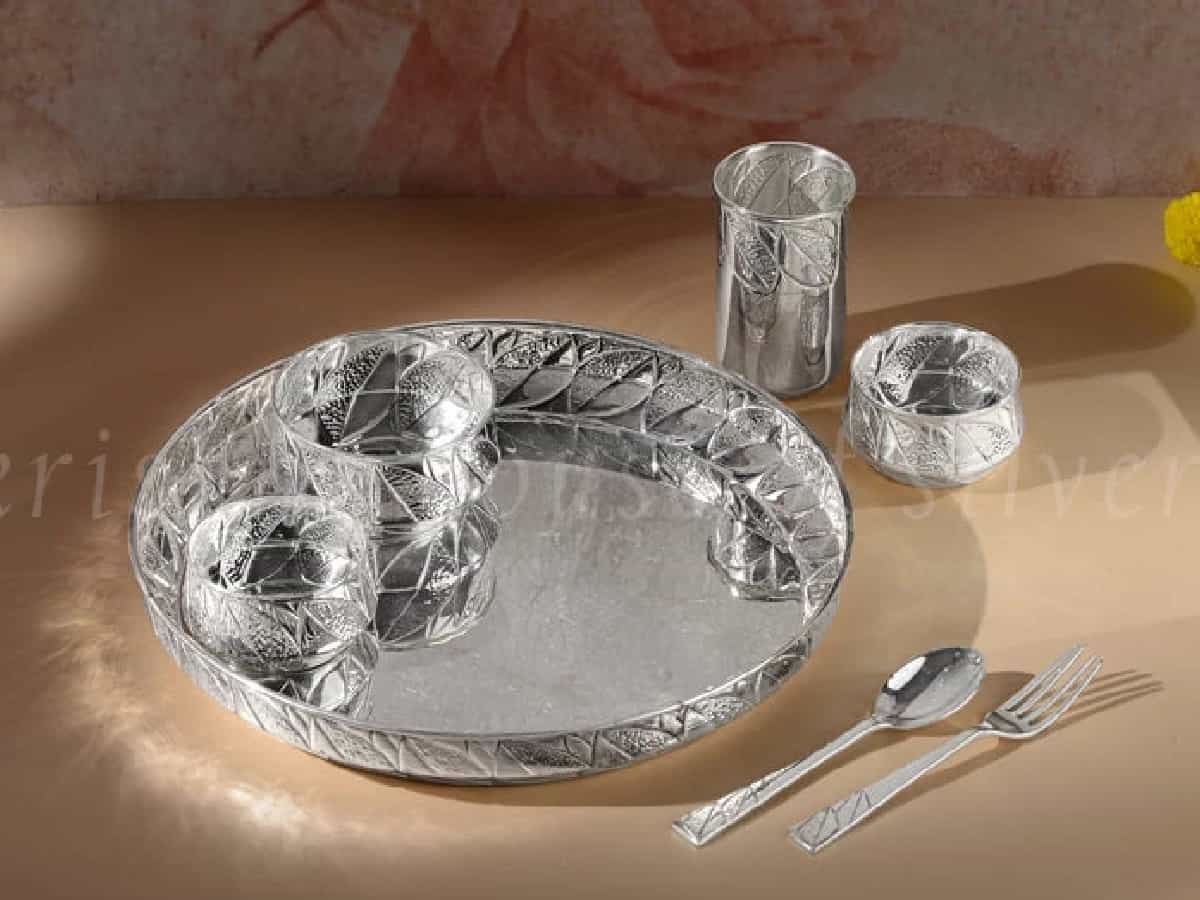
Silver Katori (Bowls): Used primarily for offering consecrated Naivedya, sweets, dry fruits, and the fivefold nectar (Panchamrit).
-
Silver Kalash and Lota: Employed for conducting ceremonial Jalabhishek over Shiva Lingams and Shaligrams, as well as preserving pure drinking water for the deities.
-
Silver Tumblers and Vessels: Dedicated to holding potable sacred water and Gangajal.
-
Small Silver Thali (Plates): Designed for keeping powdered roli, vermilion, aromatic sandalwood paste, and unbroken Akshat grains neatly partitioned during rituals.
-
Panchpatra and Achamani: The ritual silver pot and spoon used for performing personal purification (Achamana) and offering sacred water during invocations.
-
Silver Diya and Ghanta: Anointed silver oil lamps and hand bells that emit pure spiritual frequencies during morning and evening aartis.
Scriptural and Ayurvedic Wisdom: Pleasing Goddess Lakshmi and Boosting Vitality
The integration of silver into ritual life finds strong support across classical medicine and scriptural lore. In Ayurveda, silver is categorized as a healing element endowed with rejuvenating, anti-inflammatory, and detoxifying properties that dispel physical heat and bolster systemic immunity when water stored in it is regularly consumed. From a scriptural standpoint, silver is regarded as an exceptionally pure metal born of divine grace, with Puranic texts affirming that presenting food offerings (Bhog) in unblemished silver vessels pleases Goddess Mahalakshmi, attracting financial stability, domestic harmony, and enduring prosperity to the household.