Why Sanjhi Mata Is Sculpted on Walls with Clay & Cow Dung Across North India During Navratri
Alongside the classical temple rituals and scriptural chanting of Sharadiya Navratri, a vibrant, centuries-old indigenous folk art form comes alive across rural and semi-urban homesteads in North India. Dedicated to the worship of Sanjhi Mata, this living folk heritage features women and unmarried girls hand-crafting intricate, bas-relief murals of the Divine Mother on household mud walls using pure clay, fresh cow dung, natural color pigments, and wild blossoms. Celebrated as an intimate rural manifestation of Goddess Durga, Sanjhi Mata is warmly welcomed as a loving divine guest whose nine-day presence is believed to bestow marital harmony, prosperity, and household fertility across generations.
Wall Murals of Faith: The Sacred Crafting of Sanjhi Mata
The artistic and devotional process of creating Sanjhi Mata reflects ancient agrarian relationships with the natural environment:
-
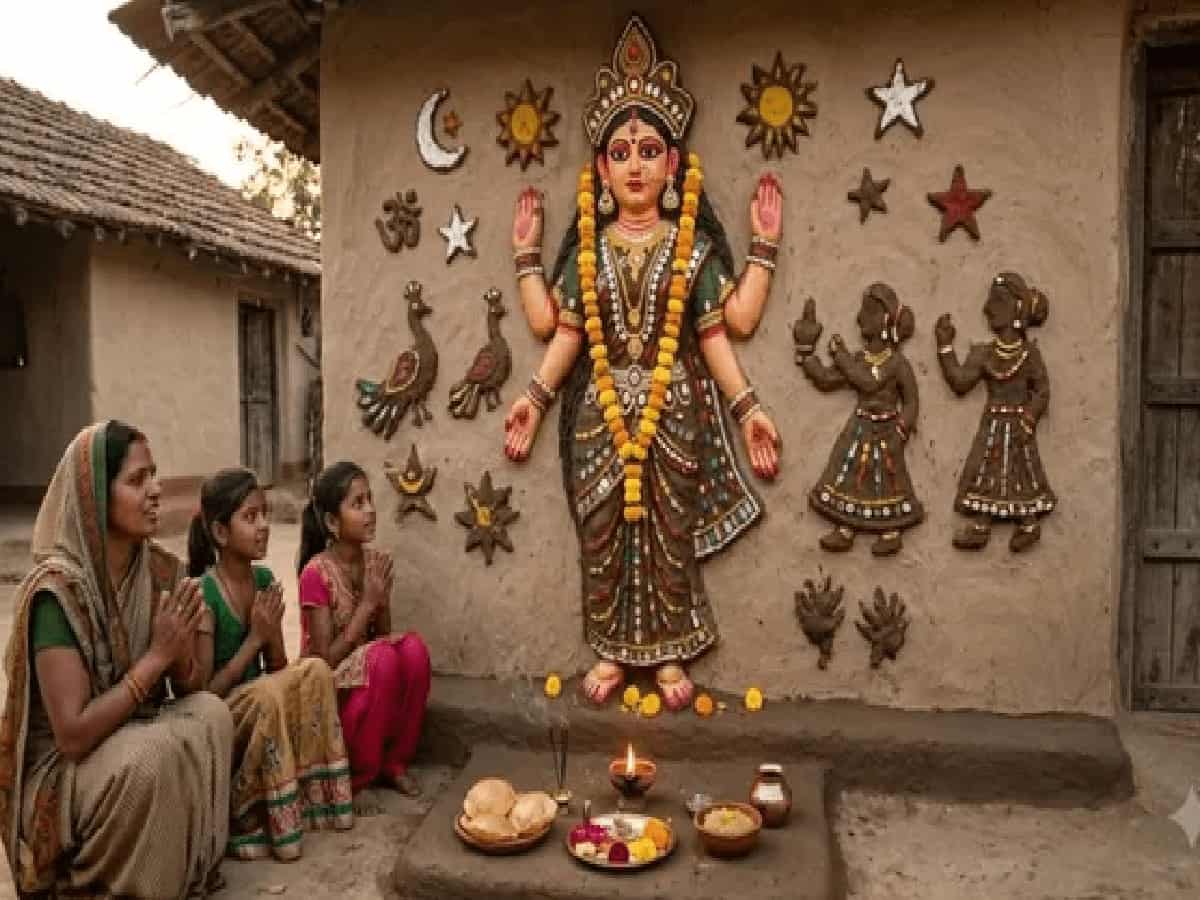
Sacred Organic Materials: Unmarried maidens and matriarchs gather fresh cow dung (gobar) and fine clay to hand-mold intricate geometric relief figures directly onto the freshly whitewashed or plastered exterior walls of their homes.
-
Intricate Decorative Motifs: The central feminine effigy of Sanjhi Mata is adorned with elaborate handmade ornaments, stars, sun motifs, domestic animals, floral borders, and vibrant garments fashioned using natural earth pigments, chalk, dried seeds, and forest flowers.
-
Embodiment of Goddess Durga: Local folk theology reveres Sanjhi Mata as an accessible, localized manifestation of Maa Durga, welcoming the supreme cosmic mother into everyday domestic life during her nine-day stay on Earth.
Geographical Footprint: Where the Folk Tradition Flourishes
The festive tradition of Sanjhi Mata remains deeply rooted across vast agricultural heartlands of North and Central India:
-
Regional Epicenters: The ritual wall-painting tradition is practiced across Haryana, Punjab, Rajasthan, Madhya Pradesh, the Braj region, and Western Uttar Pradesh.
-
Community Folk Evenings: Every twilight during the nine nights of Navratri, village women and girls gather in domestic courtyards to light earthen lamps (diyas), perform communal aarti, and sing generational Sanjhi folk songs that narrate divine legends and rural domestic tales.
-
Boon for Matrimonial Bliss: Young unmarried girls maintain daily offerings and devotional songs before the mural, guided by the traditional belief that honoring Sanjhi Mata grants an ideal life partner, removes obstacles in marriage, and ensures lifelong domestic prosperity.
The Farewell Ritual: Ceremonial Immersion on Dussehra
The vibrant artistic lifecycle of Sanjhi Mata concludes in tune with the rhythm of the Navratri festival:
-
Nine Days of Devotional Care: The clay-and-dung artwork remains enshrined on household walls through the entire nine days of Navratri, receiving daily fresh flowers and evening lamps.
-
Ceremonial Removal: On Vijayadashami (Dussehra) or the concluding day of Navratri, families gather for a final prayer before carefully taking down the sacred figures from the walls.
-
Visarjan in Sacred Waters: The clay and organic elements are ceremonially carried in decorated baskets and immersed (visarjan) into local rivers, lakes, or village ponds, completing the cyclical return of the Divine Mother to nature until the following autumn.