Why Cleaning Your Home After A Lunar Eclipse Is Crucial: Exploring The Religious Significance And Astrological Secrets
Celestial events have always held a profound place in Hindu mythology and Vedic traditions, often accompanied by strict rituals, taboos, and purification practices. As the second and final lunar eclipse of the year approaches on August 28, coinciding with the auspicious festival of Raksha Bandhan, households are preparing to observe time-honored traditions. While this particular celestial phenomenon will not be visible in India—rendering the restrictive Sutak period invalid—the spiritual protocols regarding post-eclipse house cleaning and purification continue to spark deep curiosity and reverence.
Timing and Visibility of the August 28 Lunar Eclipse
According to the Vedic calendar, Raksha Bandhan will be celebrated on August 28, marking a rare convergence with a lunar eclipse. Indian Standard Time (IST) calculations indicate that the eclipse will begin at 6:53 AM and conclude by 12:31 PM. Because the celestial alignment will remain invisible from Indian soil, local residents are exempt from observing the traditional Sutak restrictions that typically prohibit cooking, eating, and entering temples. Nevertheless, understanding the spiritual essence behind post-eclipse purification remains a cornerstone of Vedic lifestyle practices.
The Spiritual Secret: Dispelling Negative Energy and Purifying Living Spaces
According to sacred scriptures and traditional beliefs, celestial events like a Chandra Grahan cause subtle energetic shifts, temporarily increasing the density of negative energies on Earth. To neutralize these heavy vibrational influences once the eclipse ends, spiritual guidelines recommend taking a purifying bath—ideally infused with sacred Ganges water.
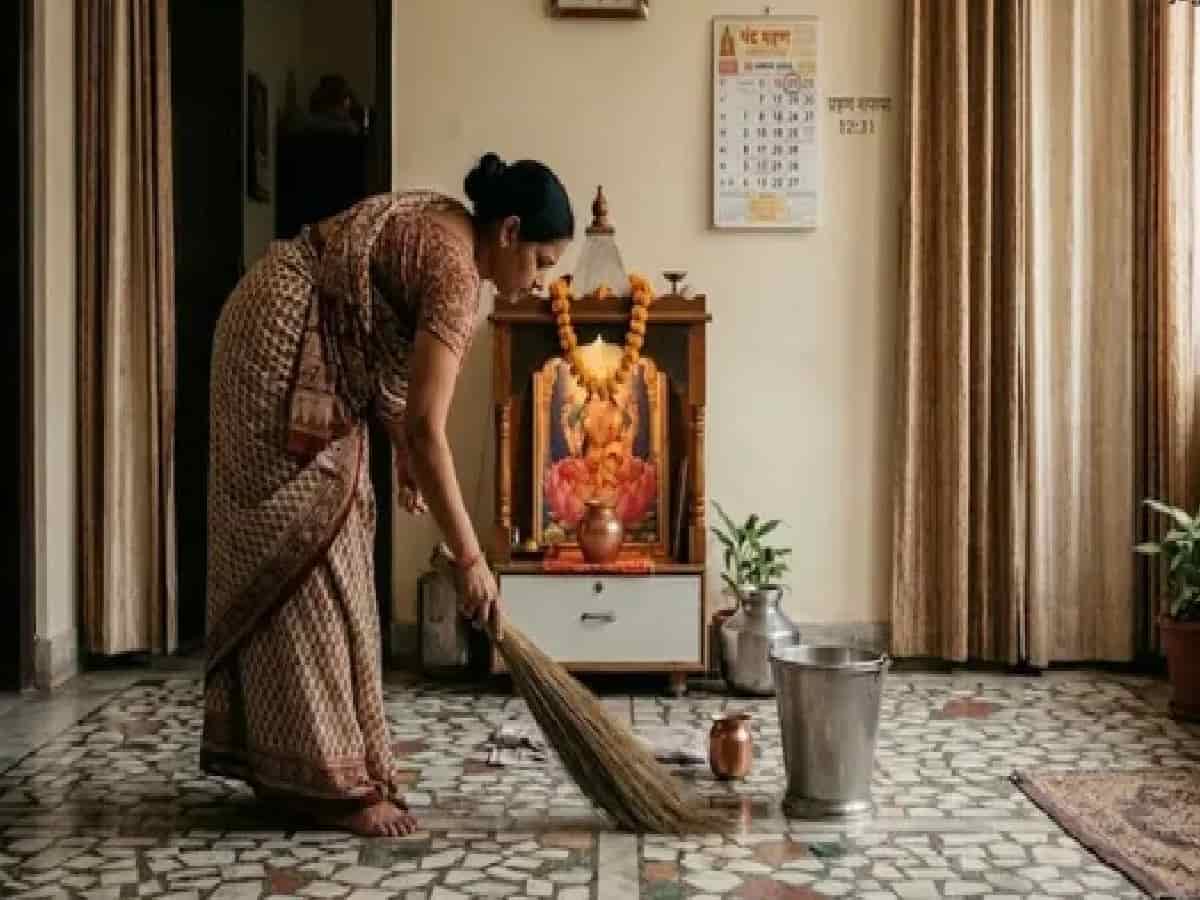
Following personal cleansing, families traditionally undertake a thorough cleaning of their homes and home shrines. Sprinkling Ganga water across all rooms is believed to flush out residual negativity and invite auspicious, positive vibrations back into the living space. Only after this rigorous purification process is completed do families resume regular worship, light lamps, and engage in charitable donations.
Protection of Deities and Guidelines for Food Consumption
During traditional eclipse windows, temple doors are customarily closed to shield sacred idols from energetic fluctuations, and food items unprotected by basil (Tulsi) leaves are avoided due to susceptibility to energetic contamination. While the upcoming eclipse on Raksha Bandhan is invisible in India, maintaining traditional cleanliness, honoring purity rites, and upholding mental mindfulness continue to offer devotees a sense of spiritual alignment, peace, and divine protection.