







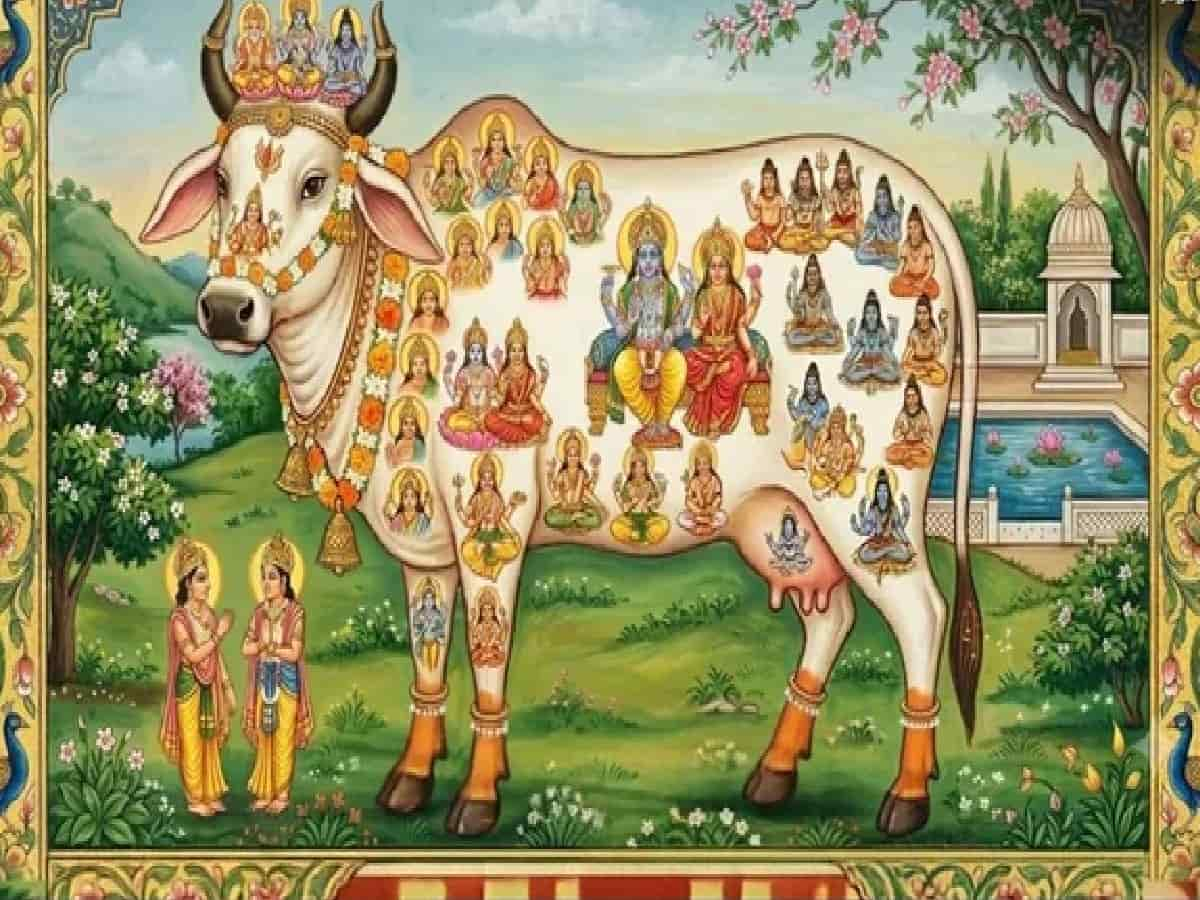
Which Gods Reside in Each Part of a Cow's Body, Hindu Beliefs
In Hindu tradition and Sanatana Dharma, the cow—affectionately revered as Gau Mata—is far more than a gentle domestic animal; she is honored as a universal mother and a living embodiment of the cosmos. Because sacred scriptures affirm that all celestial powers dwell within her physical form, the cow is known in Sanskrit as Sarvadevamayi, meaning "she who encompasses all gods and goddesses." Across spiritual centers and households from Varanasi, Mathura-Vrindavan, and Ayodhya to Haridwar, Ujjain, New Delhi, and Lucknow, caring for and worshiping cows is regarded as one of the purest pathways to spiritual merit (punya). Devotees believe that serving a cow with devotion invites the collective grace of the entire Hindu pantheon. According to ancient Puranic lore, either 33 crore (330 million) or 36 crore (360 million) deities reside within the cow’s body—a sacred concept rooted in classical Vedic scholarship, where the Sanskrit phrase Trayastrimshat Koti also refers to the 33 supreme classes of deities governing the universe.
Scriptural Roots: Why Gau Mata Is Called 'Sarvadevamayi' in the Puranas
The belief that the entire celestial realm inhabits the cow’s body is not merely folklore; it is documented in detail within classical Hindu scriptures. Most notably, Chapter 48 of the Srishti Khand of the Padma Purana presents an elaborate spiritual map describing which deities, sacred rivers, Vedas, and cosmic forces reside in specific limbs and parts of the cow. Similarly, the Anushasana Parva of the Mahabharata devotes extensive verses to the glory of Gau Seva (cow service), explaining how protecting and nourishing cows purifies negative karma and brings household harmony.
In Vedic philosophy, the cow represents selfless generosity—consuming simple grass and water while yielding milk, ghee, curd, and natural nourishment that sustain human life and sacred yajnas (fire rituals). By recognizing divine presence across every part of her anatomy, Hindu tradition elevates everyday compassion toward animals into an act of direct worship.
Deities Residing in the Cow's Mouth, Horns, Head, and Eyes
According to the Padma Purana and living spiritual traditions, the upper and facial features of the cow house the foundational pillars of Vedic wisdom and the supreme Hindu Trinity. The mouth of the cow is believed to be the sacred abode of all four Vedas—the Rigveda, Yajurveda, Samaveda, and Atharvaveda—symbolizing eternal truth and sacred sound. Rising above the head, the base and body of the cow’s horns are revered as the dwelling place of Lord Brahma (the Creator), Lord Vishnu (the Preserver), and Lord Mahadev or Shiva (the Transformer). At the very tips or front of the horns reside Lord Indra, the king of the heavens, alongside all sacred pilgrimage sites (Tirthas).
Moving to the head of the cow, scriptures state that Lord Brahma and Lord Shiva preside there together, while Goddess Gauri (Parvati) and Lord Rudra dwell upon the cow’s forehead. Equally auspicious are the cow’s eyes, which are believed to house Surya (the Sun God) and Chandra (the Moon God)—the twin cosmic luminaries that illuminate day and night. For this reason, beholding a cow first thing in the morning (Gau Darshan) is considered deeply fortunate in Hindu households.
Sacred Presence in the Ears, Teeth, Tongue, Nose, and Abdomen
Scriptural descriptions extend further into the sensory organs and internal frame of the cow, linking each part with specific Vedic guardians. The ears of the cow are believed to be the abode of the Ashwini Kumars, the celestial twin physicians renowned in the Vedas for healing and vitality. Inside the mouth, the teeth house the Eight Vasus (Ashta Vasus)—elemental deities representing earth, water, fire, air, sky, sun, moon, and stars—alongside Garuda, the mighty divine mount of Lord Vishnu.
The tongue of the cow is revered as the seat of Goddess Saraswati, the deity of learning, speech, and wisdom, as well as Lord Varuna, the presiding deity of cosmic waters and moral order—reinforcing the cow’s association with purity and knowledge. Meanwhile, the nose of the cow is said to shelter Lord Kartikeya (Skanda) and the Nagas (serpent deities). Below, the abdomen or stomach of the cow is believed to hold Lord Kartikeya together with the entire Earth (Prithvi), symbolizing that Gau Mata carries and nurtures the whole world within herself.
Gods and Sages in the Back, Body Hair, Tail, and Hooves
Across the torso and limbs, sacred texts identify protectors of cosmic justice, ascetic wisdom, and devotion. The back of the cow is considered the abode of Lord Yamaraj, the deity of dharma and righteous law, accompanied by the Eleven Rudras (Ekadasha Rudras). Remarkably, every single hair follicle (romakupa) across the cow’s body is believed to serve as the dwelling place of all Rishis and Munis (enlightened sages) as well as the 33 crore (or 36 crore) gods and goddesses, explaining why gently stroking a cow’s back is regarded as receiving the blessings of countless saints and deities at once.
At the rear, the tail of the cow is revered as the abode of Lord Hanuman, the mighty son of Vayu (the wind god) and symbol of unwavering devotion. Down below, the Gandharvas (celestial musicians) are believed to reside between the cow’s hooves, while serpent deities dwell at the front of the hooves. Even the dust kicked up by a cow’s feet (Gau-dhuli) is held in high spiritual esteem, believed to carry the purifying sanctity of every holy river and pilgrimage shrine across India.
Spiritual Significance of Cow Dung, Cow Urine, and Gau Seva
Beyond her physical limbs, Hindu scripture accords profound sanctity to the natural byproducts of the cow, known collectively within Panchagavya. According to religious belief, cow urine (Gomutra) is considered the sacred abode of Goddess Ganga and Goddess Bhavani, while cow dung (Gomaya) is revered as the dwelling place of Goddess Lakshmi (the deity of wealth, abundance, and auspiciousness) and Goddess Yamuna. Because of these divine associations, cow dung and Panchagavya have been used for centuries in Vedic havans, temple rituals, and traditional household purification ceremonies.
Ultimately, scriptures emphasize that recognizing the divine within Gau Mata should inspire tangible kindness and stewardship. Serving cows by offering fresh green fodder (hara chara), clean drinking water, shelter, and medical care—especially during sacred lunar observances and festivals—is celebrated across texts like the Mahabharata and Padma Purana as an act that brings peace, prosperity, and spiritual fulfillment to the entire family.
Complete Guide: Which Deity Resides in Each Part of the Cow's Body
| Part of the Cow's Body | Residing Deities / Sacred Entities (As Per Hindu Belief) |
| Mouth | All Four Vedas (Rigveda, Yajurveda, Samaveda, Atharvaveda) |
| Horns (Base & Tips) | Lord Brahma, Lord Vishnu, Lord Shiva (base); Lord Indra & sacred pilgrimage sites (tips) |
| Head & Forehead | Lord Brahma and Lord Shiva (head); Goddess Gauri and Lord Rudra (forehead) |
| Eyes | Surya (Sun God) and Chandra (Moon God) |
| Ears | Ashwini Kumars (celestial twin physicians) |
| Teeth | Eight Vasus (Ashta Vasus) and Garuda |
| Tongue | Goddess Saraswati and Lord Varuna |
| Nose | Lord Kartikeya and Serpent Deities (Nagas) |
| Abdomen / Stomach | Lord Kartikeya and Mother Earth (Prithvi) |
| Back | Lord Yamaraj and the Eleven Rudras (Ekadasha Rudras) |
| Body Hair Follicles | All Sages (Rishis-Munis) and 33 Crore / 36 Crore Gods and Goddesses |
| Tail | Lord Hanuman |
| Hooves & Foot Dust | Gandharvas (between hooves), Serpent Deities (front), and all pilgrimage sites (dust) |
| Cow Urine & Cow Dung | Goddess Ganga & Bhavani (urine); Goddess Lakshmi & Yamuna (dung) |




