







The Sacred Secret Behind Lord Hanuman’s Infinite Glory in the Hanuman Chalisa
Composed by the revered saint-poet Goswami Tulsidas, the Hanuman Chalisa remains one of the most chanted and spiritually potent devotional hymns in the world, encapsulating the boundless valour, unmatched intellect, and absolute surrender of Bajrangbali. While millions chant its forty verses daily for spiritual fortitude and protection, classical scholars and Vedic commentators often turn to two foundational chaupais that illuminate the true nature of divine greatness. These verses not only illustrate why the greatest cosmic custodians of wealth, justice, and knowledge fail to comprehend Hanuman’s divine stature, but also showcase how the mighty warrior leveraged his supreme intellect to broker alliances, defeat tyranny, and uplift those living in fear.
Beyond Celestial Comprehension: Why Yama, Kubera, and the Digpals Fall Short
In the evocative quatrain “Jam Kuber Digpal Jahan Te, Kabi Kobid Kahi Sake Kahan Te,” Tulsidas underscores that even celestial rulers and the most erudite minds across the universe cannot fully capture the dimensions of Hanuman’s majesty. Yama, the formidable deity of justice and cosmic law, and Kubera, the sovereign guardian of heaven's treasures and the north direction, command immense universal authority, yet their power remains anchored within the material and cosmic hierarchies. Flanked by the Digpals—the eight divine regents who guard the cardinal and intercardinal compass directions—alongside celebrated poets, seers, and cosmic scholars (Kabi Kobid), their descriptive faculties fall silent before Hanuman. The sacred secret behind this reverence lies in the unique synthesis of omnipotent strength and absolute humility: while worldly entities often wield power for self-glorification, Hanuman’s infinite prowess is entirely purged of ego, consecrated perpetually at the lotus feet of Lord Rama in selfless servitude.
The Diplomat and Kingmaker: How Wisdom and Humility Restored Sugriva’s Royal Dignity
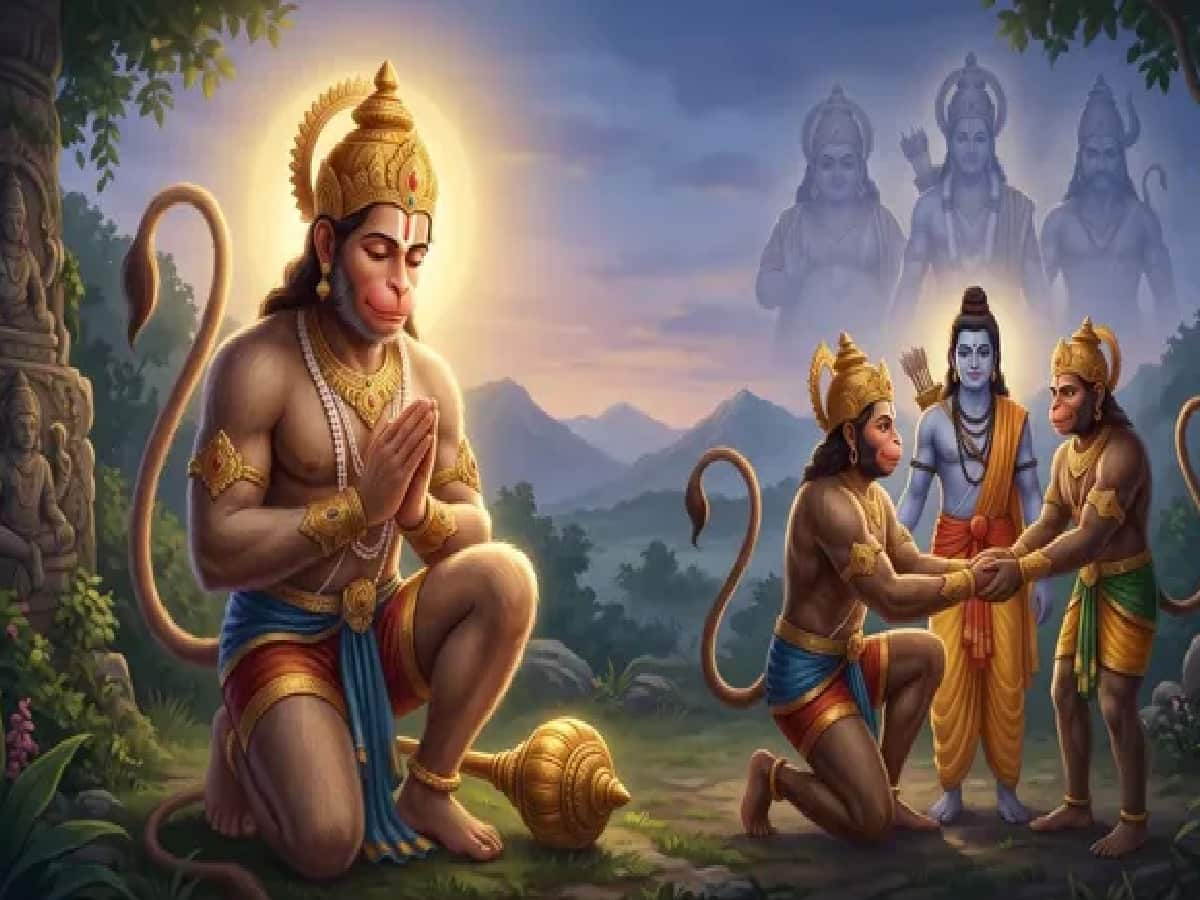
Hanuman's spiritual stature is further demonstrated in his selfless actions during the Kishkindha Kanda, immortalized in the verse “Tum Upkar Sugreevahin Keenha, Ram Milaye Rajpad Deenha.” When the Vanara prince Sugriva was driven out of his kingdom by his brother Vali and forced to live in constant dread on Mount Rishyamukha, it was Hanuman’s sharp discernment that recognized the divine advent of Lord Rama and Lakshmana. Acting not as an intimidating warrior, but as a wise mediator, Hanuman disguised himself as a mendicant, initiated a peaceful dialogue, and forged the sacred alliance in the presence of the holy fire that ultimately vanquished adharma and restored Sugriva to the throne of Kishkindha. This pivotal episode illustrates that true greatness does not lie in brute physical dominance or seeking supreme titles for oneself, but in applying boundless strength, strategic diplomacy, and wisdom to protect the vulnerable and establish dharma across the world.




