







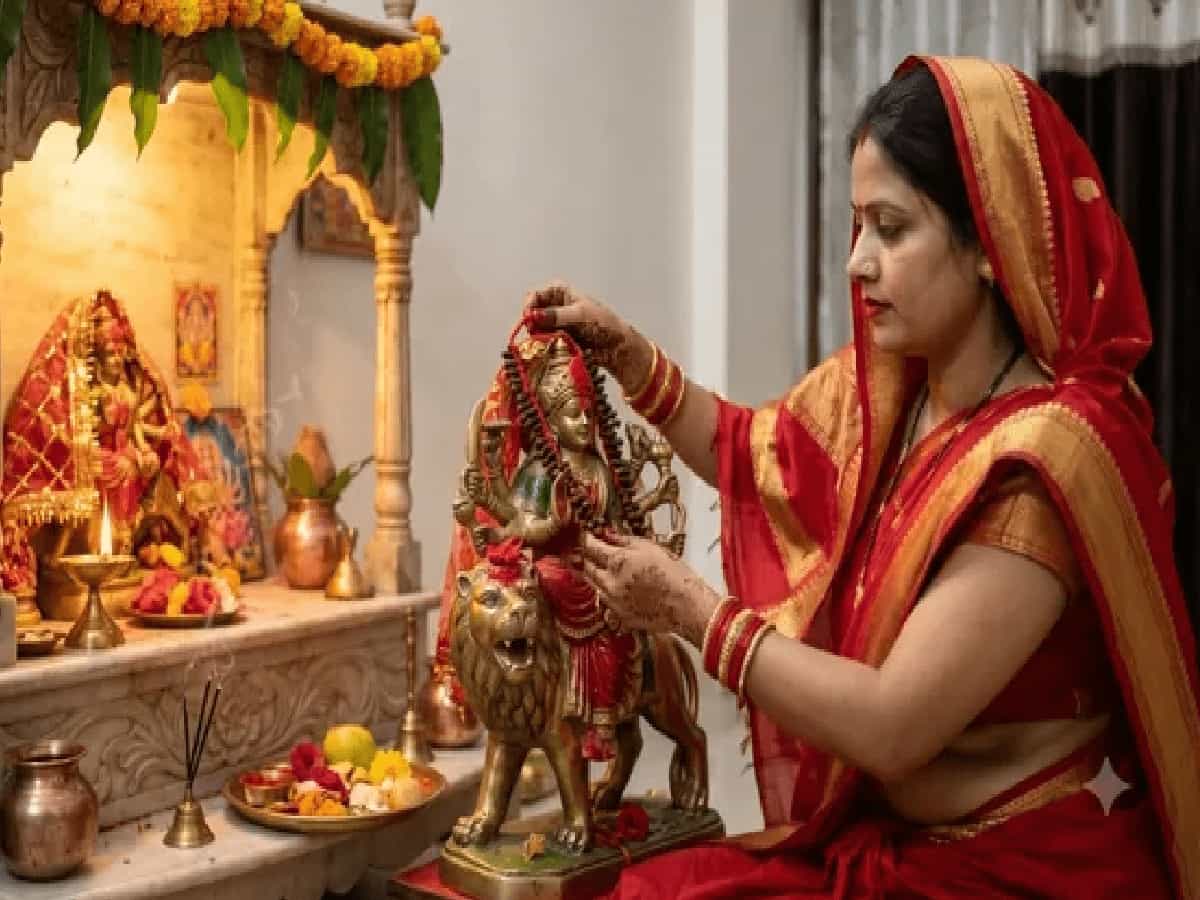
Shardiya Navratri Ritual: Why Devotees Offer a Garland of 108 Cloves
During the sacred nine nights of Shardiya Navratri, millions of devotees perform traditional rites to invoke the divine blessings of Goddess Durga, seeking spiritual strength, inner balance, and household prosperity. While common devotional offerings include crimson flowers (hibiscus), sacred coconuts, and red chunris, an age-old ritual holds a special place in Vedic rituals: the offering of a garland strung with exactly 108 fragrant cloves (laung). Deeply rooted in scriptural tradition, this spiritual practice is believed to act as an energy cleanser that absorbs lingering negative vibrations, shields families from adverse influences, and paves the way for financial stability and fulfilled prayers.
The Mystical Significance: Sacred Power of the Number 108 and Clove Aroma
In Sanatan Dharma, both the cosmic number 108 and natural whole cloves carry profound metaphysical relevance:
-
Cosmic Resonance of 108: The number 108 represents spiritual completeness, reflecting the mathematical distance between cosmic bodies, the 108 Upanishads, and the sacred count of mantra japa repetitions across meditation traditions. Strung into an offering, it symbolizes unreserved devotion and complete mental surrender at the feet of the Divine Mother.
-
Natural Negativity Shield: Aromatic whole cloves contain powerful essential oils that have long been valued in havan and yajna ceremonies. Traditional beliefs hold that the pungent aroma traps and neutralizes dense, negative vibrations, leaving behind an environment charged with clarity and positive energy.
-
Relief From Financial and Material Hurdles: Because Goddess Durga is revered as the ultimate source of Shakti, Lakshmi, and auspicious abundance, presenting this garland with pure intent is seen as a way to remove chronic obstacles in business, clear mounting debts, and invite sustained prosperity into the home.
Step-by-Step Puja Vidhi: How to Properly Prepare and Present the 108 Clove Garland
To ensure the sacred ritual retains its intended spiritual benefit, scriptures outline precise preparation guidelines:
-
Selecting Intact Cloves: Collect 108 clean, unbroken cloves. The head of each clove (the crown or flower bud) must be completely intact, as damaged or headless cloves are strictly avoided in Vedic offerings.
-
Stringing With Red Thread: Thread the 108 whole cloves carefully using sacred red thread (moli or kalawa), maintaining pure thoughts and chanting the name of Goddess Durga throughout the preparation.
-
Sanctifying the Altar: Thoroughly clean the worship space, place a clean cloth on the altar, and ignite a ghee or mustard oil lamp before the idol or image of Maa Durga.
-
Devotional Offering and Dhyana: Present fresh red flowers, vermilion (roli), and traditional sacred items, then gently place the garland of 108 cloves around the deity or at her feet while performing silent dhyana (focused meditation).
-
Concluding Mantras: Recite the Durga Chalisa or chant the sacred Navarna Mantra (Om Aim Hreem Kleem Chamundayai Vichche), concluding with an earnest prayer for family harmony, well-being, and liberation from distress.
Most Auspicious Timing: Why Ashtami and Navami Are Preferred Days
While this sacred remedy can be performed on any auspicious evening during Navratri, scriptural customs highlight two specific tithis for maximum spiritual potency:
-
Maha Ashtami and Maha Navami: The eighth and ninth lunar days represent the culmination of Goddess Durga's triumph over demonic forces. Performing the 108-clove garland ritual on either Ashtami (the day of Maa Mahagauri) or Navami (the day of Maa Siddhidatri) is believed to amplify the benefits of the prayers manifold.




