







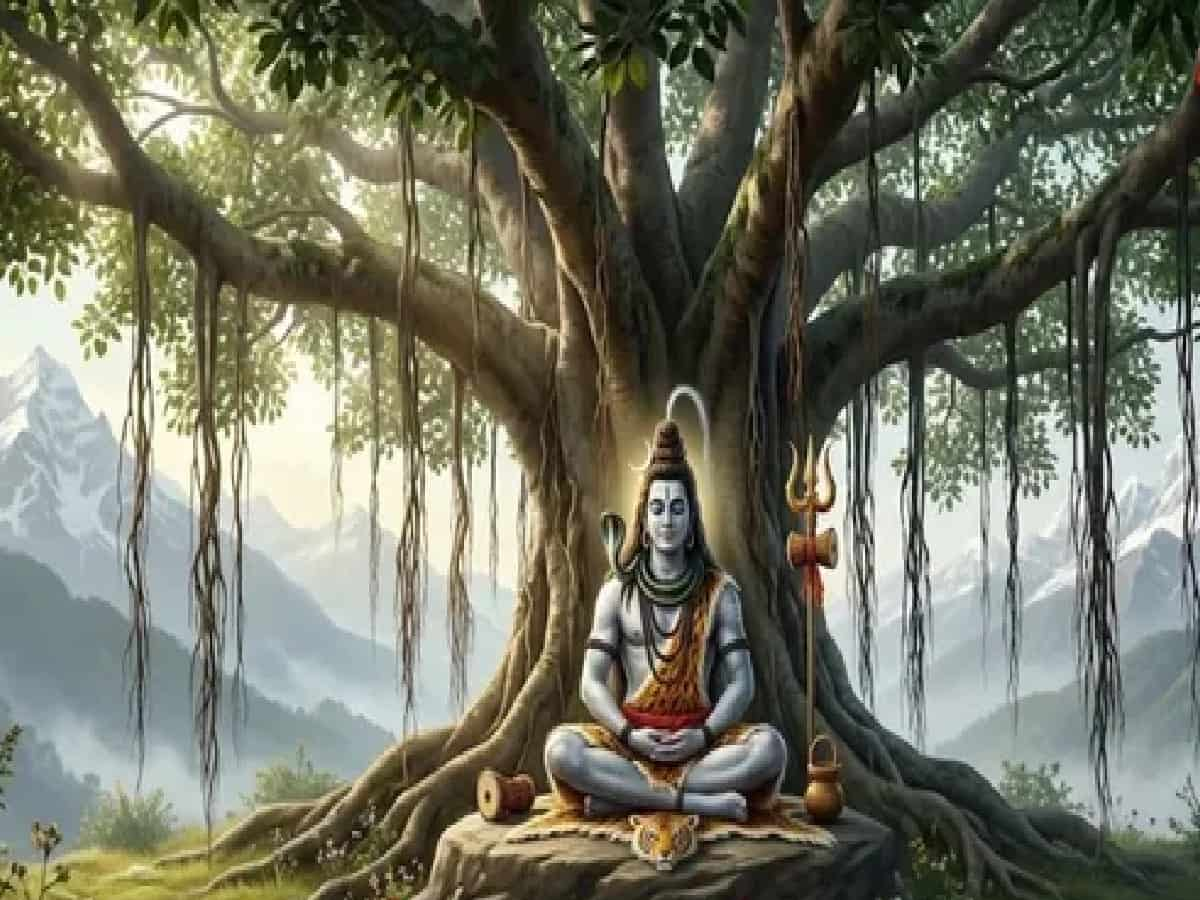
Sacred Roots: The Mythological Linking Lord Shiva to the Immortal Banyan Tree
Holding an esteemed sanctuary within Vedic botany and Sanatana Dharma, the majestic banyan tree (Vat Vriksha) has been revered for millennia as a living monument of longevity, stability, divine knowledge, and eternal existence. Beyond its environmental grandeur across Indian landscapes and temple courtyards, sacred scriptures delineate an intimate metaphysical bond connecting this sprawling tree directly to Mahadev. According to detailed scriptural expositions found in Chapter 115 of the Uttara Khanda of the Padma Purana, the banyan is not merely an earthly arboreal giant, but a tangible manifestation of cosmic divinity resulting from ancient celestial events, leading millions of devotees and spiritual seekers to perform specialized rituals beneath its dense canopy to invoke the grace of Lord Shiva.
Padma Purana and Parvati's Curse: How the Holy Trinity Manifested as Sacred Trees
The sacred origin story chronicled in the Padma Purana traces back to an ancient celestial moment of intimacy between Lord Shiva and Goddess Parvati. According to scriptural lore, while the divine couple was secluded in sacred solitude, Agni Deva (the Fire God) breached protocol and disturbed their privacy disguised as an ascetic Brahmin. Enraged by this unannounced intrusion, the Divine Mother pronounced a formidable curse, declaring that the celestial deities would descend to the mortal terrestrial realm in the form of flora. Under this divine ordinance, the sacred Trideva (Holy Trinity) manifested as three fundamental holy trees on Earth: Lord Vishnu assumed the form of the sacred Peepal tree (Ashwattha), Lord Brahma embodied the flame-blossomed Palash tree, and Lord Shiva manifested as the immortal Vat Vriksha. Because of this spiritual transformation, Sanatana traditions revere the banyan tree as an absolute physical personification and living altar of Lord Shiva.
The Mystery of Akshayavat: Eternal Aerial Roots and the Wisdom of Lord Dakshinamurti
Beyond its scriptural genesis, the unique botanical structure of the banyan tree directly mirrors the transcendent nature of Mahadev, earning it the sacred title of Akshayavat (the imperishable tree). The expansive tree extends massive aerial prop roots from its high branches into the earth, which anchor themselves into the soil to form sturdy new trunks, allowing a single tree to renew itself endlessly across centuries and even millennia. This cyclical immortality and boundless expansion reflect Lord Shiva's primordial nature as Anadi (without beginning) and Ananta (without end). Furthermore, meditating or performing Rudrabhishek under the banyan tree holds immense spiritual significance due to Shiva’s revered Dakshinamurti manifestation—the south-facing primordial Guru who sat in profound, silent communion beneath the sacred banyan tree to transmit the ultimate Brahma-Jnana (supreme cosmic truth) to the ancient Sanatkumara sages. Performing devotional offerings under the banyan is therefore regarded by spiritual masters as a direct conduit for clearing mental turbulence, eradicating ignorance, and receiving boundless intellectual clarity and spiritual enlightenment.




