Panchbali Ritual in Pitru Paksha: Why Ancestral Peace Hinges on These 5 Sacred Offerings
The annual observance of Pitru Paksha—commencing on Bhadrapada Purnima and culminating on the sacred day of Sarva Pitru Amavasya—represents a critical sixteen-day spiritual period in Sanatan Dharma dedicated to honoring departed forebears. Across these two weeks, families perform Tarpan water offerings and formal Shraddha rites to grant peace to wandering souls and secure ancestral benevolence for future generations. While ceremonial feasts and Brahmin Bhojan are standard elements of the occasion, classical scriptures mandate that no Shraddha rite is spiritually valid without the prior execution of the foundational Panchbali karma. This ancient five-fold offering serves as the primary gateway ensuring that the essence of dedicated meals reaches ancestors directly through their designated karmic emissaries.
The Meaning of Panchbali: Feeding 5 Cosmic Channels Before the Feast
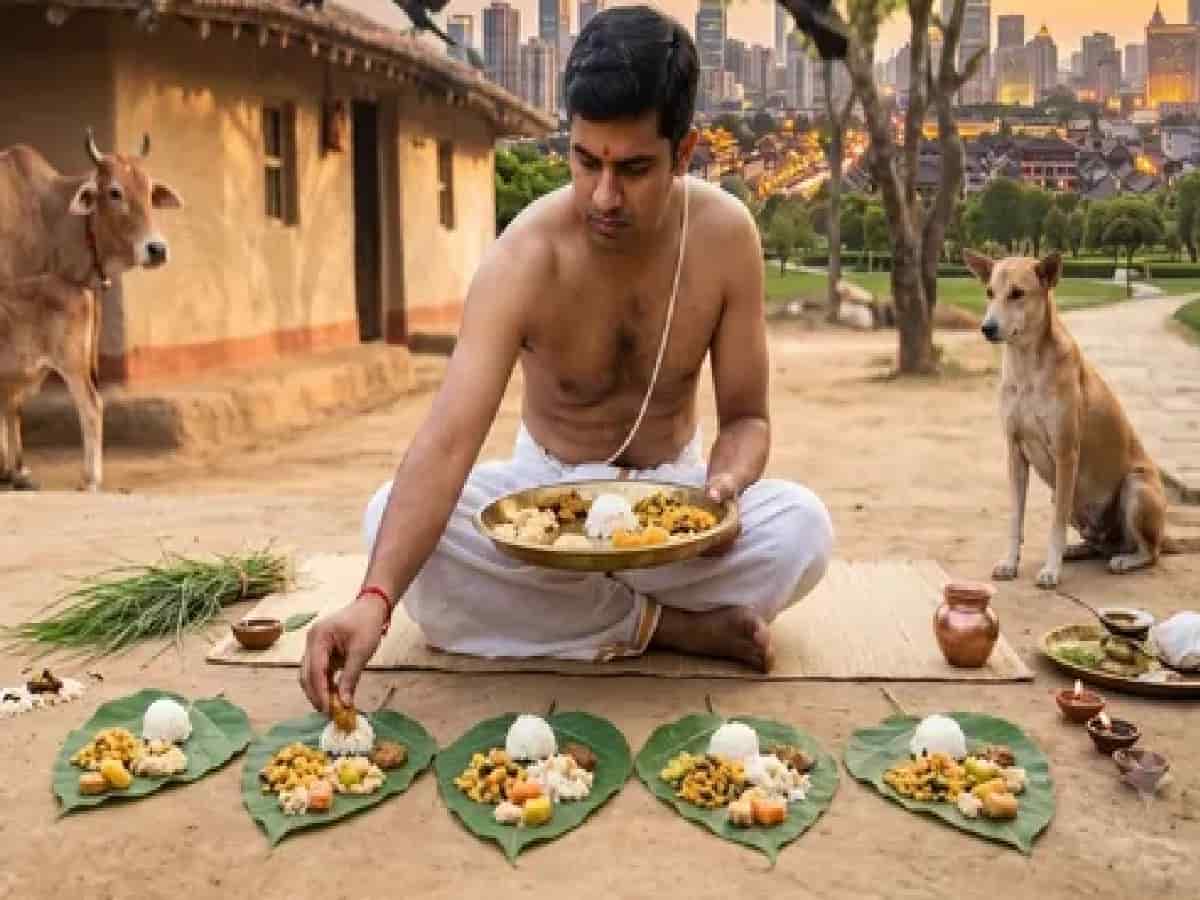
Derived from the ancient Sanskrit words Pancha (five) and Bali (sacred dedicated offering), Panchbali entails dividing freshly prepared, pure sattvic Shraddha meal portions across five designated plates or clean leaf mats around the household prior to serving Brahmins or family members. Vedic philosophy establishes that disembodied souls cannot physically consume gross material food; instead, they absorb the subtle energetic essence of the offerings carried through specific animal messengers and cosmic agents of Yamaloka. By reciting sacred mantras, placing these five shares in separate locations, and encircling them with consecrated water, the performer dispels accumulated Pitru Dosh, invites divine protection, and guarantees ancestral satisfaction.
The Five Sacred Recipients: From Gau Grass to Pipilika Bali Explained
The systematic execution of Panchbali strictly allocates each dedicated portion to a specific cosmic recipient holding a distinct role in Vedic metaphysics. The first portion, known as Gau Grass, is respectfully served to the sacred cow, representing the dwelling presence of 330 million deities and channeling divine blessings alongside ancestral peace. The second offering is dedicated to the crow (Kaka Bali), traditionally regarded as an ethereal messenger moving between the earthly realm and Yamaloka, carrying the energetic sustenance directly to the ancestors. The third portion is kept for the dog (Shvan Bali), another guardian animal associated with Yama's gates and karmic balance. The fourth share is consecrated directly to the Devas (celestial deities), ensuring that the ruling cosmic energies harmonize with ancestral goodwill. The fifth and concluding portion is dedicated to the tiny ant or Pipilika Bali, honoring the subterranean life-forms that serve as elemental conduits of ancestral peace, freeing the household from ancestral afflictions.