







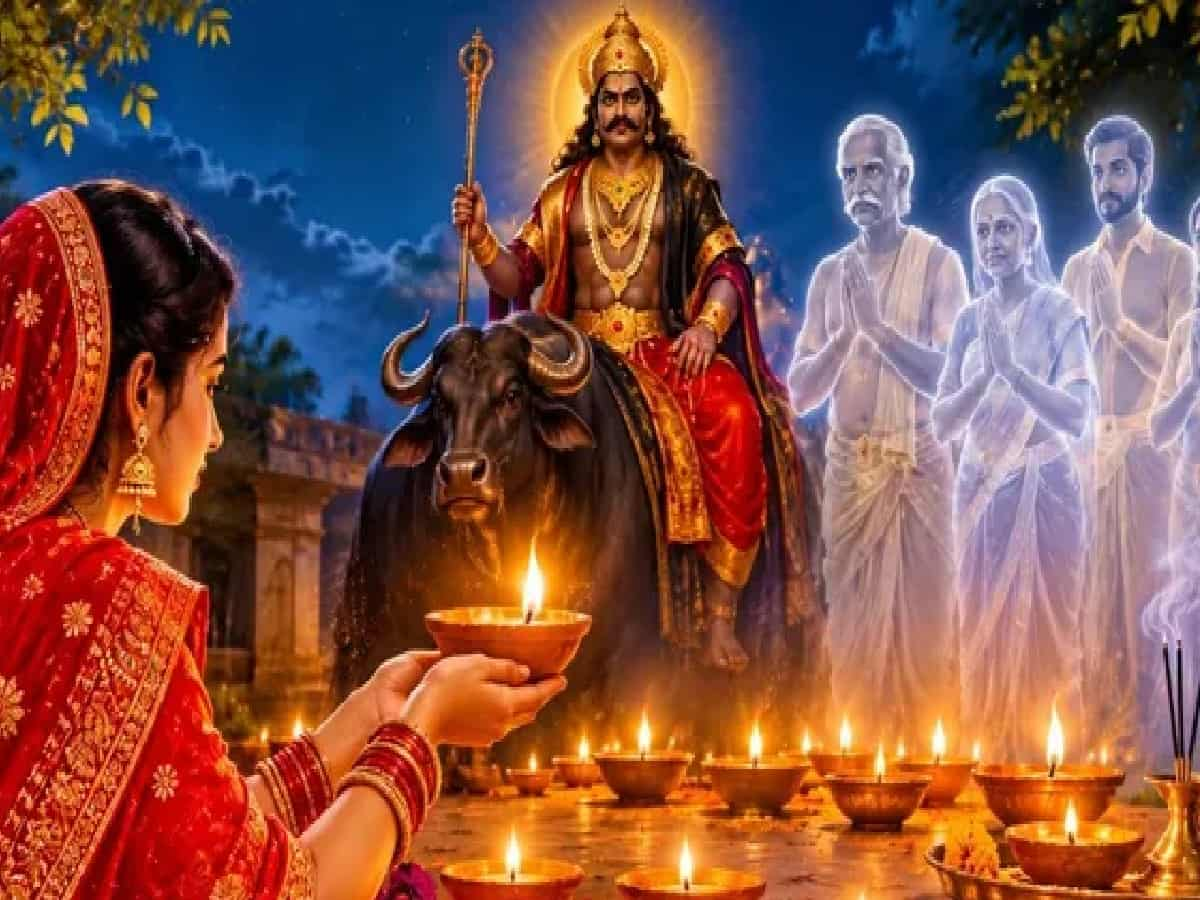
Narak Chaturdashi 2026: 14 Lamps for Yamaraj and Ancestors Shields Families
Celebrated on the fourteenth day of the dark fortnight in the month of Kartik, Narak Chaturdashi—widely observed as Choti Diwali and Roop Chaudas—marks the divine triumph of Lord Krishna over the demon Narakasura, symbolizing the timeless victory of righteousness over darkness. While domestic preparations typically center on cleansing and festive illumination ahead of Lakshmi Puja, the spiritual core of the evening revolves around the solemn tradition of Deepdaan. Beyond adorning doorsteps, Sanatan scriptures prescribe lighting dedicated earthen lamps for Yamaraj, the celestial lord of justice and death, alongside venerating one's departed ancestors (Pitrus). Guided by scriptural wisdom, this twilight ritual serves as an esoteric shield designed to ward off the agony of untimely death (Akaal Mrityu), liberate the household from ancestral afflictions (Pitra Dosha), and dismantle lingering negative vibrations before welcoming Goddess Lakshmi on Diwali night.
South-Facing Yama Deepam: Pacifying the God of Justice and Dispelling 'Akaal Mrityu'
The primary ritual across Sanatan households involves lighting a sanctified four-faced earthen lamp (chaumukhi diya) filled with mustard oil and placing it purposefully in the southern direction of the residence. According to Astropatri astrologer Chandresh Sharma, ancient texts like the Skanda Purana explain that the southern quadrant is governed by Lord Yama and directly aligned with the ancestral realm (Pitra Loka). By offering this four-sided flame at dusk, the householder offers obeisance to Yamaraj, praying for the longevity, vitality, and safety of every family member. Scriptural tradition emphasizes that performing Yama Deepdaan with pure devotion purges malevolent psychic influences and creates an energetic perimeter that prevents sudden tragedies or premature mortality from crossing the threshold.
Guiding Ancestral Souls & The 14-Diya Placement Blueprint to Ward Off Pitra Dosha
Falling precisely a day prior to the dark new moon of Diwali Amavasya, Chaturdashi Tithi holds deep esoteric significance as the auspicious twilight window for bidding farewell to ancestors who visited during Pitru Paksha and the auspicious Kartik month. Lighting ancestral lamps outside the threshold, in the south courtyard, or beneath a sacred Peepal tree provides spiritual light to assist departed souls on their journey back to their cosmic realms, invoking their benevolent blessings and mitigating deep-rooted astrological Pitra Dosha. In strict alignment with Vedic custom, households illuminate precisely 14 lamps across distinct spatial energy points to purify the living space:
-
Main Entrance: Dedicated to Lord Yama to banish untimely misfortunes and shield the threshold.
-
Tulsi Altar: Kept near the sacred basil plant to invoke the permanent grace of Goddess Lakshmi.
-
Kitchen Hearth: Placed near the cooking zone to honor Mother Annapurna for perpetual food abundance.
-
Southern Quadrant: Lit facing south to placate family ancestors and neutralize ancestral debts.
-
Additional Vital Zones: The remaining 10 lamps are systematically distributed across the home's Brahmasthan (central sanctum), balcony, terrace, bedroom, storeroom, washrooms, and under a neighborhood Peepal tree to dispel stagnation and ensure harmonious cosmic energy flows through every corner of the dwelling.




