






Missed Morning Muhurat, Install Navratri Kalash in Abhijit Muhurta Today
Sharadiya Navratri has officially commenced across the country on Sunday, October 11, 2026, inaugurating nine sacred days of devotion dedicated to worshipping the nine manifestations of Goddess Durga. In Vedic tradition, performing Ghatasthapana—the ceremonial installation of the sacred Kalash—during an auspicious planetary window is considered essential to invoking the presence and blessings of the Mother Goddess into the home. For devotees who were unable to perform the installation during the primary morning hours, Vedic astrology provides a powerful alternative through Abhijit Muhurta, which is considered exceptionally favorable for sanctifying the altar. By aligning the ceremony with this midday astrological window, observers ensure that their Navratri austerities begin on an auspicious note without breaking scriptural protocols.
Auspicious Muhurat Timings, Pratipada Tithi, and Complete Samagri Checklist
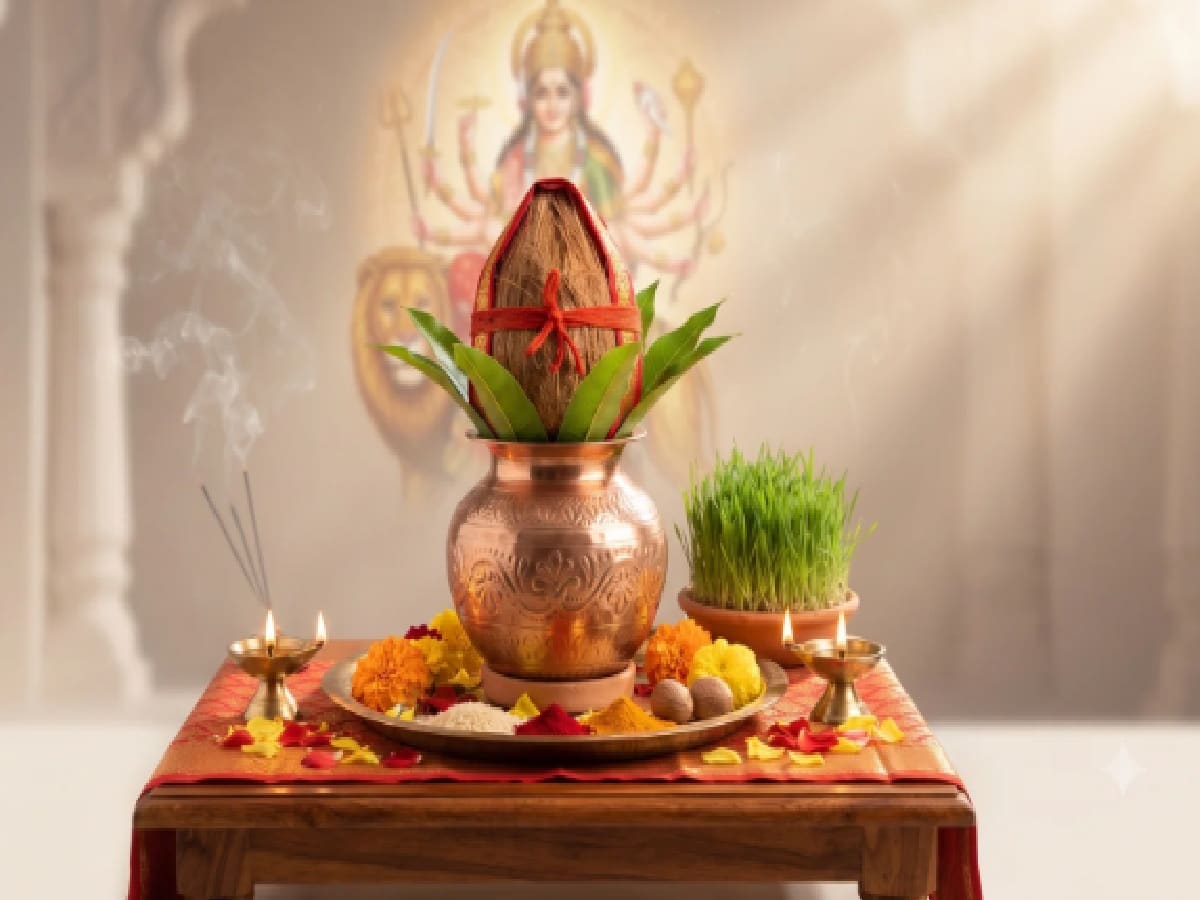
According to the Vedic calendar, the Pratipada Tithi of Ashwin Shukla Paksha commenced at 9:19 PM on October 10 and remains active until 9:30 PM on October 11. Guided by the traditional Udaya Tithi principle, Sunday, October 11, is recognized as the day for Kalash installation. While the initial Ghatasthapana morning window was calculated between 06:19 AM and 10:12 AM, the highly revered Ghatasthapana Abhijit Muhurta runs from 11:44 AM to 12:31 PM, offering an ideal opportunity to complete the rituals before the afternoon sets in. To carry out the ceremony properly, devotees must assemble all prescribed sacred samagri, which includes an earthen or metallic Kalash (vase), sacred soil collected from a clean site, a clay pot for planting, clean Gangajal, betel nut (supari), unbroken rice grains (akshat), sacred turmeric (haldi), mauli (sacred red thread/kalava), roli, cloves, camphor, fresh flowers, floral garlands, a currency coin, mango or Ashoka leaves, fresh red cloth, a whole coconut with its outer fiber/tufts (shrifal), barley seeds (jau), and a large lamp with cotton wicks for the Akhand Jyot (eternal flame).
Step-by-Step Ghatasthapana Vidhi, Barley Sowing, and Critical Fasting Rules
To conduct the Ghatasthapana vidhi correctly, begin by taking a morning bath, donning fresh clothes, and offering Arghya (water libation) to the Sun God. The worship area and temple altar should then be cleaned and purified by sprinkling Gangajal. Fill the Kalash with pure water, drop in a coin, a flower, and a pinch of akshat, and then draw an auspicious Swastika on the exterior using roli before tying sacred kalava around its neck. Arrange mango or Ashoka leaves around the rim of the pot, wrap the fibrous coconut in a red cloth, mark a Swastika on it with roli, and place it atop the foliage on the Kalash. Alongside the altar, spread fertile soil in a broad earthen dish, sow the barley seeds evenly, water them lightly, and offer daily prayers to them throughout the festival. Conclude the ceremony by performing the formal Aarti of Maa Durga, taking a solemn sankalp (pledge) for your fast and prayers. When performing the installation, observe strict traditional decorum: ensure the ceremony takes place strictly within the designated muhurat, avoid wearing black clothing as it is considered inauspicious, maintain mental tranquility free of spite or ill thoughts toward others, and carry out each ritual with heartfelt devotion to receive the divine protection of Goddess Durga.