







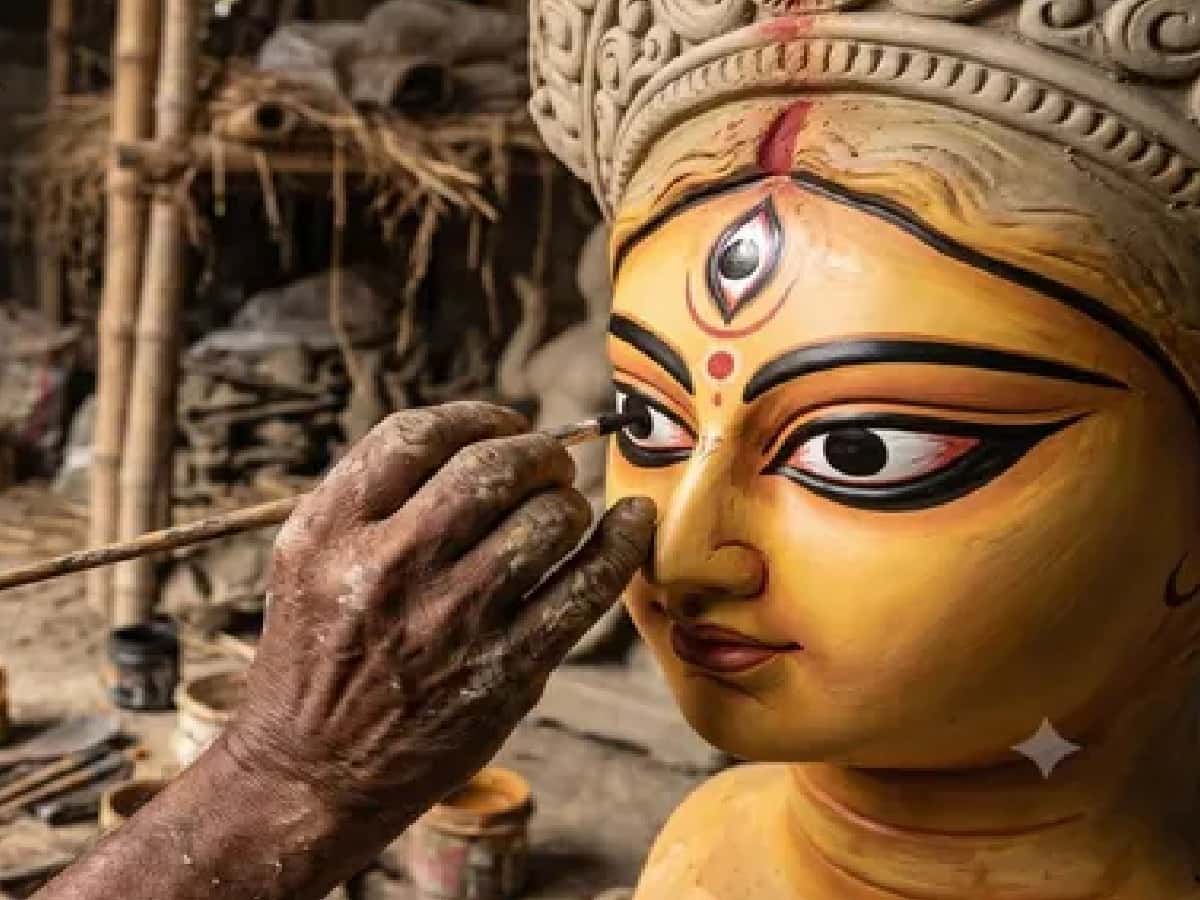
Maa Durga's Eyes Look Alive in Puja Pandals: The Ancient 'Chakshudan' Ritual of Bengal Explained
Step inside any Durga Puja pandal during autumn, and the very first detail that transfixes millions of devotees is the magnetic, piercing gaze of Goddess Durga. The colossal clay idols stand resplendent with gilded ornaments, flowing silk drapes, and ten celestial weapons, yet it is the expressive eyes of the divine mother that seem to communicate directly with those standing before her. Far from a mere cosmetic detail or aesthetic coincidence, the creation of Maa Durga’s eyes is the final, most delicate, and deeply sacred stage of the sculpting process. Bengal’s artisan heritage preserves an age-old consecrated custom where a single flick of a paintbrush can fundamentally transform the deity's facial expression from serene maternal benevolence to fierce cosmic authority, breathing spiritual vitality into what was once silent earth.
The Sacred Art of Chakshudan: How Kumartuli’s Master Artisans Bestow Divine Sight on Mahalaya
The ritualistic foundation of these mesmerizing eyes lies in an ancient Bengali tradition known as Chakshudan—a compound of Chakshu (eye) and Daan (offering or bestowing sight). In traditional idol-making hubs like Kolkata’s legendary potters' quarter, Kumartuli, the creation of the deity spans several meticulous stages over months, beginning with raw bamboo and straw frameworks, followed by successive layers of sacred river clay, intricate facial sculpting, priming, painting, and sartorial ornamentation. Even when the idol is fully finished, the eye sockets remain deliberately blank until the auspicious dawn of Mahalaya, the day that marks the arrival of the Goddess on Earth. On this day, the most revered senior artisan undertakes the sacred duty of painting the irises and defining the outer contours. Approached not simply as a technical art form but as an act of ascetic devotion passed through generations, the master sculptor works in deep meditative focus to infuse the eyes with an intricate balance of vatsalya (unconditional maternal affection), karuna (boundless compassion), and raudra shakti (unyielding power).
Veiled Gazes and Living Darshan: The Emotional Power Behind Maa Durga’s Eyes
To maintain the profound spiritual aura of the idol, tradition dictates that the freshly painted eyes of Goddess Durga are shielded or veiled following the Chakshudan ceremony until the ritual invocation of Bodhon on Shashthi. This intentional concealment ensures that when the deity is finally unveiled before worshippers in the sanctified pandal, the visual communion—or darshan—forges an immediate, living emotional bond. Gazing into those wide, almond-shaped eyes, devotees do not simply behold an idol sculpted from straw, mud, and pigment, but the living, breathing presence of the universal protector shielding her children from adversity. When visiting a Durga Puja pandal this festive season, taking a deliberate moment to pause and lock eyes with the Goddess reveals the profound generational craftsmanship and spiritual devotion that transform earth into divinity.




