







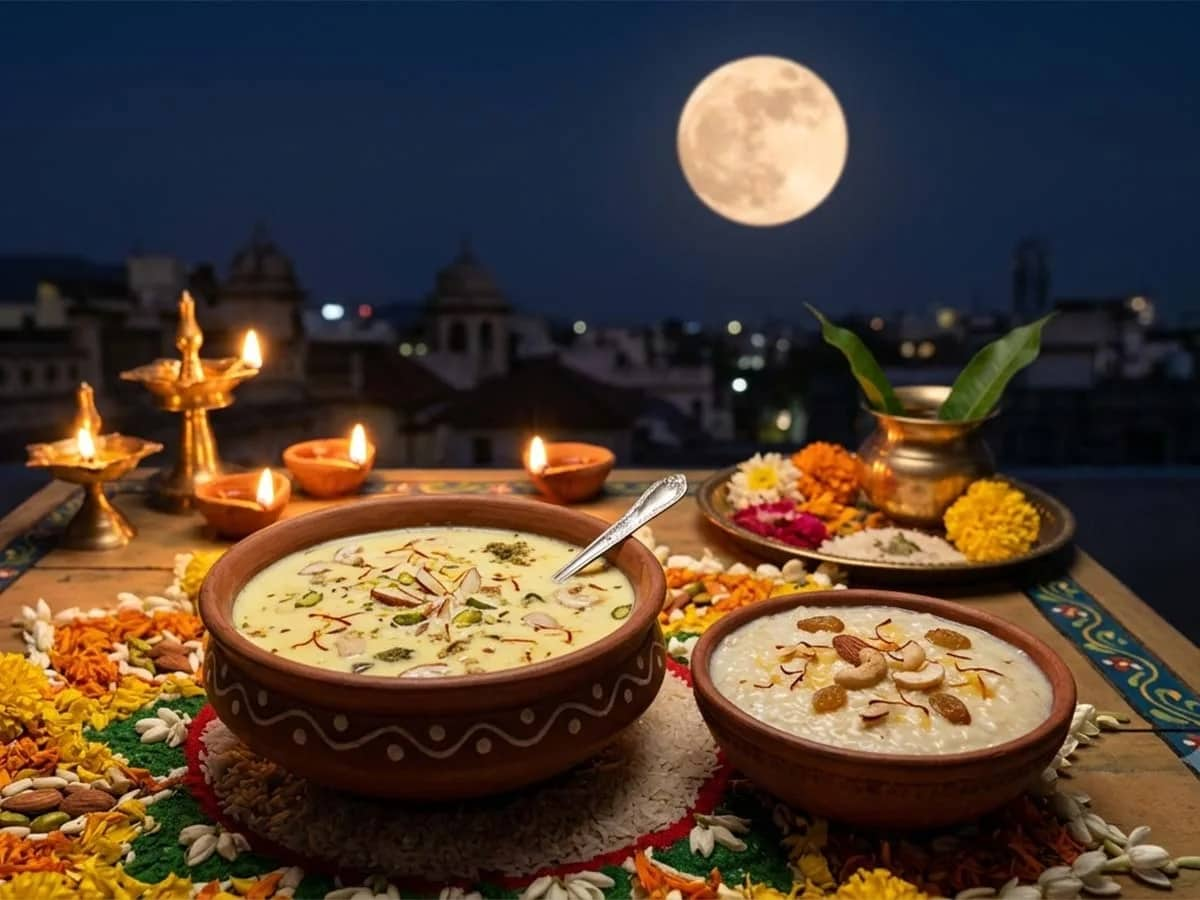
Kojagiri Purnima: Maharashtra Drinks Moon-Bathed 'Masala Milk' Instead of Kheer
As the festive vibrancy of Navratri and Dussehra gives way to the serene autumn breeze of the Hindu calendar's Ashwin month, families across India are preparing to observe Kojagiri Purnima on Sunday, October 25, 2026. Alternatively celebrated as Sharad Purnima, this auspicious full moon night is widely revered as the singular night when the celestial moon displays all sixteen divine phases (solah kalas), showering curative cosmic nectar (Amrit) onto the mortal plane. While North Indian traditions predominantly revolve around cooking white rice kheer and leaving it exposed to the open night sky, Maharashtra observes a distinctive and deeply cherished culinary ritual: preparing aromatic, slow-simmered masala milk (masala doodh). Steeped in ancient Ayurvedic health practices, seasonal dietary balance, and sacred Hindu lore, this Maharashtrian custom transforms a moonlit night into a celebration of health, wellness, and celestial grace.
Ayurvedic Science and Seasonal Shifts: Why Spiced Milk Replaces Kheer Across Maharashtra
The cultural preference for masala milk in Maharashtra is anchored directly in classical Ayurvedic seasonal principles (Ritucharya). Sharad Purnima marks the formal departure of the retreating southwest monsoon and ushers in the crisp beginnings of the winter season, a transitional climatic phase that places sudden metabolic demands on the human body. As the weather fluctuates, the human digestive fire and immune system require nutrient-dense nourishment, which is naturally provided by calcium-rich whole milk fortified with restorative spices and nuts. Maharashtrian households craft a specialized spice blend incorporating crushed almonds, pistachios, aromatic green cardamom (elaichi), cinnamon (dalchini), and most distinctively, charoli (chironji seeds)—an indigenous nut celebrated for building vitality. According to Ayurveda, the cooling autumn moonlight counteracts accumulated pitta dosha (internal metabolic heat) that builds up during the tail-end of the monsoon. By exposing this nutrient-dense spiced beverage to the open nocturnal sky before consuming it at midnight, families allow the milk to absorb the therapeutic infrared and ultraviolet lunar vibrations, neutralizing seasonal toxins and revitalizing both body and mind for the cold months ahead.
Divine Vigil of Goddess Lakshmi and the Legend of Raas Leela Under the Moonlight
Beyond its physical and immunological benefits, the tradition of drinking masala milk on Kojagiri night carries immense spiritual weight rooted in sacred Vedic scriptures. Mythological chronicles state that on this divine full moon, Goddess Lakshmi emerged from the cosmic churning of the celestial ocean (Samudra Manthan), prompting households to perform elaborate nocturnal Lakshmi Pujas to welcome prosperity and good fortune into their residences. The term Kojagiri derives from the Sanskrit phrase "Ko Jagarti" ("Who is awake?"), based on the scriptural belief that Goddess Lakshmi traverses the earthly skies during midnight hours, showering boundless wealth and abundance exclusively upon devotees who remain awake in spiritual contemplation. Simultaneously, the night is celebrated as the sacred anniversary when Lord Krishna performed the transcendental Maha Raas Leela with Radha and the Gopis amidst the groves of Vrindavan, a cosmic dance of divine love commemorated across western India through spirited folk dances like Rasgarba. As families gather on open terraces, courtyards, and balconies across Maharashtra to stay awake and share piping-hot cups of moon-blessed masala milk, the ritual serves as a living cultural link uniting community bonding, devotion, and ancestral wellness practices.




