







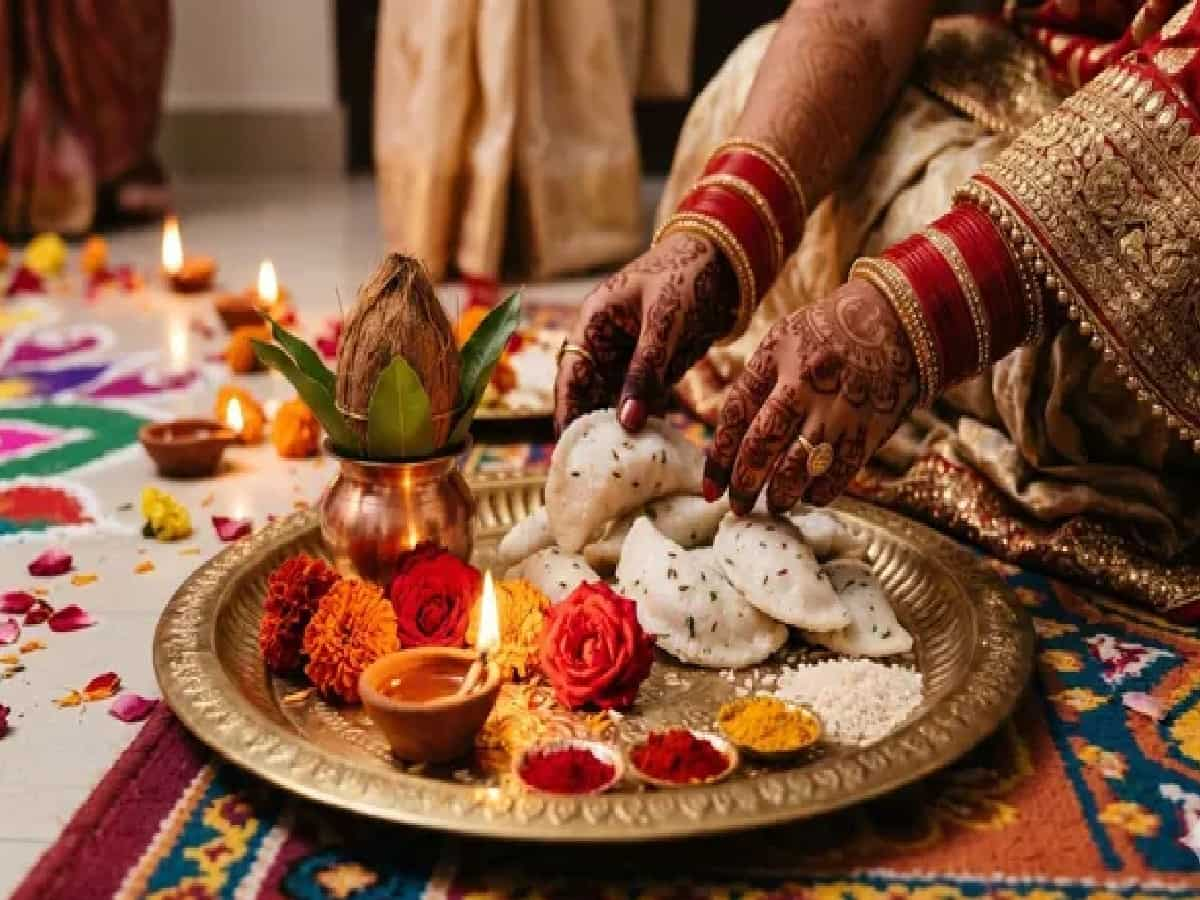
Karwa Chauth Rituals: Offering Steamed Rice Balls to the Moon for 'Akhand Saubhagya'
The sacred festival of Karwa Chauth represents one of the most devout observances in Sanatan tradition, wherein married women undertake a rigorous, waterless (nirjala) fast from sunrise to moonrise, praying for the longevity, health, and uninterrupted prosperity of their husbands. While the evening sight of the moon through a sieve and the ceremonial offering of water (arghya) remain universally recognized rituals, regional customs add profound cultural depth to the festival. Across Eastern Uttar Pradesh (Purvanchal) and extensive regions of Bihar, generations of women maintain an indispensable ancestral tradition: offering freshly prepared rice balls, traditionally known as fara, to Karva Mata and the Moon. Far from an ordinary ritual sweet or decorative offering, astrological authorities affirm that this culinary presentation carries esoteric significance deeply tied to the blessing of Akhand Saubhagya (eternal good fortune) and family lineage protection.
A Sacred Symbol of Purity: Astrologer Chandresh Sharma on 'Akhand Saubhagya'
In Hindu Vedic thought, whole rice grains—revered scripturally as Akshat—represent absolute completeness, purity, and indestructible life energy, making them the foundational element of every sacred rite. According to noted astrologer Chandresh Sharma of Astropatri, this deep theological reverence explains why dough made of ground rice flour is shaped into traditional spheres or dumplings to mark the culmination of the Karwa Chauth fast. Sharma highlights that ritual tradition strictly emphasizes the law of sattvic enjoyment, mandating that this divine offering be prepared entirely through steam rather than being fried in oil or tempered with pungent spices. The completely untainted, gentle steam preparation preserves the pure sattvic vibrations of the grain, ensuring that when the offering is presented to Chandradev alongside the evening prayers, it channels lunar cooling energies directly into the household, cleansing matrimonial relationships of discord and ensuring enduring marital harmony.
Celebrating the Fresh Harvest: The Ageless Purvanchal and Bihar Tradition
Beyond its metaphysical significance, the ritual of offering rice balls remains deeply rooted in the agricultural rhythms of northern and eastern India. Karwa Chauth falls during the holy month of Kartik, a pivotal timeframe across the fertile plains of Purvanchal and Bihar that marks the arrival of the season's freshly harvested paddy crop. Ancient agrarian tradition dictates that before the newly harvested grain enters regular domestic kitchens for family consumption, the very first yield must be consecrated and offered to the divine forces that sustain life. By hand-crafting the first flour from this maiden harvest into holy offerings for Karva Mata and the lunar deity, agrarian households invoke divine gratitude and seek cosmic assurance that their domestic granaries, wealth, and family fortunes remain perpetually replenished throughout the coming agricultural cycle.




