







Karwa Chauth: From Punjab’s Kacchi Lassi to UP’s Sacred Rice-Flour Rites
As the festive calendar moves past Navratri and Dussehra, millions of married Hindu women across India are gearing up to observe the sacred fast of Karwa Chauth on Thursday, October 29, 2026. Rooted in deep devotion and mutual respect, the day-long nirjala (waterless) fast is undertaken from dawn until moonrise to pray for the longevity, prosperity, and well-being of husbands. While the spiritual essence of the festival remains uniform across the country, regional cultures across Northern, Western, and Central India have infused the celebration with distinctive culinary customs, intricate bridal adornments, and time-honored community ceremonies that reflect India's rich cultural diversity.
Punjab's Kacchi Lassi, Maternal Baina, and Wholesome Post-Fast Feasts
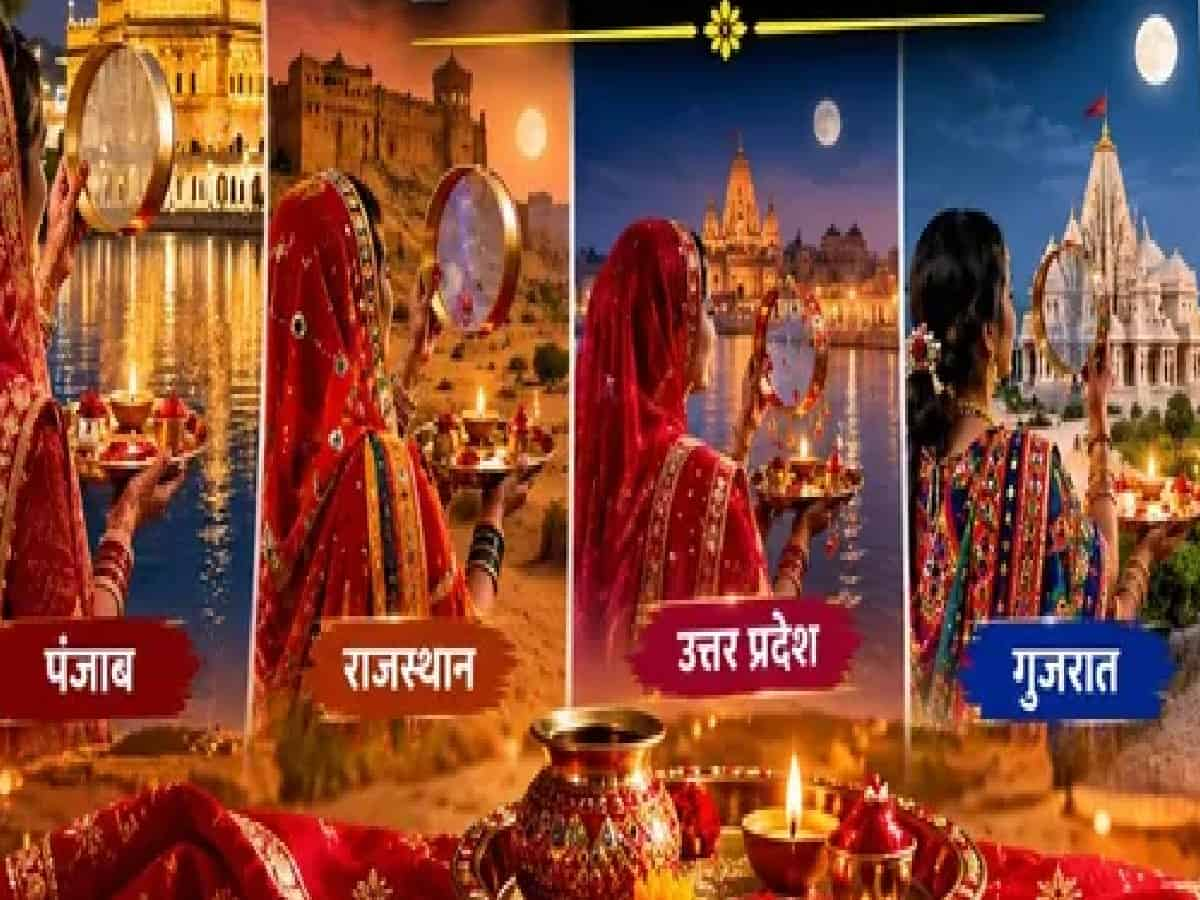
In Punjab, Karwa Chauth unfolds with immense celebratory fervor, beginning long before daybreak as women wake up to prepare for the rigorous fast. A central custom in Punjabi households is the arrival of the baina—a thoughtful gift hamper sent by a married woman's mother containing new festive attire, fresh coconuts, traditional sweets, seasonal fruits, and sacred vermilion (sindoor). As night falls, women gather on terraces dressed in vibrant bridal ensembles, holding decorated puja thalis featuring a handmade wheat-flour lamp (aate ka diya), sweets, and a sieve. A unique hallmark of the Punjabi tradition is the offering of kacchi lassi (a cooling blend of sweetened water and fresh milk) to the moon during the Arghya ceremony. Husbands then offer the first sips of this sanctified lassi along with traditional sweets to break their wives' fast, culminating in a festive family dinner centered around nourishing staples like slow-cooked rajma, whole green gram (sabut moong), hot puris, and fragrant rice.
UP and Bihar: Sargi Feasts, Solah Shringaar, and Sacred Rice-Flour Motifs
Across Uttar Pradesh and Bihar, the day commences at the crack of dawn with the traditional consumption of Sargi, a pre-fast nutritional meal typically prepared by mothers-in-law that includes slow-simmered kheer, roasted vermicelli (seviyan), premium dry fruits, coconuts, and traditional sweets. As evening approaches, women complete their Solah Shringaar (sixteen bridal adornments), adorning themselves in crimson attire, glass bangles, silver anklets (payal), intricate mehendi patterns, sindoor, and red alta tracing their feet. Before moonrise, neighborhood women gather in courtyards for collective prayer and the storytelling of the Karwa Chauth katha. In parts of eastern UP and Bihar, devotees draw auspicious geometric moon symbols on the courtyard floor using ground rice-flour paste, ceremonially dipping their earthen karwa into sanctified water seven times while chanting traditional Vedic prayers to invite marital blessings into the home.
Royal Poshaks of Rajasthan, Central India's Devotion, and the Pan-India Shift
In the desert state of Rajasthan, Karwa Chauth reflects the region’s royal heritage, with women dressed in ornate traditional Rajasthani poshaks, bandhani prints, and heritage jewelry while performing day-long community rituals and devotional songs. Similarly, in Madhya Pradesh, major urban centers including Bhopal, Indore, and Gwalior witness lively celebrations where women observe strict waterless fasts and participate in temple-led rituals. While traditionally centered in Northern India, the festival has evolved into a national phenomenon over recent decades. Metropolises across Maharashtra and Gujarat, as well as southern IT hubs in Karnataka, Tamil Nadu, and Andhra Pradesh, now celebrate Karwa Chauth with equal enthusiasm, as cosmopolitan diaspora communities and local households blend regional traditions into an inclusive celebration of marital harmony and cultural heritage.




