Jitiya Thread: Why This Sacred Shield Protects Children During Vrat
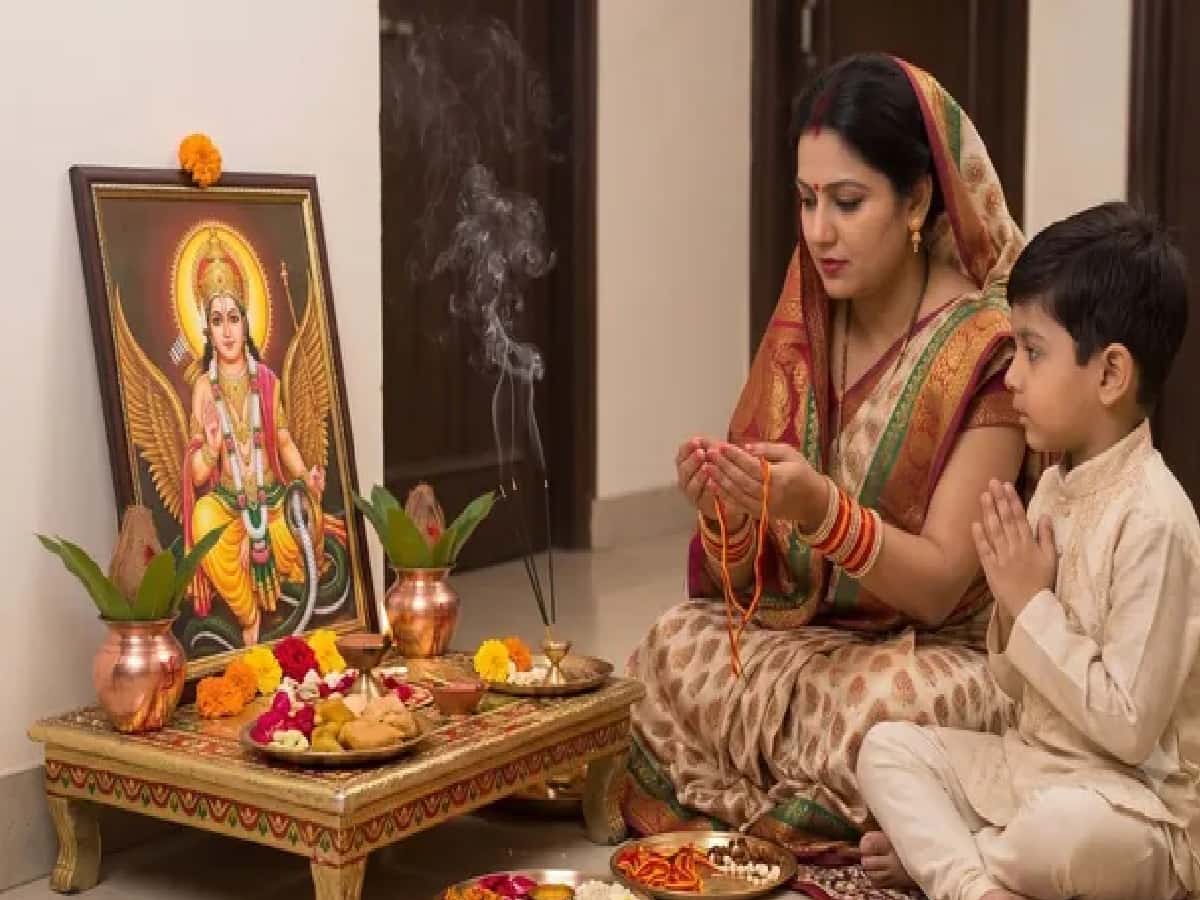
Observed annually during the Krishna Paksha of the Hindu month of Ashwin, the three-day Jivitputrika Vrat—popularly known across Bihar, Jharkhand, and eastern Uttar Pradesh as Jitiya or Jiutiya—is regarded as one of the most arduous and spiritually potent fasts undertaken by mothers. The rigorous Nirjala (waterless) observance is dedicated to praying for the longevity, safety, and prosperous future of children. At the very core of this sacred ritual is the consecration and wearing of the Jitiya thread, a practice steeped in scriptural heritage. Far from being a mere ornamental string, this consecrated cord is revered as an impenetrable spiritual shield bestowed through the divine intervention of King Jimutavahana, whose legendary sacrifice in the Skanda Purana saved the Naga lineage from Garuda, establishing him as the eternal guardian deity of children.
How and Where to Wear the Consecrated Cord: Knot Counts and Sacred Placement
The culmination of the primary puja involves presenting a specially prepared red or red-and-yellow thread to Lord Jimutavahana before it is tied by the fasting mother. The bright red and yellow hues represent auspiciousness, domestic prosperity, and divine vitality. Mothers traditionally wear this sacred thread around their wrists or adorn it around their necks, often strung with a consecrated silver or gold Jiutiya locket. Custom dictates a precise knot-tying formula: each year, knots are tied onto the thread corresponding to the number of children a mother has, plus one additional knot dedicated to the protection of the household. Tying this cord formalizes the mother's vow of selfless love and divine guardianship, sealing the blessings of the fast.
Duration Rules and Respectful Immersion: Strict Protocols for Removing the Thread
Scriptural customs establish clear guidelines regarding how long the Jitiya thread must remain tied and how it should be handled afterward. The thread must be kept intact on the body for a minimum of 24 hours following the conclusion of the fast, though countless devout mothers choose to wear it continuously throughout the entire year until the next Jivitputrika Vrat arrives. When the time comes to remove the thread, specific restrictions must be followed: it should never be untied on Sundays or Tuesdays. Crucially, given its sanctified status, the thread must never be discarded in the garbage or left on the ground; instead, it must be respectfully immersed in a flowing sacred river or placed carefully beneath the roots of a revered tree like Peepal or Banyan, preserving its divine sanctity.