Jalabhishek Vs Rudrabhishek: Understanding The Key Differences And Significance On The Last Monday Of Sawan
The sacred month of Sawan witnesses an incredible surge of devotion, with temples packed with worshippers offering prayers to Lord Shiva. During this holy period, terms like Jalabhishek and Rudrabhishek are frequently used interchangeably by devotees. However, according to Vedic scriptures and Hindu traditions, there is a profound distinction between these two sacred rituals, ranging from the items used to the specific procedures and spiritual outcomes. Understanding these differences helps devotees perform their prayers correctly and receive maximum divine grace.
What Is Jalabhishek, Simple Ritual And Mythological Significance
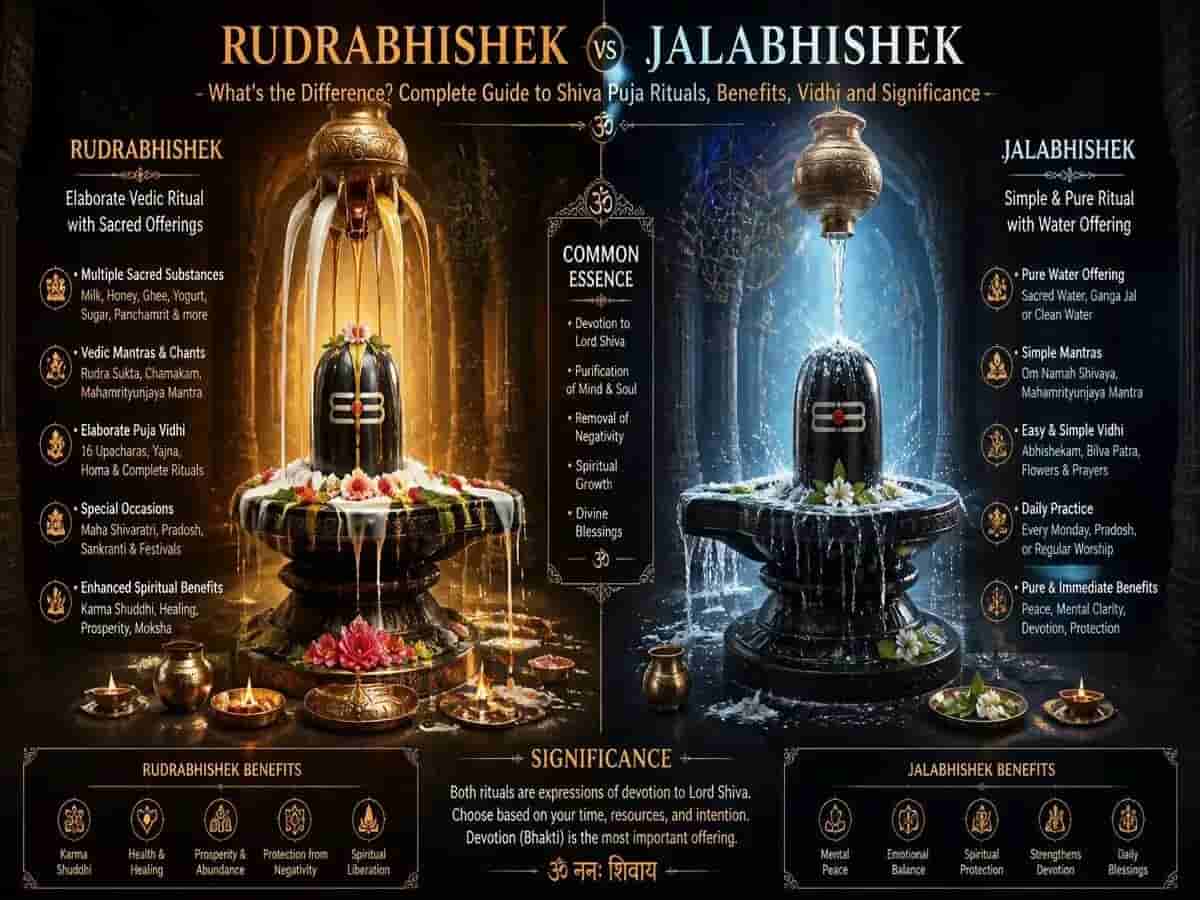
The act of offering pure, clean water onto a Shivalinga is known simply as Jalabhishek. This serves as the most accessible and common method of worshipping Mahadev, requiring no elaborate preparations or specialized priestly assistance. Devotees can easily perform Jalabhishek at home or in local neighborhood temples every morning while quietly chanting the universal Om Namah Shivaya mantra.
According to Puranic mythology, when Lord Shiva consumed the lethal Halahal poison during the churning of the cosmic ocean (Samudra Manthan), his body began to burn from the intense heat. To cool and soothe him, deities and celestial beings poured water over him, giving rise to the eternal tradition of Jalabhishek.
What Is Rudrabhishek? The Special Vedic Worship Process
In contrast, Rudrabhishek is an intensive, highly sacred Vedic ritual that extends far beyond merely pouring water. This ceremonial anointing is performed by qualified priests or Brahmins who chant powerful Vedic mantras, specifically from the Rudrashtadhyayi of the Yajurveda.
During a Rudrabhishek, the Shivalinga is ritually bathed not just with water, but with sacred ingredients known collectively as Panchamrit—which includes cow's milk, fresh yogurt, pure ghee, honey, and sugarcane juice. Various other sacred liquids like tender coconut water or fragrant waters may also be used depending on the specific sankalp (intention) of the devotee.
Why Is Rudrabhishek Performed? Benefits And Spiritual Purpose
The term "Rudra" refers to the fierce, powerful, and transformative aspect of Lord Shiva that destroys sorrows, obstacles, and negative energies. Rudrabhishek is traditionally performed to fulfill major life desires, overcome severe hurdles, cure chronic illnesses, invite prosperity, and achieve deep mental peace. Furthermore, astrologers often recommend performing Rudrabhishek to pacify malefic planetary influences (graha doshas), particularly those related to Saturn (Shani), Rahu, and Ketu.