How a Demon's Penance and Lord Vishnu's Footprint Made Gaya the Ultimate Pilgrimage for Ancestral Salvation
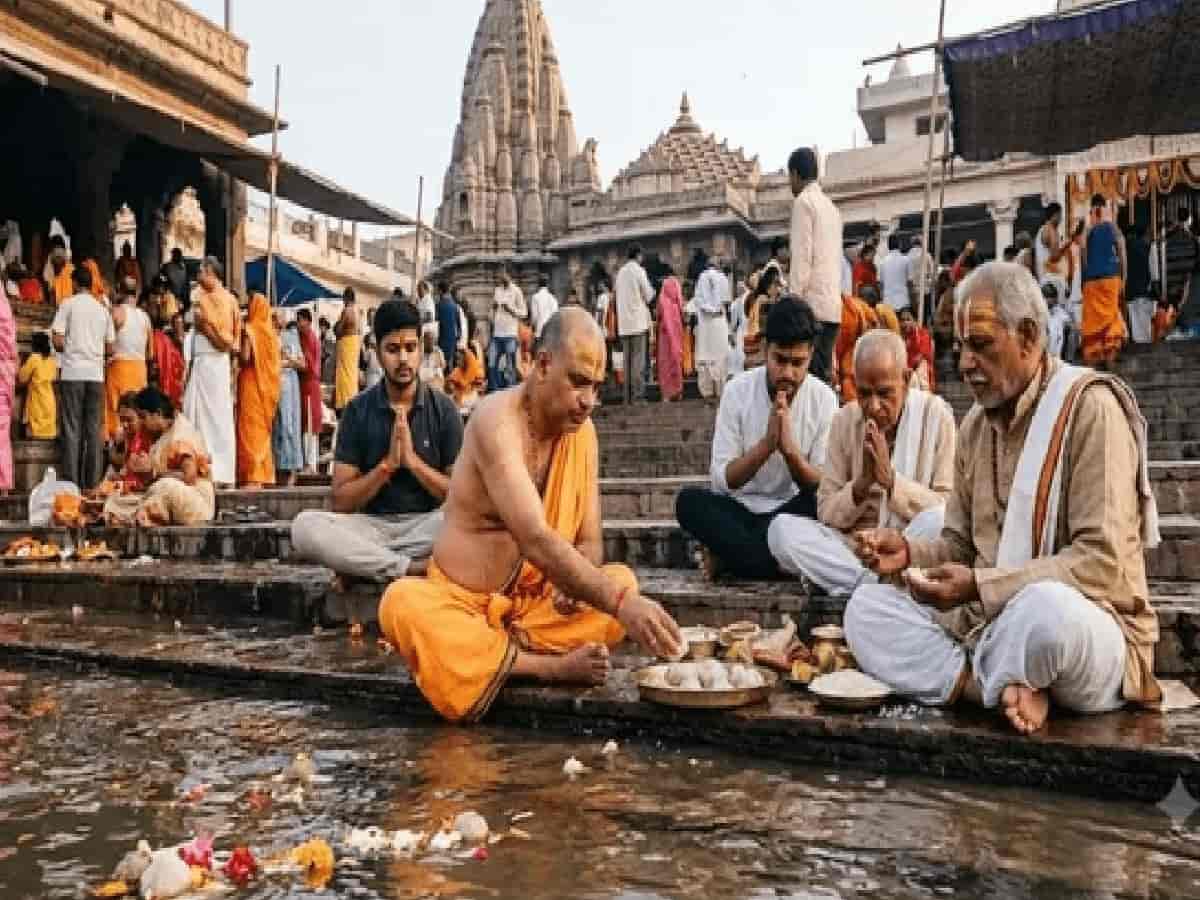
Nestled along the holy Falgu River in southern Bihar, the ancient temple town of Gaya holds unmatched spiritual significance in Sanatana Dharma as the supreme threshold for Pitru Moksha (ancestral salvation). Every year during the auspicious fortnight of Pitru Paksha, millions of devout pilgrims from across India and around the globe journey to this sanctified soil to perform solemn Pind Daan and Tarpan rituals for their departed forebears. Hindu scriptural tradition holds that offering funeral cakes of barley flour and sesame here pacifies restless souls, resolves severe ancestral afflictions (Pitru Dosh), and propels past generations straight into Vishnuloka, releasing them forever from the ceaseless wheel of rebirth and suffering. The sacred origin of this sacred geography is chronicled in the venerable pages of the Vayu Purana, tracing back to the severe austerities of an extraordinary demon named Gayasur and divine intervention by the Holy Trinity.
The Divine Dilemma: Gayasur's Rigorous Penance and Lord Brahma's Overwhelming Boon
The epic genesis of Gaya unfolds through an astonishing tale of demonic asceticism that challenged the cosmic order of karma:
-
Unprecedented Tapasya: According to the Vayu Purana, the giant demon Gayasur undertook relentless, thousand-year penance of such punishing intensity that radiant spiritual heat emanated from his body, shaking the celestial realms and alarming the gods.
-
The Cosmic Imbalance: Pleased by his unyielding resolve, Lord Brahma manifested before him and granted his chosen wish: that Gayasur's physical body become so infinitely holy that anyone who merely gazed upon him, touched his skin, or whispered his name would instantly be cleansed of all accumulated mortal sins and ascend directly to heaven (Swarga).
-
The Emptying of Yamaloka: Because salvation became effortless for every passing sinner who looked at Gayasur, Lord Yama's realm of judgment and retribution fell completely deserted, throwing the foundational law of cause, effect, and moral consequence into cosmic chaos.
The Sacred Yajna on a Living Altar: Lord Brahma Outwits the Noble Demon
To restore balance without revoking the granted boon, the celestial deities devised an elaborate divine strategy:
-
Seeking an Unblemished Ground: Brahma approached Gayasur and explained that he needed to conduct a grand, cosmic yajna (fire sacrifice) for world peace, but lamented that no spot on Earth was pure enough to hold the sacrificial fires.
-
Offering His Own Flesh: Filled with humility and genuine devotion, Gayasur laid his colossal frame across the landscape, inviting the Creator to erect the sacred sacrificial altar directly upon his chest.
-
Tremors Beneath the Altar: As the sacred rituals concluded, Gayasur's immense vital energy continued to shift and heave beneath the earth, threatening to overturn the holy sacrificial grounds.
Lord Vishnu as Gadadhara: The Weight of Pret Shila and the Immortal Footprint
To achieve final stability, the Preserver of the Universe intervened in His supreme protective aspect:
-
Placing the Divine Weight: Lord Vishnu manifested in the form of Gadadhara (the mace-bearing protector) and placed His divine lotus foot upon Gayasur's body, while the gathered deities placed a massive sacred boulder over his back to permanently anchor his form.
-
The Sacred Rock of Pret Shila: This historic anchoring rock is revered today as Pret Shila (the Ghost Stone), one of Gaya's primary sacred hill sites where specialized Pind Daan rituals are performed to release spirits trapped in agonizing intermediate realms.
-
The Blessing of Vishnupad Temple: Moved to tears by the demon's total surrender and unblemished piety, Lord Vishnu granted him an eternal boon: that the holy land would forever bear his name as Gaya Kshetra, and that Vishnu’s divine footprint—still enshrined in the sanctum sanctorum of the world-famous Vishnupad Temple—would remain the premier gateway through which any soul receiving offerings would attain immediate liberation.
The Eternal Heritage: Why Pind Daan at Gaya Overcomes Pitru Dosh Forever
Centuries after this mythical encounter, Gaya remains the preeminent ancestral sanctuary for the Hindu diaspora:
-
Absolution of Hereditary Karma: Scriptural commentaries affirm that while ordinary funeral rites must be renewed annually, a single comprehensive Pind Daan conducted along the sacred ghats of the Falgu River and before the Vishnupad footprint permanently frees up to twenty-one generations of paternal and maternal lineages.
-
The Guiding Priests of Gaya: The hereditary Gayawal Pandas, who trace their lineage directly to the ancient priests consecrated by Brahma, continue to guide pilgrims through the precise traditional rituals of offering rice balls, honey, and sacred water.
-
A Living Testimony of Redemption: Gayasur's transition from an asura to a timeless vessel of divine mercy stands as a profound reminder in Indian spiritual philosophy that sincere self-sacrifice and pure devotion transcend birth, sanctifying an entire land for millennia to come.