Harder Than Karwa Chauth: Why 36-Hour Nirjala Jitiya Vrat Is Hinduism's Toughest Fast
In the vast spectrum of Hindu spiritual observances, Jitiya Vrat—also revered as Jivitputrika Vrat—stands apart as one of the most physically rigorous and uncompromising fasts. Observed primarily by mothers across Uttar Pradesh, Bihar, Jharkhand, and the Mithila region for the longevity, protection, prosperity, and holistic well-being of their children, this sacred penance demands unwavering endurance. While festive fasts like Karwa Chauth and Hartalika Teej are observed by married women for spousal bliss, the spiritual discipline required during Jivitputrika makes it significantly more challenging in duration, ritual compliance, and physiological demands.
36 Hours vs. 24 Hours: The Crucial Duration Gap That Tests Endurance
The most glaring distinction between Jitiya and other major fasting traditions lies in the sheer timeline of observance:
| Fasting Observance | Primary Objective | Typical Duration | Breaking (Parana) Condition |
| Karwa Chauth | Husband's long life | Sunrise to Moonrise (~13–15 hours) | Immediate sighting and offering of Arghya to the Moon |
| Hartalika Teej | Marital bliss & harmony | 24 Hours | Concludes on the morning of the following Chaturthi |
| Jitiya (Jivitputrika) | Children's protection & longevity | 36 Continuous Hours | Strictly regulated by Navami Tithi calculations and Panchang Muhurat |
Unlike Karwa Chauth, where the fast concludes as soon as the celestial moon ascends in the evening sky, Jitiya commences with the traditional Nahai-Khai on Saptami, enters the grueling continuous waterless fast on Ashtami Tithi, and stretches across the night into the auspicious Parana window on Navami Tithi. Fasting mothers cannot break their fast simply at sunrise; they must wait until the exact astrological conclusion of the Tithi as verified by the Vedic almanac, frequently extending the austerity beyond a grueling 36-hour span.
Strict Nirjala Fasting: Not Even a Single Drop of Water Permitted
The operational rules governing Jivitputrika are uncompromisingly strict. It is observed as a complete Nirjala fast—prohibiting not only all forms of solid and liquid nourishment, but forbidding even a single drop of water from passing the lips for the entire fasting duration. While several regional traditions permit concessions or fruits during certain fasts, Jitiya allows zero laxity. Devotees believe that even an inadvertent sip of water breaks the sanctity of the maternal vow, nullifying the divine protective shield invoked for their children’s safety.
Jimutavahana's Divine Shield: Why Strict Adherence Remains Essential
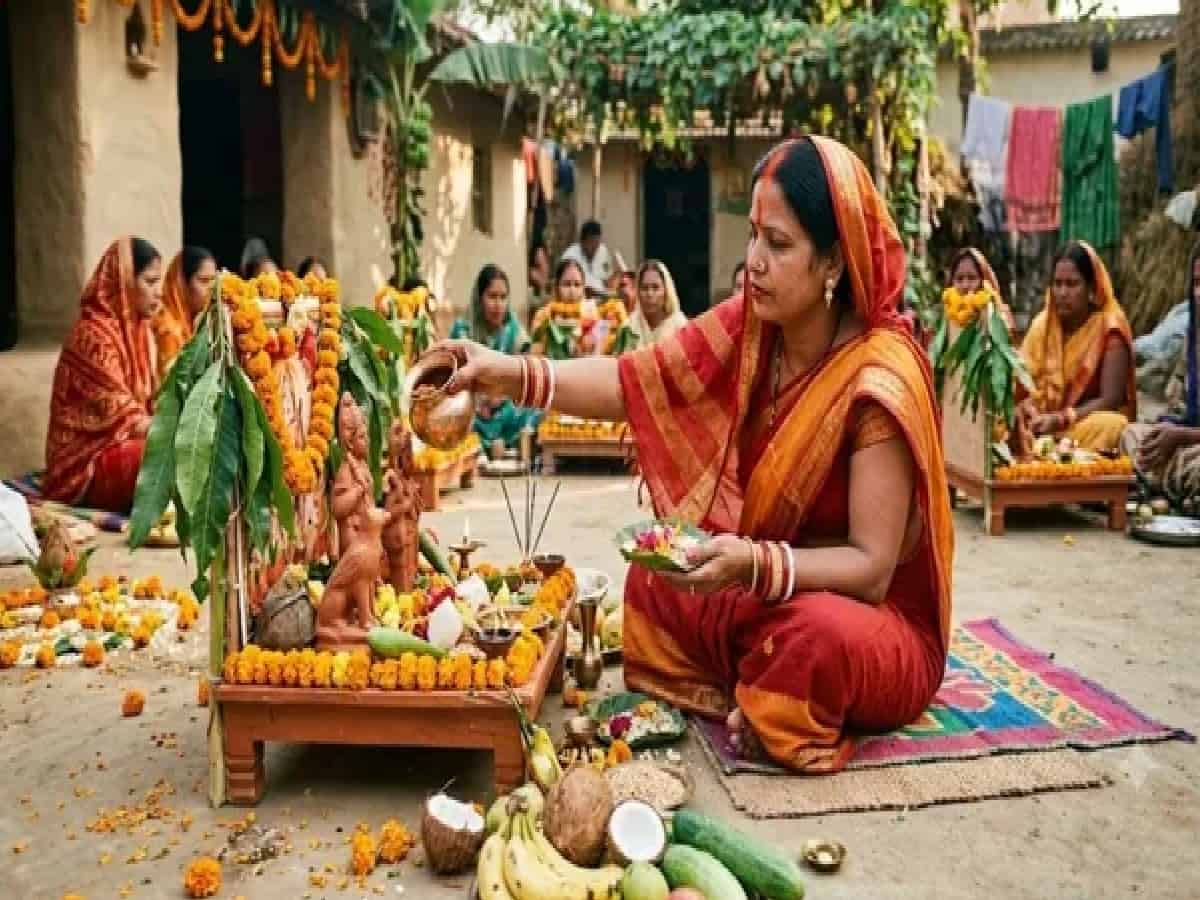
The divine foundation of Jivitputrika is anchored in the worship of King Jimutavahana, alongside ancestral and symbolic totems of the Eagle (Chhili) and the Fox (Siyar). Scriptural lore dictates that the spiritual merits of Jitiya bestow miraculous health, immunity against untimely demise (Akaal Mrityu), and academic and professional flourishing upon children. Because the metaphysical stakes involve safeguarding the life force of one's offspring, mothers undertake this extreme 36-hour physical test with unyielding determination, making Jivitputrika an unparalleled testament to selfless maternal sacrifice.