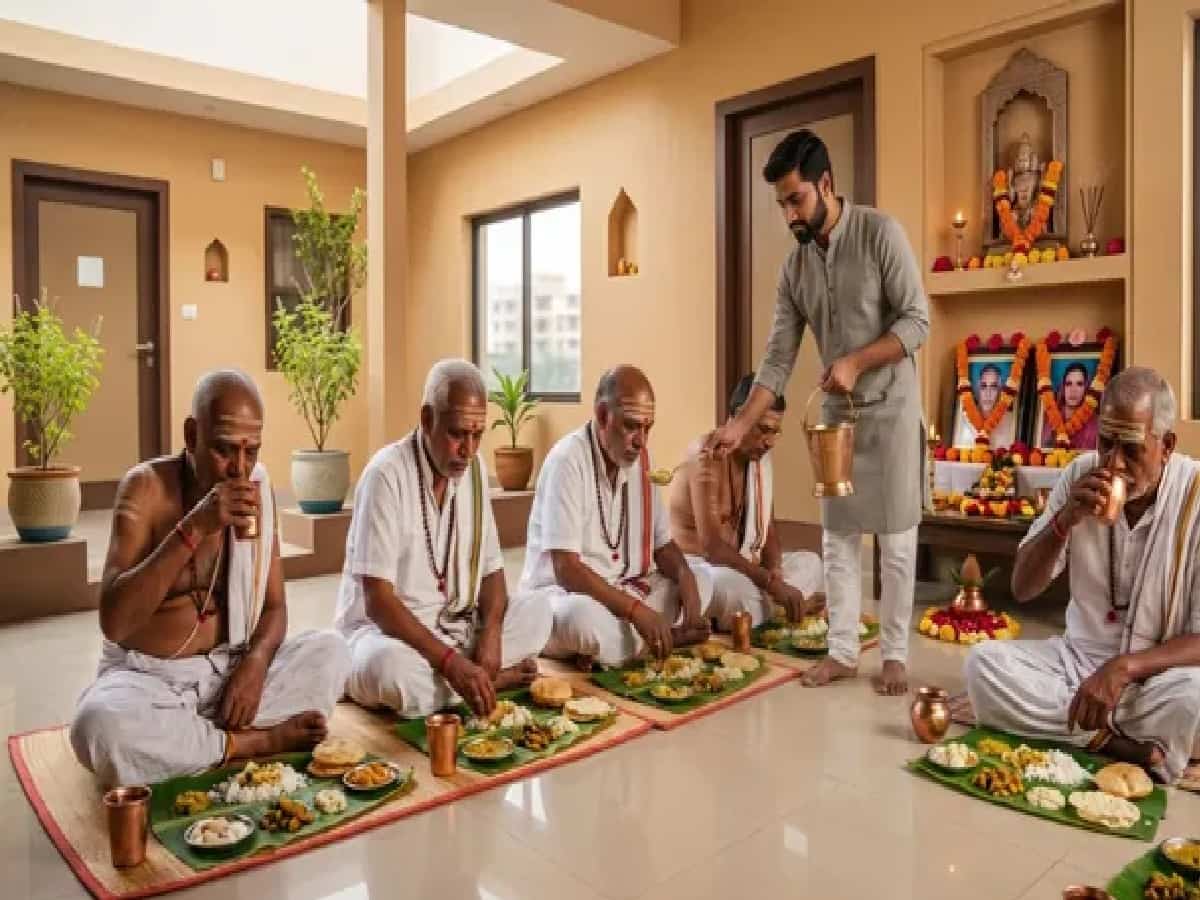
Feeding Brahmins in Shradh: Garuda Purana Rules to Avoid Pitru Dosha
In Sanatan Dharma, feeding Brahmins (Brahmin Bhojan) is regarded as the indispensable capstone of major religious ceremonies, carrying unmatched spiritual weight during the sacred fortnight of Pitru Paksha. Vedic scriptures and the Garuda Purana emphasize that Shraddha rituals on an ancestor's tithi remain fundamentally incomplete until a pious Brahmin is fed with devotion. According to spiritual beliefs, Brahmins serve as the earthly medium through which consecrated food offerings reach the ancestors; when a contented Brahmin partakes of a meal served with pure intentions and proper protocols, the departed souls of ancestors—regardless of the cosmic realm they inhabit—receive immediate peace, satisfaction, and nourishment, dissolving karmic debts and blessing the household with prosperity.
Strict Kitchen Purity and the Panchabali Ritual: Direction, Utensils, and Serving Order
To ensure the food is spiritually acceptable to ancestors, the Garuda Purana lays down meticulous preparation and serving standards that must not be violated. The meal must be rigorously sattvik, prepared in a tranquil mental state, and completely devoid of tamasic ingredients such as onions and garlic, while maintaining absolute physical cleanliness, strictly prohibiting preparation during menstruation. Before serving the Brahmin, the household must complete the mandatory Panchabali ritual—offering separate food portions to cows, crows, dogs, ants, and divine entities. When seating the Brahmin, they must strictly face south, the sacred direction governed by ancestors. Food should be presented on traditional plates (pattals or brass/silver), strictly avoiding modern steel or iron utensils, and must always be served using the right hand, as serving with the left hand invalidates the offering.
Water Protocol and Dakshina: The Non-Negotiable Final Steps for Ancestral Liberation
A traditional Brahmin feast requires exact procedural etiquette regarding water and post-meal honors to unlock the full merits of Shraddha. Water must always be served alongside the meal, as Brahmins traditionally commence their dining ritual with sacred sips (Achamana) and complete it by ceremonially purifying the plate; a meal offered without adequate water is deemed incomplete and displeasing to Pitrus. Following the meal, offering Dakshina—a respectful financial gift accompanied by clothes or fruits according to one’s financial capacity—is strictly mandatory. Without presenting Dakshina and respectfully bowing with folded hands to seek forgiveness for any unintentional omissions, scriptures declare that even ancestors refuse to accept the feast, leaving the ritual void of spiritual fruit.