







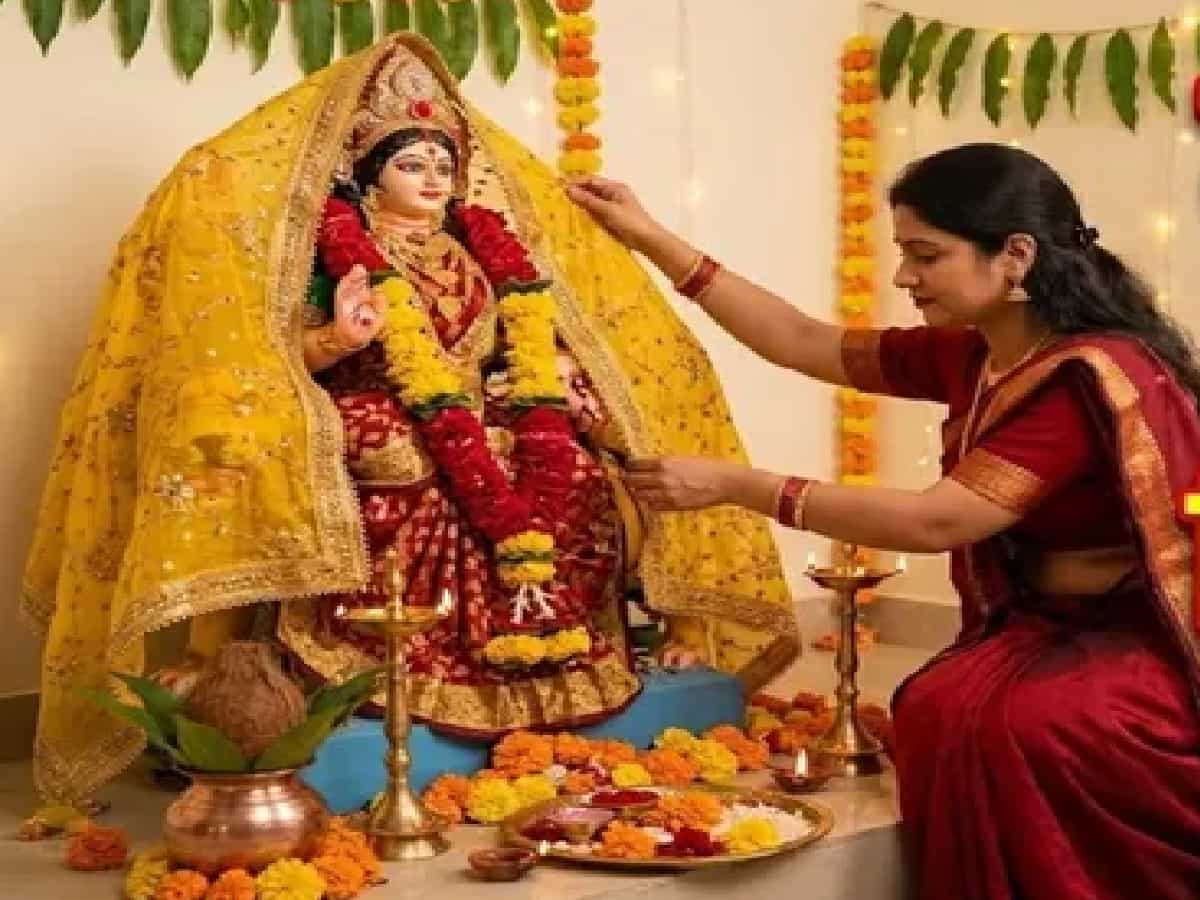
Color Chunari Pleases Maa Durga, Sacred Meanings of Red, Yellow, Saffron, Pink & White
During the sacred nine-night festival of Sharadiya Navratri, millions of Hindu devotees across India immerse themselves in deep devotion to seek the divine blessings of Goddess Durga through prayers, fasts, and traditional offerings of flowers, coconuts, vermilion, and chunaris (sacred scarfs). In Vedic ritual traditions, the sacred chunari draped over the deity's idol is far more than a ceremonial embellishment; it acts as a direct cosmic conduit between the devotee’s heartfelt intentions and the goddess’s grace. Because every color reflects a specific spiritual vibration and emotion, selecting the appropriate hue for Maa Durga’s chunari allows worshippers to align their spiritual practices with their distinct life desires, whether seeking inner peace, marital bliss, career expansion, or protection against negative energies.
Red and Saffron Chunaris: Invoking Divine Valor, Protection, and Marital Blessings
Red stands as the most prominent and deeply revered color associated with Maa Durga, embodying supreme Shakti, cosmic power, dynamic vitality, and ultimate victory over malevolent forces. According to religious traditions, presenting a vibrant red chunari paired with vermilion to the Mother Goddess dispels lingering distress, removes obstacles from one’s path, and creates an aura of enduring domestic prosperity. For married women, offering a red scarf holds special religious merit, serving as a prayer for akhand saubhagya (eternal marital well-being) and the holistic health of the family. Simultaneously, offering a saffron or deep orange chunari invokes the virtues of tapasya (penance), courage, and spiritual awakening. Representing absolute dedication and inner fire, the saffron cloth infuses devotees with heightened self-confidence, fearless determination, and the mental resilience required to conquer external and internal hurdles.
Yellow and Pink Chunaris: Accelerating Career Growth and Deepening Family Bonds
For students, competitive exam aspirants, and working professionals, offering a radiant yellow chunari to Goddess Durga is regarded as profoundly auspicious. Symbolizing wisdom, pure intellect, focus, and divine grace, yellow creates an energetic alignment that fosters academic clarity and career advancement, helping individuals overcome creative blocks and identify the right paths to achieve their life goals. On the other hand, families experiencing emotional distance or domestic tensions are advised to offer a delicate pink chunari to the divine mother. Symbolizing unconditional affection, tenderness, and harmony, the pink scarf channels vibrations of emotional healing, dissolving interpersonal bitterness, nurturing mutual understanding among relatives, and fostering an enduring atmosphere of joy and sweetness within the household.
White Chunari for Inner Tranquility: Cultivating Mental Stability and Spiritual Purity
In instances where individuals face emotional turbulence, chronic restlessness, or heightened anxiety, presenting a pristine white chunari to Goddess Durga acts as a powerful spiritual remedy. White epitomizes pure consciousness (sattva), immaculate purity, and mental composure, functioning as a sacred symbol of complete surrender before the divine. By offering a white scarf, seekers pray for emotional grounding, purification of thoughts, and the elimination of chaotic psychic vibrations, inviting serene tranquility and positive aura into both home and mind. By aligning their devotional offerings with these sacred scriptural color codes throughout the auspicious period of Navratri, devotees can transform traditional rituals into a transformative journey of spiritual fulfillment.




