







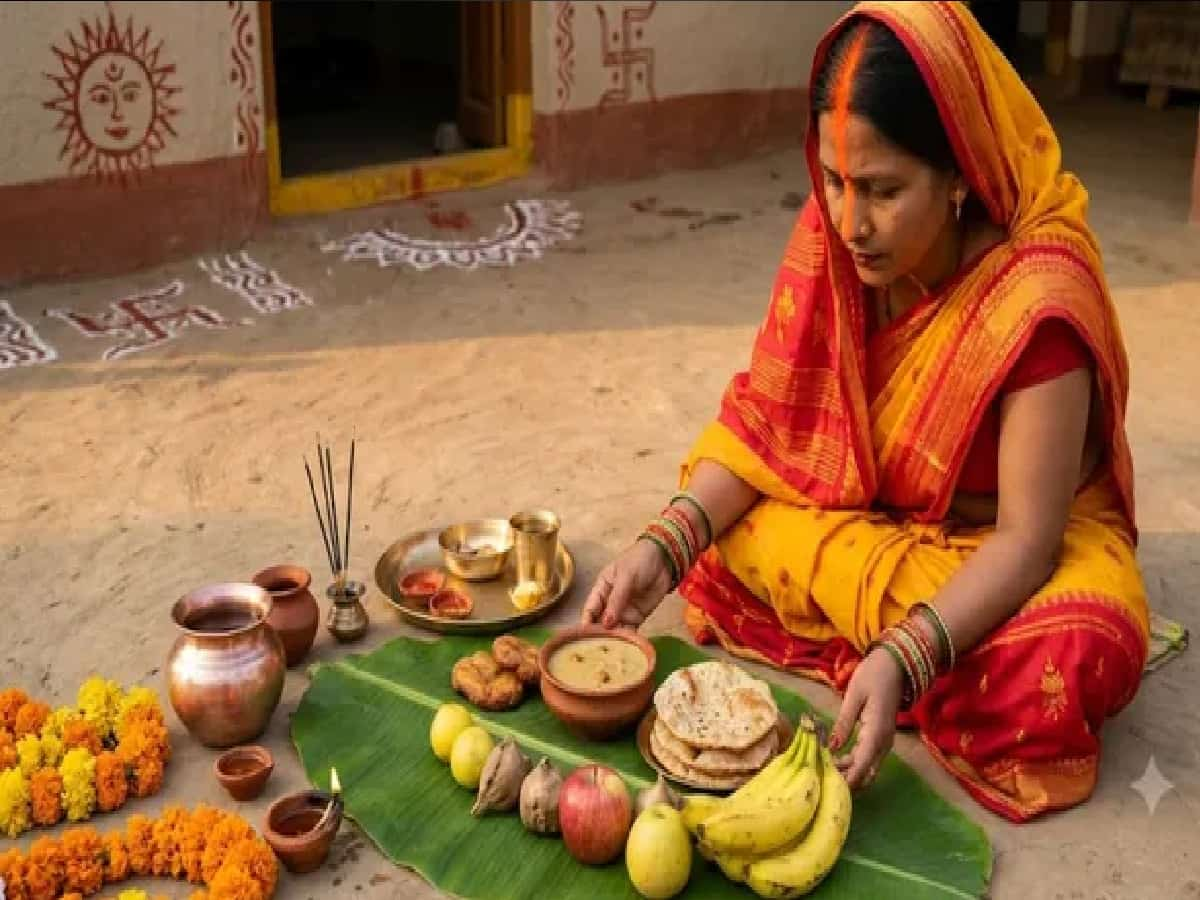
Chhath Puja 2026: Why Is Kharna Prasad Served on a Banana Leaf
With the arrival of Chhath Puja 2026 on Friday, November 13, millions of households across Bihar, Jharkhand, eastern Uttar Pradesh, and metropolitan centers from Lucknow, Varanasi, and Patna to New Delhi and Mumbai have entered four days of extraordinary spiritual discipline and devotion. Dedicated to Lord Surya (the Sun God) and Chhathi Maiya, this ancient festival is renowned for its uncompromising adherence to sanctity and gratitude toward nature. After the opening day of Nahay Khay, the second day of the festival brings Kharna—a deeply sacred observance marked by day-long fasting, evening worship, and the preparation of traditional Rasiyaw (jaggery kheer) and ghee-smeared rotis. Anyone who has witnessed Kharna rituals knows one unbreakable rule: the sanctified Kharna Prasad is always served exclusively on a fresh banana leaf, never on steel, brass, glass, or ceramic plates. Behind this centuries-old custom lies a fascinating blend of scriptural reverence, ecological wisdom, and spiritual symbolism.
Absolute Ritual Purity: Why Banana Leaves Outshine Metal Utensils
In Sanatana Dharma, no festival enforces stricter standards of cleanliness and ritual purity (shuddhata) than Chhath Mahaparva. Every ingredient, utensil, and space involved in the four-day fast must remain completely untouched by everyday household food, salt, or impurity (jhootha). Conventional household plates made of stainless steel, brass, or porcelain are washed and reused daily, meaning they have inevitably held regular meals in the past. Even after thorough scrubbing, traditional belief regards reusable dining ware as unsuitable for offering sacred naivedya during Chhath.
A freshly harvested banana leaf (kela patta), by contrast, represents absolute, untouched purity. Used only once and sourced directly from nature, a banana leaf has never been previously eaten from, eliminating any possibility of ritual contamination. Beyond spiritual sanctity, traditional Indian households and Ayurvedic wisdom also value banana leaves for their natural waxy coating, generous surface area, and hygienic properties—ensuring that hot jaggery kheer and freshly cooked rotis retain their pure aroma without absorbing metallic flavors or synthetic residues.
Abode of Lord Vishnu and Goddess Lakshmi in the Banana Tree
Beyond practical cleanliness, serving Kharna Prasad on a banana leaf carries profound scriptural significance rooted in Hindu cosmology. Across sacred texts and living temple traditions, the banana tree (Kadali Vriksha) is revered as the earthly abode of Lord Vishnu (the preserver of the universe) and Goddess Lakshmi (the deity of wealth, abundance, and auspiciousness). Because the banana plant grows steadily, bears abundant fruit, and regenerates continuously from its roots without requiring seeds, scriptures celebrate it as an enduring emblem of prosperity, fertility, and unbroken family lineage.
When devotees place Kharna Prasad upon a fresh banana leaf before offering it to Surya Dev and Chhathi Maiya, they symbolically invoke the combined grace of Lord Vishnu and Goddess Lakshmi into their home. Accepting and partaking of Prasad from a banana leaf is therefore believed to invite lasting happiness, financial stability, and spiritual well-being for both the fasting devotee (vrati) and every member of the household.
Chhath as Nature Worship: Earthen Stoves, Mango Wood, and Bamboo
What sets Chhath Puja apart from almost every other major Hindu festival is its pure, unmediated devotion to the natural elements that sustain human life. Celebrated without elaborate idols or priestly intermediaries, Chhath honors solar energy, flowing rivers, clean air, and seasonal harvests directly. Every tool chosen for the rituals reflects this deep ecological harmony—from woven bamboo winnowing trays (soop) and baskets (daura) to clay lamps and fresh fruits.
The preparation and serving of Kharna Prasad follow the exact same philosophy of returning to the earth. Rather than cooking on modern gas burners, devotees construct a brand-new earthen stove (mitti ka chulha) specifically for Chhath and fuel it exclusively with dried mango wood (aam ki lakdi), which is considered sacred in Vedic fire rituals. Serving the resulting Prasad on a biodegradable banana leaf completes an unbroken circle of earth-friendly devotion—leaving zero plastic or synthetic waste behind while expressing gratitude to Mother Nature.
Step-by-Step Kharna Rituals: From Nirjala Fast to Prasad Distribution
On the second day of Chhath Puja—falling on Saturday, November 14, 2026—the spiritual intensity of the festival deepens considerably. From sunrise until sunset, the vrati observes a strict nirjala fast, abstaining entirely from both food and water throughout the day. As dusk approaches, the household kitchen is purified, and the vrati personally prepares the sacred Kharna offerings on the earthen stove: sweet kheer made from newly harvested rice, jaggery (gud), and milk, alongside soft whole-wheat rotis generously brushed with pure cow ghee, accompanied by ripe bananas and seasonal fruits.
After sunset, the vrati performs evening prayers to Lord Surya and Chhathi Maiya using incense (dhoop), camphor, vermilion, and glowing ghee lamps, neatly arranging the Prasad upon freshly washed banana leaves. A remarkable tradition governs the moments that follow: the vrati consumes the Kharna Prasad first in complete, peaceful silence—as family members ensure no loud noises disturb the devotee while breaking the day-long fast. Crucially, consuming this Kharna meal marks the threshold of the most demanding phase of Chhath Puja: an uninterrupted 36-hour waterless (nirjala) fast that continues through Sandhya Arghya until Usha Arghya on the fourth morning. Only after the vrati finishes eating is the sanctified Kharna Prasad distributed joyfully among family members, relatives, and neighbors, who consider receiving even a spoonful of the sweet jaggery kheer a cherished blessing.
Quick Summary: Sacred Elements of Kharna Puja and Their Significance
| Sacred Element | Traditional Use in Kharna | Religious & Cultural Meaning |
| Fresh Banana Leaf (Kela Patta) | Used exclusively as the plate for serving Prasad | Single-use purity; revered as the sacred abode of Lord Vishnu and Goddess Lakshmi |
| New Earthen Stove (Mitti Ka Chulha) | Built fresh solely for cooking Chhath offerings | Symbolizes purity, humility, and direct connection with Mother Earth |
| Mango Wood (Aam Ki Lakdi) | Used as sacred fuel to cook Kharna Prasad | Considered spiritually pure in Vedic havans and traditional rituals |
| Jaggery Kheer & Ghee Rotis | Core food offerings prepared without salt or refined sugar | Celebrates newly harvested autumn rice and sugarcane jaggery with satvik purity |
| Silent Prasad Acceptance | Vrati eats first in quiet solitude before distribution | Marks the spiritual transition into the 36-hour nirjala fast |
Through this simple yet deeply symbolic green leaf, Kharna reminds millions of devotees across India and around the world that true sanctity lies not in opulence, but in purity of heart, reverence for nature, and unwavering faith.




