SIR Voter Row Fact-Check: 13-Crore Claim Boils Down to 3 Crore
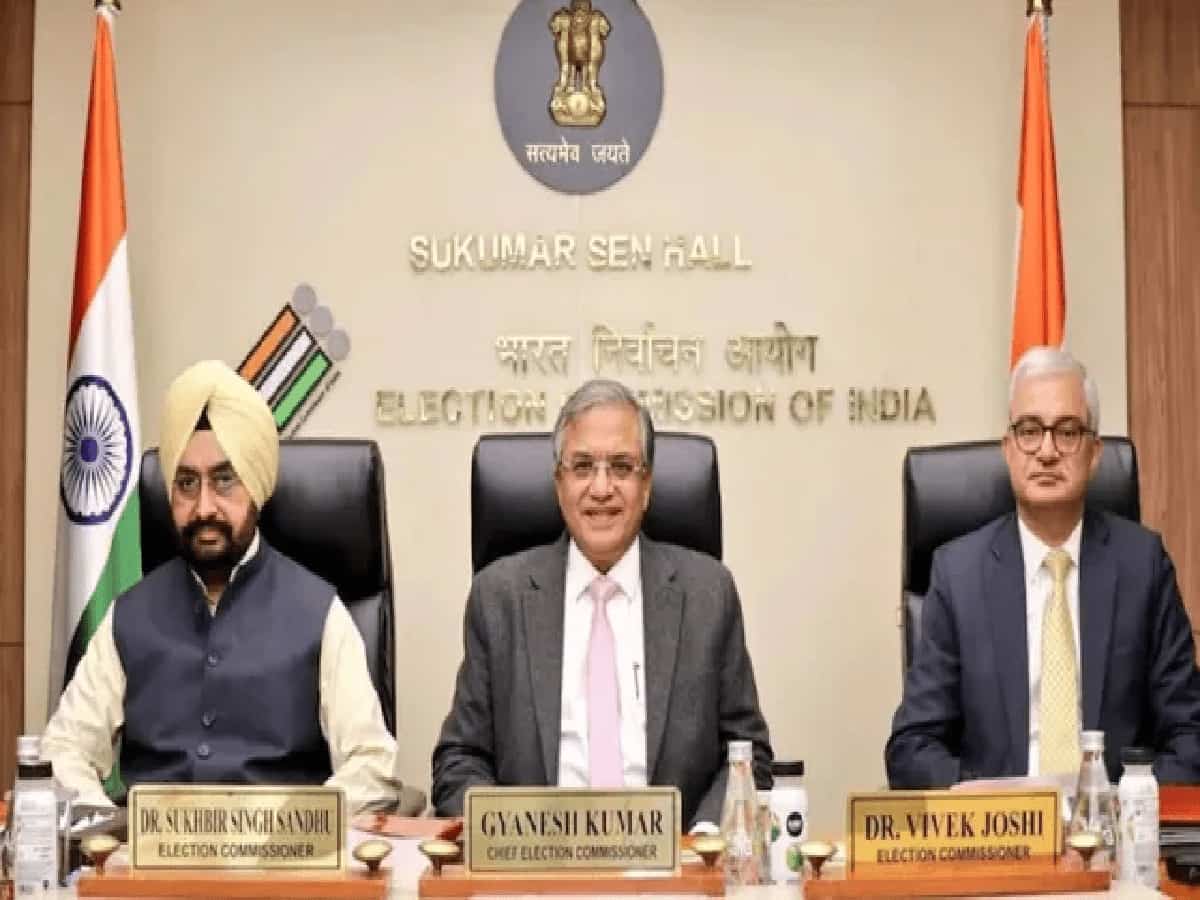
The political clash over the Election Commission of India’s (ECI) Special Intensive Revision (SIR) has reached fever pitch, with opposition parties mounting sharp attacks against Chief Election Commissioner Gyanesh Kumar and the central government. Opposition leaders have repeatedly alleged that 13 crore citizens have been arbitrarily stripped of their voting rights across various states. However, an analysis of the statutory verification data reveals a vast difference between political narratives and ground reality: approximately 75 percent of the 133 million questioned names were struck off due to biological mortality, permanent demographic relocation, and duplicate entries accumulated over decades, leaving only about 25 percent—roughly 3 crore individuals—subject to active procedural re-verification.
Breaking Down the Numbers: Deceased, Relocated, and Duplicate Entries
A detailed examination of the nationwide SIR audit conducted across participating states shows where the 13.3 crore flagged names actually fall:
-
2.8 Crore Deceased Electors: Nearly 28 million individuals recorded on obsolete voter registries had passed away over the last two decades without their names being formally struck off by local booth officers.
-
6.5 Crore Permanently Migrated Electors: Approximately 65 million citizens had permanently shifted their residences and had not lived at their registered addresses for extended periods, as verified through ground-level neighbor attestations and door-to-door enumeration.
-
Over 1 Crore Duplicate Registrations: More than 10 million redundant entries were identified where identical electors held active voting credentials across multiple assembly constituencies or polling booths.
-
3 Crore Absent During Enumeration: Around 30 million individuals were not present at their registered premises during field visits, while several hundred thousand received standard compliance notices due to incomplete documentation.
To address procedural grievances, the Election Commission has initiated a targeted re-verification drive across 20 states for electors who received administrative notices or were left out of final drafts, ensuring that every legitimate citizen is afforded full opportunity to secure their voting franchise.
Supreme Court's May 27 Verdict: Affirming the Constitutional Mandate for Clean Electoral Rolls
The intense political friction persists despite conclusive judicial scrutiny by the Supreme Court of India. The controversy initially reached the top court after the Election Commission notified the rollout of the SIR in Bihar on June 24, 2025, followed by challenges stemming from West Bengal, where petitioners termed the exercise unconstitutional. Over a thorough hearing schedule spanning from June 2025 to May 2026, the apex court declined to stay the revision, instead issuing structured transparency guidelines. In its landmark judgment delivered on May 27, 2026, the bench validated the SIR process in its entirety, underscoring in its opening observations that before votes can be counted, a sovereign constitutional democracy must accurately establish whose votes are valid.
Settling the Legal Questions: EC Powers, Proportionality, and Citizenship Verification
In its comprehensive ruling, the Supreme Court addressed four constitutional questions, holding that the Election Commission possesses the full statutory authority under the Representation of the People Act and the Registration of Electors Rules, 1960, to execute intensive revisions. The court observed that maintaining an untainted voter roll directly serves the legitimate constitutional objective of guaranteeing free and fair elections, and that the verification procedures were proportionate to that aim. Furthermore, the bench clarified that the poll body is legally empowered to carry out limited citizenship checks for inclusion or retention on electoral rolls, while reiterating that possession of an identity card does not constitute conclusive legal proof of Indian citizenship. While ongoing court proceedings continue to assess administrative refinements, the core constitutional validity of the SIR exercise remains firmly upheld.