







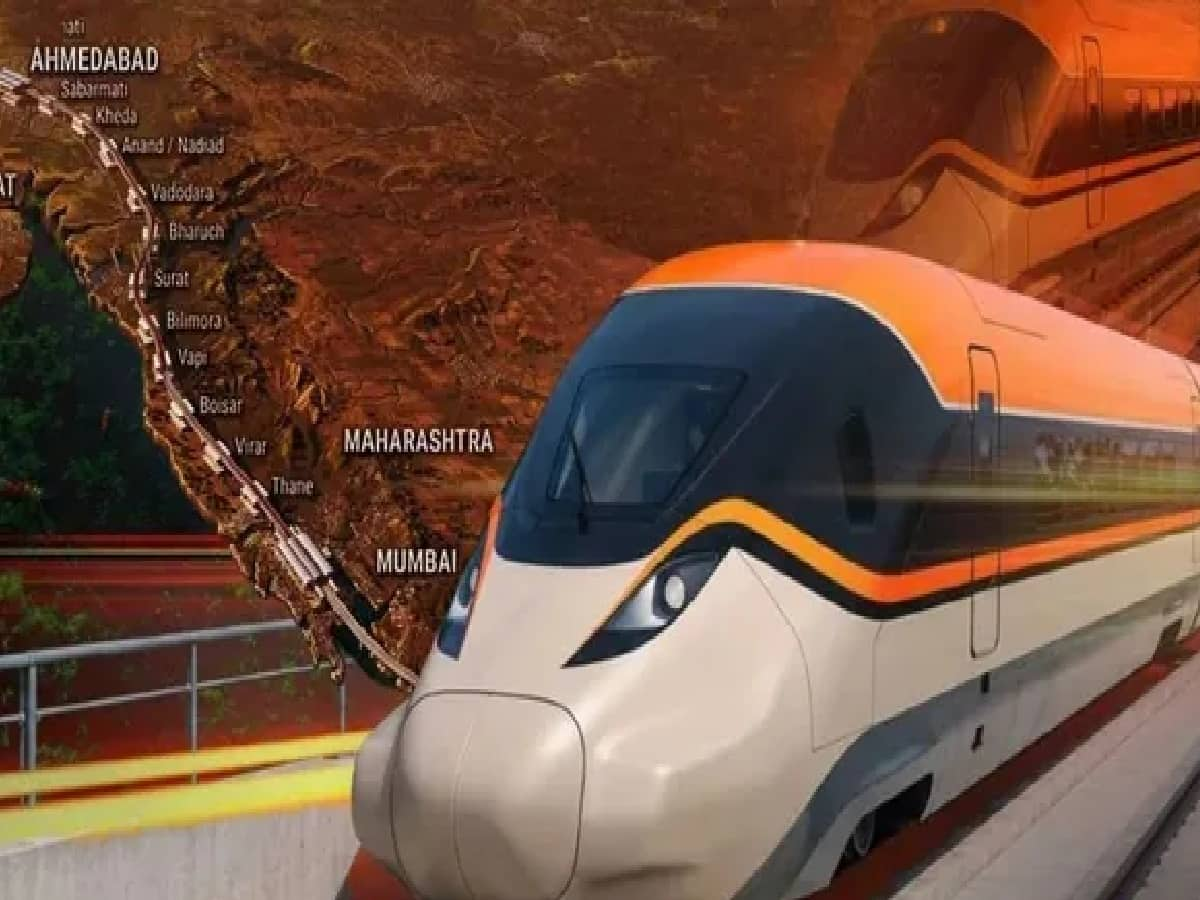
India’s 280 km/h Indigenous Bullet Train B28 Clears Squeeze Test
India's ambitious leap into high-speed rail achieved a major engineering milestone as the country's first indigenous bullet train, designated the B28, successfully completed its mandatory Vehicle Body Shell Assessment—commonly known as the "squeeze test"—at the Bengaluru manufacturing facility of Bharat Earth Movers Limited (BEML). Designed to operate on the 508-kilometer Mumbai-Ahmedabad High-Speed Rail (MAHSR) corridor, the aerodynamic trainset is built to clock a maximum testing velocity of 280 km/h and a standard commercial operating speed of 249 km/h. Once operational, the bullet train will slash the transit time between Maharashtra's financial capital and Gujarat's commercial hub from roughly 6.5 hours to just 1 hour and 58 minutes. With the structural crashworthiness and cabin resilience of the trainset officially verified under extreme pressure conditions, Indian Railways is gearing up to launch trial runs on the 100-kilometer Surat-Vapi stretch by May-June 2027, aiming for commercial operations on that section by August 2027, followed by the complete Gujarat section by December 2027 and the full 508-km corridor to Mumbai by December 2030.
Decoding the 'Squeeze Test' and the Mumbai-Ahmedabad Corridor Timeline
The successful execution of the squeeze test serves as a foundational safety validation for the B28 program, confirming that the train’s lightweight outer shell can withstand intense mechanical stress and external collision forces without deforming or endangering passengers. BEML is currently assembling the first two indigenous trainsets, configured in an eight-coach formation consisting of four motorized cars and four trailer cars, with engineering provisions to couple two trainsets into a 16-coach rake during peak travel demands. While initial trial operations between Surat and Vapi will benchmark traction, pantograph stability, and signaling integration in mid-2027, civil construction across the elevated viaducts and undersea tunnels is progressing to connect the entire Western economic corridor by the close of 2030.
20 High-Tech Engineering & Luxury Features Powering the B28 Experience
Engineered to match global standards while catering specifically to domestic operational requirements, the B28 integrates advanced safety, aerodynamic efficiency, and passenger comfort:
-
Sub-2-Hour Intercity Transit: Reduces Mumbai-to-Ahmedabad travel time from 6.5 hours to 1 hour and 58 minutes.
-
Regenerative Braking Architecture: Captures kinetic energy during braking cycles to feed electricity back into the grid, maximizing operational efficiency.
-
Modular 8-Coach Composition: Features four motorized and four trailer cars capable of seamless coupling into a high-capacity 16-coach trainset.
-
Dual-Class Passenger Layout: Offers seven standard-class coaches in an ergonomic 3×2 seating configuration and one executive-class coach in an exclusive 2×2 arrangement with superior legroom.
-
High-Speed Velocity Profile: Built for a peak testing benchmark of 280 km/h and an operating service speed of 249 km/h.
-
Accessible 557-Seat Capacity: Accommodates 557 seated travelers, incorporating dedicated facilities for passengers with reduced mobility alongside Braille-embossed directional signage.
-
Emergency Vestibule Talk-Back: Direct two-way communication terminals located in inter-coach gangways allow immediate contact with the train crew during emergencies.
-
Panoramic Thermal Glazing: Continuous wide-view windows engineered with heat-insulating and glare-reducing layers to offer unobstructed scenic vistas.
-
Wi-Fi Passenger Infotainment: On-board local Wi-Fi architecture delivering pre-loaded movies, music, and travel telemetry directly to passenger devices.
-
Pressurized Sealed Gangways: Single-piece, flexible, hermetically sealed vestibules enabling seamless and safe movement between coaches at high speeds.
-
Retractable Platform Footsteps: Automated sliding steps extend upon station arrival to eliminate platform boarding gaps for passenger safety.
-
Intelligent Dual Driver Cabs: Streamlined aerodynamic cabins at both ends equipped with real-time digital monitoring synced directly with the Operations Control Centre.
-
Automated Multi-Channel PA Systems: High-clarity public address networks delivering automated station broadcasts and route updates.
-
Adaptive Ambient LED Illumination: Glare-free, energy-efficient interior LED lighting engineered to adjust between daytime and nighttime running modes.
-
Multilingual LCD Route Displays: Digital screens positioned across passenger cabins displaying real-time speed, weather, and upcoming station alerts in English, Hindi, and Gujarati.
-
Dual HVAC Microclimate Units: Two roof-mounted heating, ventilation, and air-conditioning units per coach regulating temperature and active airflow.
-
Acoustic Noise-Suppression Package: Insulated floor assemblies, aerodynamic bogie fairings, and lower skirts designed to minimize wheel-rail friction noise and tunnel pressure booms.
-
Dual-Tier Luggage Architecture: Spacious overhead parcel racks paired with dedicated floor-anchored compartments for oversized baggage.
-
Integrated Personal Power Consoles: Individual universal charging outlets and USB connections integrated directly into armrests and seat backs.
-
Eco-Friendly Bio-Digester Restrooms: Zero-discharge bio-vacuum toilet systems designed to optimize water use and maintain strict hygiene.
508-Kilometer MAHSR Route: Connecting 12 Strategic Commercial Centers
Spanning dedicated elevated viaducts, coastal bridges, and underground corridors across Maharashtra and Gujarat, the bullet train network will connect 12 modern high-speed railway terminals: Mumbai (BKC), Thane, Virar, Boisar, Vapi, Bilimora, Surat, Bharuch, Vadodara, Anand, Ahmedabad, and Sabarmati. By linking financial districts with industrial hubs and port corridors, the B28 project is designed to accelerate commercial activity, spur transit-oriented urbanization, and set a new benchmark for rail transport across the subcontinent.




