







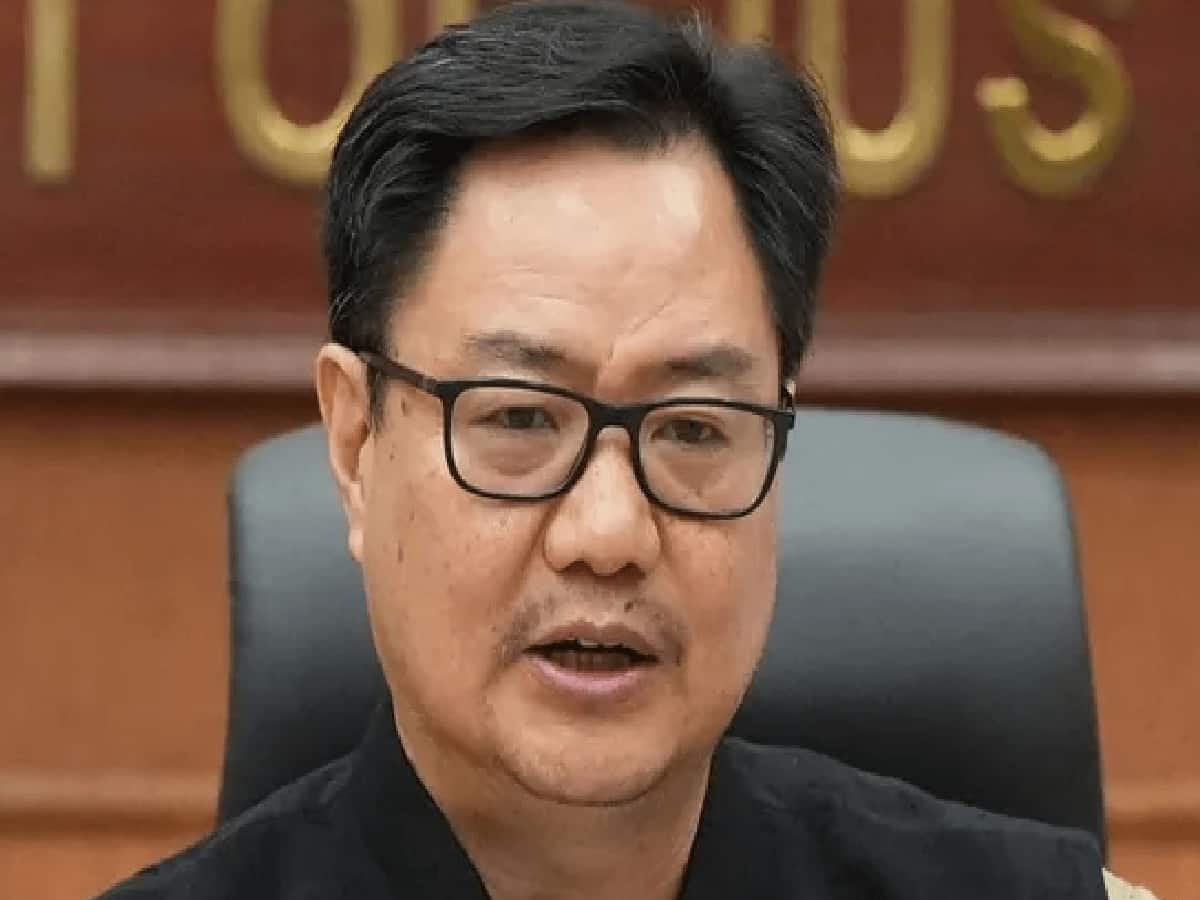
Govt Rejects Kharge’s All-Party Delimitation Meet Demand, Slams Congress 'Reluctance'
In a sharp political face-off over legislative consultation and electoral constituency boundaries, the Union Government has outright rejected Congress President Mallikarjun Kharge’s demand to convene a comprehensive all-party meeting to deliberate on a newly proposed delimitation framework. Addressing the communication sent by the opposition leader to Prime Minister Narendra Modi, Parliamentary Affairs Minister Kiren Rijiju declared that the grand old party itself repeatedly avoided formal consultation rounds despite multiple government outreaches. Citing ongoing bilateral engagements with several prominent regional opposition factions to forge a cross-party consensus, the ruling administration's firm posture has rekindled strong speculation in power corridors that a brief, focused session of Parliament may soon be convened to introduce and push forward the crucial delimitation legislation.
Rijiju's Sharp Rebuttal: 'Congress Avoided Discussions Despite Multiple Requests'
Addressing the timeline of discussions around the delimitation blueprint, the Parliamentary Affairs Minister laid down facts regarding opposition engagement:
Direct Outreaches to Top Leaders: Kiren Rijiju pointed out that during the previous parliamentary sitting, direct meetings were held with both Mallikarjun Kharge and the Leader of the Opposition in the Lok Sabha, Rahul Gandhi, yet the Congress leadership failed to commit to any scheduled date for detailed deliberations.
Building Regional Consensus: Highlighting that the government did not stall the legislative initiative despite the Congress's indecision, Rijiju revealed that wide-ranging consultations were conducted with representatives of key parties including the Samajwadi Party (SP), Dravida Munnetra Kazhagam (DMK), YSR Congress Party (YSRCP), Nationalist Congress Party - Sharadchandra Pawar (NCP-SP), Shiv Sena (UBT), All India Majlis-e-Ittehadul Muslimeen (AIMIM), and Biju Janata Dal (BJD).
Questioning Repeated Appeals: The minister argued that demanding an all-party conference at this juncture appears inconsistent when the party actively declined specific dates for bilateral consultations offered by the executive.
The Prorogation Debate: Centre Defends Monsoon Session Timeline Against Kharge's Charge
A major constitutional point raised by the Congress chief in his October 16 letter questioned why the Monsoon Session had not yet been formally prorogued after being adjourned sine die on August 13:
Refuting Procedural Irregularity: Responding to Kharge’s assertions, Rijiju stated unequivocally that there is no constitutional timeline or statutory restriction mandating that the President must prorogue a House within a specified number of days following its sine die adjournment.
Citing Historical Precedents: The government underlined historical conventions across earlier regimes where sessions remained active without immediate prorogation to retain administrative flexibility.
No Constitutional Violation: Rijiju underscored that the mere procedural continuance of the session without formal prorogation does not constitute any constitutional breach, procedural error, or legislative impropriety.
Speculation Mounts Over Short Parliamentary Session for Delimitation Bill
The escalating war of words between the treasury benches and the Congress has fueled intense talk regarding an upcoming legislative move:
Short Session on the Cards: Because the Monsoon Session has not been officially prorogued, the government retains the procedural authority to reconvene the sittings of both Houses on short notice without needing a fresh presidential summons for a new session.
Isolating Congress on Electoral Reforms: By projecting that non-NDA and regional opposition outfits like SP, DMK, and NCP-SP have already been taken into confidence, the Centre is strategically positioning the Congress as politically isolated on the national delimitation debate.
Anticipation Over New Delimitation Norms: Political strategists view the impending legislation as a pivotal structural reform that could reshape parliamentary representation, population-based electoral boundaries, and seat allocations ahead of subsequent general election cycles.




