







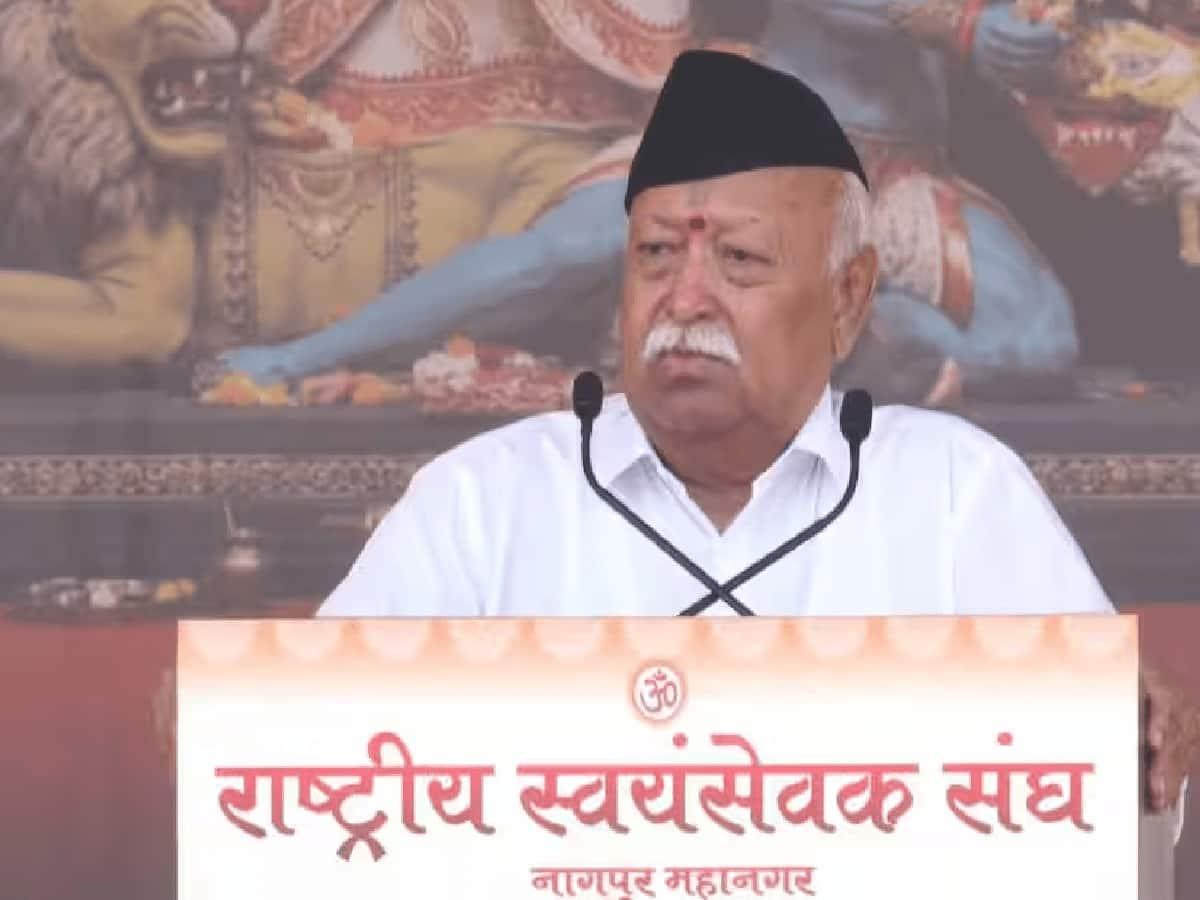
'Divided We Become Weak': RSS Chief Mohan Bhagwat Warns on AI Ethics
Delivering his annual Vijayadashami address from the headquarters in Nagpur on Tuesday, October 20, 2026, Rashtriya Swayamsevak Sangh (RSS) Sarsanghchalak Mohan Bhagwat issued an urgent appeal for social cohesion, cautioning that internal fractures historically undermine the country’s strength. Speaking against the backdrop of escalating geopolitical strife across several continents, Bhagwat asserted that while global tensions continue to intensify, India possesses the foundational spiritual and cultural wisdom to offer enduring solutions to the world. Addressing critical contemporary shifts, the RSS chief focused heavily on the impact of unregulated digital technologies on the younger generation, warning that the rapid proliferation of artificial intelligence, synthetic deepfakes, and unfiltered Over-The-Top (OTT) streaming platforms demands immediate ethical guardrails and robust administrative regulation.
AI Ethics and Digital Vulnerabilities: Navigating the Double-Edged Sword of Emerging Tech
The RSS chief placed significant emphasis on modern technological adoption, highlighting the delicate balance between innovation and moral responsibility:
-
Embracing Technological Mastery: Bhagwat underlined that youth and national institutions must actively learn, master, and harness cutting-edge technologies, affirming that the advent of Artificial Intelligence brings undeniable socioeconomic and operational benefits.
-
The Peril of Synthetic Deceptions: He cautioned that technological prowess divorced from ethical accountability creates severe societal hazards, citing the dangerous surge in viral fake videos and manipulated media generated by generative AI tools.
-
Call for Regulatory Frameworks: Urging governments and civic administrators to take concrete steps, he noted that several nations have instituted statutory checks over digital platforms, stressing that India must enforce balanced oversight on social media algorithms and OTT content to shield vulnerable impressionable minds.
Guiding the Youth: The Imperative to Discern Right from Wrong in the Digital Age
Addressing the psychological challenges faced by the younger generation, Bhagwat highlighted the deluge of unverified digital information:
-
Unfiltered Information Influx: The Sarsanghchalak observed that today's youth exhibit an immense curiosity to acquire knowledge, but often consume vast volumes of online material without the critical tools to separate truth from falsehood or constructive knowledge from moral decay.
-
Administrative Duty to Protect: He stated that given the observable psychological and societal side-effects of unregulated screen exposure, state administrations must actively consider guidelines that promote constructive digital literacy over addictive, polarizing feeds.
-
Rootedness in Core Values: Grounding youth in timeless ethical principles is essential to ensure that access to global digital tools does not alienate them from cultural responsibilities.
Century of Sangh's Journey: Awakening the 'Self' and Upholding Swadeshi
Reflecting on the organization's historic milestones, Bhagwat contextualized the RSS’s broader mission in national resurgence:
-
A Century of Awakening: Bhagwat noted that the Sangh's mission, which has been in motion for a hundred years, fundamentally revolves around the awakening of the collective "Self" (Swa)—strengthening the nation on the bedrock of its authentic identity, historical civilizational heritage, and collective consciousness.
-
Five Structural Transformations: Recalling the preamble outlined by the provincial Sanghchalak, he reiterated the crucial role of "Panch Parivartan" (five transformations), specifically spotlighting the practice of Swadeshi and self-reliance as primary instruments of civilizational renewal.
-
The Constitutional Bond: Connecting cultural consciousness with constitutional ideals, Bhagwat referenced the Preamble of the Constitution of India, noting that the opening phrase "We the People of India" embodies this deep-seated emotional bond of shared collective destiny.
-
The Peril of Historical Ammesia: Concluding his address, he reminded the gathering that India has functioned as one unified society and nation since antiquity because our ancestors recognized the unity of all existence; he warned that whenever society forgot this transcendent unity and succumbed to internal divisions, the nation suffered decline and defeat.




