







Delhi's Dust War: Why Anti-Smog Fleet Fails Across 47 Hotspots
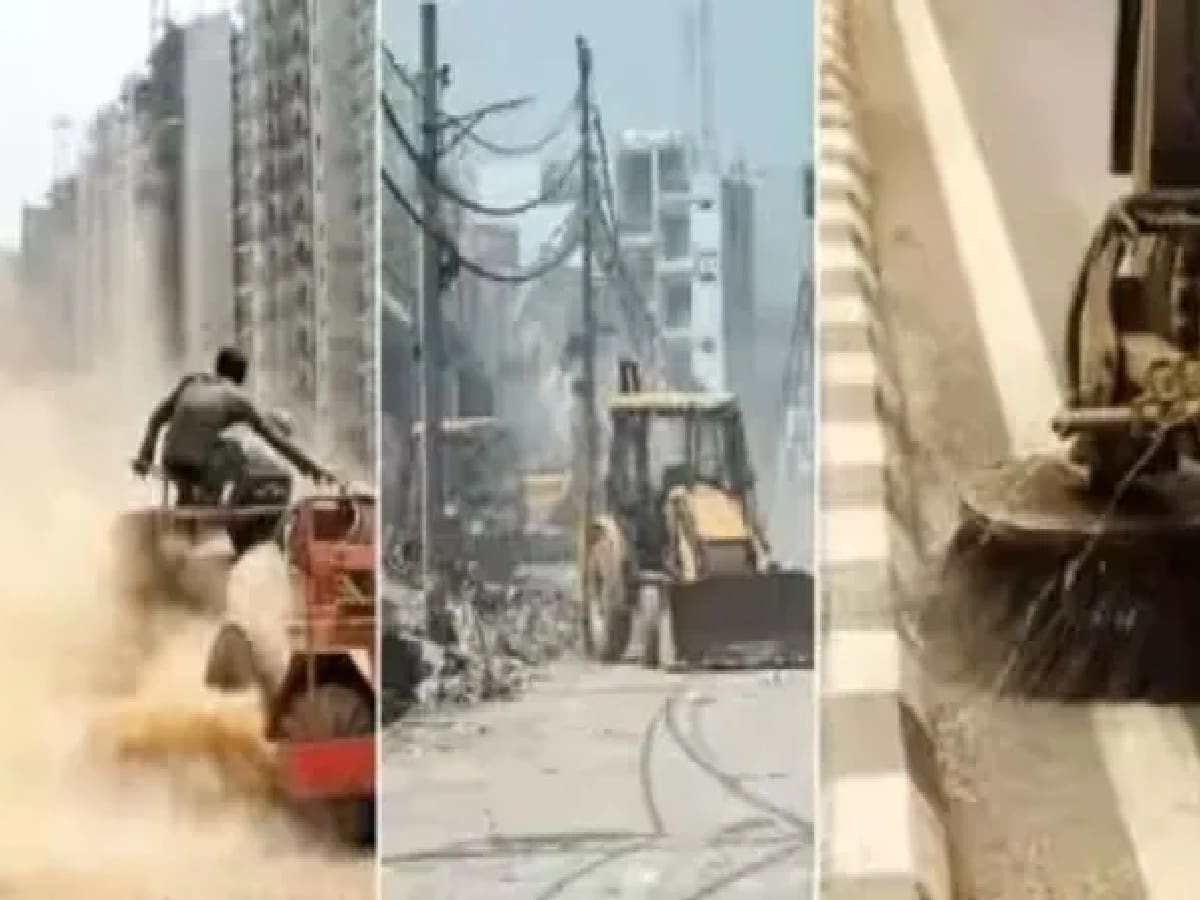
As the national capital confronts another gruelling winter pollution cycle, municipal agencies across New Delhi find themselves locked in a perennial cycle of cosmetic suppression rather than addressing the structural origins of airborne dust. While city corridors are once again dominated by water sprinklers, anti-smog guns, and localized deep-cleaning drives, ground reality reveals a widening chasm between emergency firefighting measures and the unyielding accumulation of roadside silt, exposed earth, and broken pavement. Road dust kicked up by crawling vehicular traffic, unregulated construction debris, and unattended municipal excavation continue to saturate the troposphere with coarse and fine particulate matter. Rather than eliminating these toxic particulates at their point of generation, civic authorities remain under intense scrutiny for relying on transient water sprays that merely weigh dust down momentarily, only for passing traffic to aerosolize it back into the breathing zone within hours.
The 47-Hotspot Grid and the Sweeper Deficit: Why 70% of Delhi’s Roads Slip Through the Cracks
To contain the crisis, the Public Works Department (PWD) rolled out an expanded containment strategy targeting dust-generating sources within a 3-kilometer radius of 47 designated pollution hotspots—a major expansion from previous containment perimeters spanning Anand Vihar, Bawana, Mundka, Wazirpur, Rohini, R.K. Puram, Okhla, Jahangirpuri, Punjabi Bagh, Ashok Vihar, Dwarka, ITO, DTU, Pusa, IGI Airport, IIT Delhi, the JNU corridor, Burari Crossing, North Campus, and Alipur. This micro-zoning acknowledges that localized air quality cannot improve if peripheral construction or barren soil continues feeding dust into residential colonies. The scale of the containment failure is underscored by an exhaustive audit conducted by the Commission for Air Quality Management (CAQM), which initially tracked 65 primary pollution sources across 13 core hotspots—of which only 16 have been resolved, while 43 remain under active monitoring and 6 linger unaddressed—alongside 4,555 minor local sources ranging from unpaved roads and potholes to open garbage burning. Compounding this challenge is a critical mechanical deficit: an October 2026 assessment revealed that Delhi's mechanical road sweepers (MRS) cover only 35% to 40% of major arterial roads on alternate days, far below the statutory 100% mandate. Operating with barely 100 sweeping machines against an evaluated necessity of 172 units, each sweeper logs an average of only 30 kilometers daily against an operational benchmark of 40 kilometers, frequently hampered by illegal parking and commercial encroachments. Crucially, nearly 70% of Delhi's aggregate road network consists of streets under 10 meters in width, rendering heavy sweepers obsolete and forcing civic bodies to rely on manual broom sweeping that routinely throws dust directly back into the atmosphere.
C&D Waste Violations, PMO Scrutiny, and Why Anti-Smog Guns Cannot Replace Source Elimination
The crisis is exacerbated by unchecked construction and demolition (C&D) waste, where exposed soil heaps and improperly hauled rubble turn local neighborhoods into dust corridors. Following sharp interventions from the Prime Minister's Office (PMO) warning of punitive accountability for administrative negligence, the Municipal Corporation of Delhi (MCD) escalated surveillance by installing 360-degree cameras with live telemetry connected to the Delhi Pollution Control Committee (DPCC) across all 125 authorized C&D waste transfer stations, while enforcing covered transport mandates and wetting requirements. However, ground-level compliance remains fractured; past reviews during Graded Response Action Plan (GRAP) Phase III restrictions revealed that contractor compliance lapses, illegal leaf burning, and compactor transfer shortages persist across residential wards. Although the MCD expanded its fleet to deploy 167 water sprinklers and 60 mobile anti-smog guns alongside deep-cleaning squads across all 12 municipal zones, environmental experts emphasize the functional limits of end-of-pipe suppression. Pointing to the inherent limitations of anti-smog guns, environmental activist Bhavrin Malhotra noted that while mechanical mists temporarily suppress coarse dust around immediate demolition perimeters, they offer zero protection against the dangerous sub-micron particulate spikes and toxic gaseous pollutants that build up during winter inversions, arguing that such equipment must be operated systematically year-round rather than as seasonal emergency theater. Until municipal bodies transition from water sprays to the permanent repair of cratered road margins, the total paving of open shoulders, and the unyielding legal enforcement of demolition regulations, Delhi will remain trapped in an endless cycle of chasing the very dust it fails to stop at the source.




