







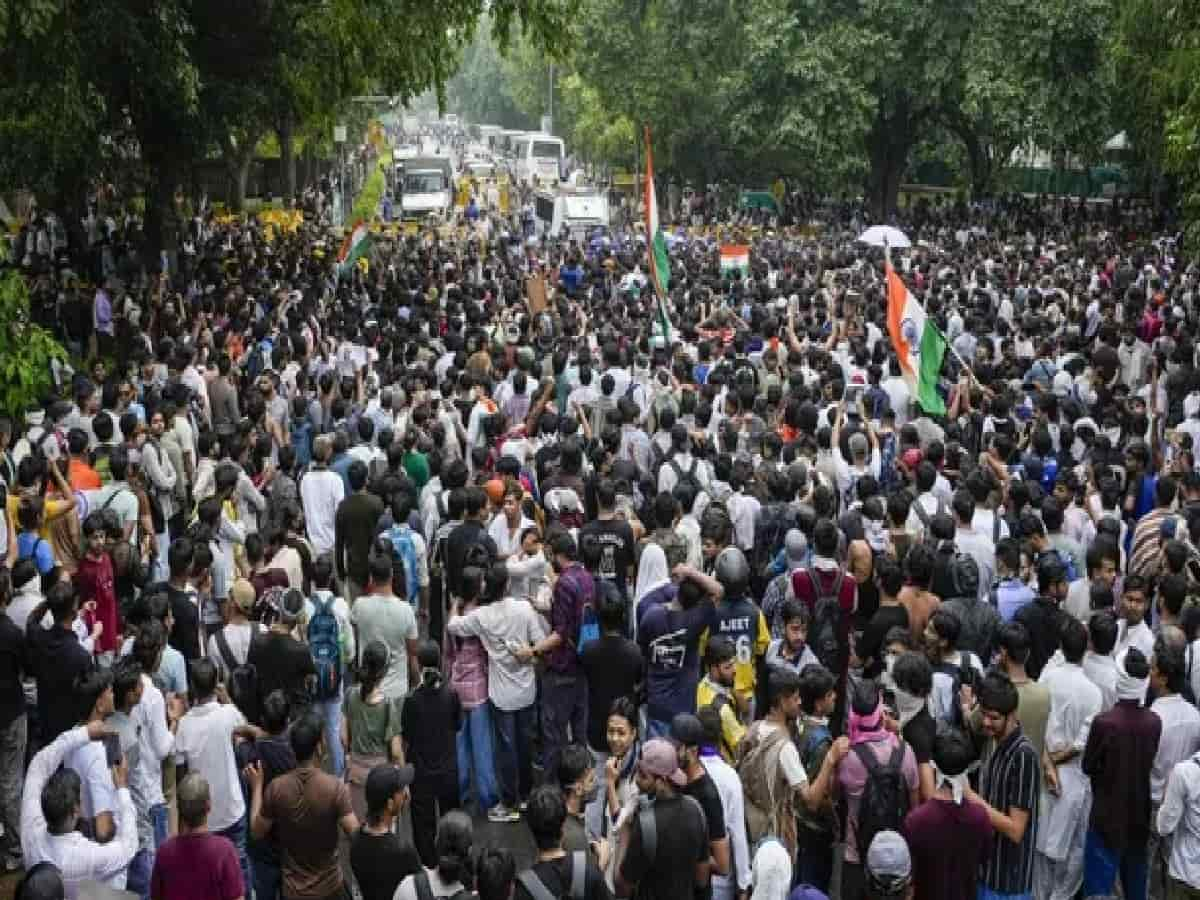
CJI Surya Kant Issues Stern Remark on Central Delhi Protests
The Supreme Court of India on Tuesday issued a stern observation regarding the indefinite occupation of public demonstration zones in the national capital, emphasizing that the fundamental right to protest cannot be exercised to the exclusion of other citizen groups or at the cost of widespread civic paralysis. A bench headed by Chief Justice of India Surya Kant was hearing a batch of urgent petitions filed by local trade associations and affected civic bodies challenging recurrent commercial shutdowns, widespread preventive detentions, sudden metro station closures, and localized communication curbs triggered by high-stakes political demonstrations. Underscoring the delicate constitutional balance between democratic dissent and public order, the Chief Justice remarked that while the right to assemble peacefully remains constitutionally guaranteed, no single group can monopolize public spaces permanently, pointing out that public protest venues must remain accessible for diverse citizen movements, including agitations by farmers and legal professionals.
Balancing Rights to Dissent: Supreme Court Scrutinizes Indefinite Rallies at Jantar Mantar
The top court's pointed observations arrived during legal scrutiny surrounding a massive, ongoing demonstration staged by opposition parties and civil outfits at Delhi’s historic Jantar Mantar against the Election Commission of India. The agitation coincided with administrative deliberations regarding the designated status of Jantar Mantar as an authorized protest site, prompting significant security barricading and preventive restrictions across Central Delhi. CJI Surya Kant questioned the tenability of protracted sit-ins that choke arterial municipal spaces, observing that an indefinite hold on public venues fundamentally impedes the legitimate rights of other citizens and civil society groups seeking temporary space to voice grievances. The bench emphasized that urban spaces cannot be perpetually held hostage to localized agitation, noting that civic authorities and judicial bodies must preserve functional public life alongside democratic freedoms.
Crippling Losses at Connaught Place: Bench Directs Traders to Implead Agitation Organizers
Representing thousands of affected shop owners and commercial enterprises, counsel for the merchant bodies presented an alarming picture of the economic fallout confronting business hubs adjoining the protest corridor. The traders' counsel submitted that five million residents and daily commuters across neighborhoods surrounding Jantar Mantar face severe disruption, pointing out that prime commercial corridors like Connaught Place have been left completely deserted due to barricading and shop closures. Addressing the plea, the Supreme Court directed the trader associations to formalize legal accountability by impleading the principal organizers of the anti-Election Commission agitation as direct respondent parties in the litigation. Backing the traders' concerns, Solicitor General Tushar Mehta argued before the bench that entities issuing mass calls for disruptive public agitations must be held legally and operationally accountable for the collateral economic losses, civic chaos, and public hardship resulting from their coordinated actions.




