







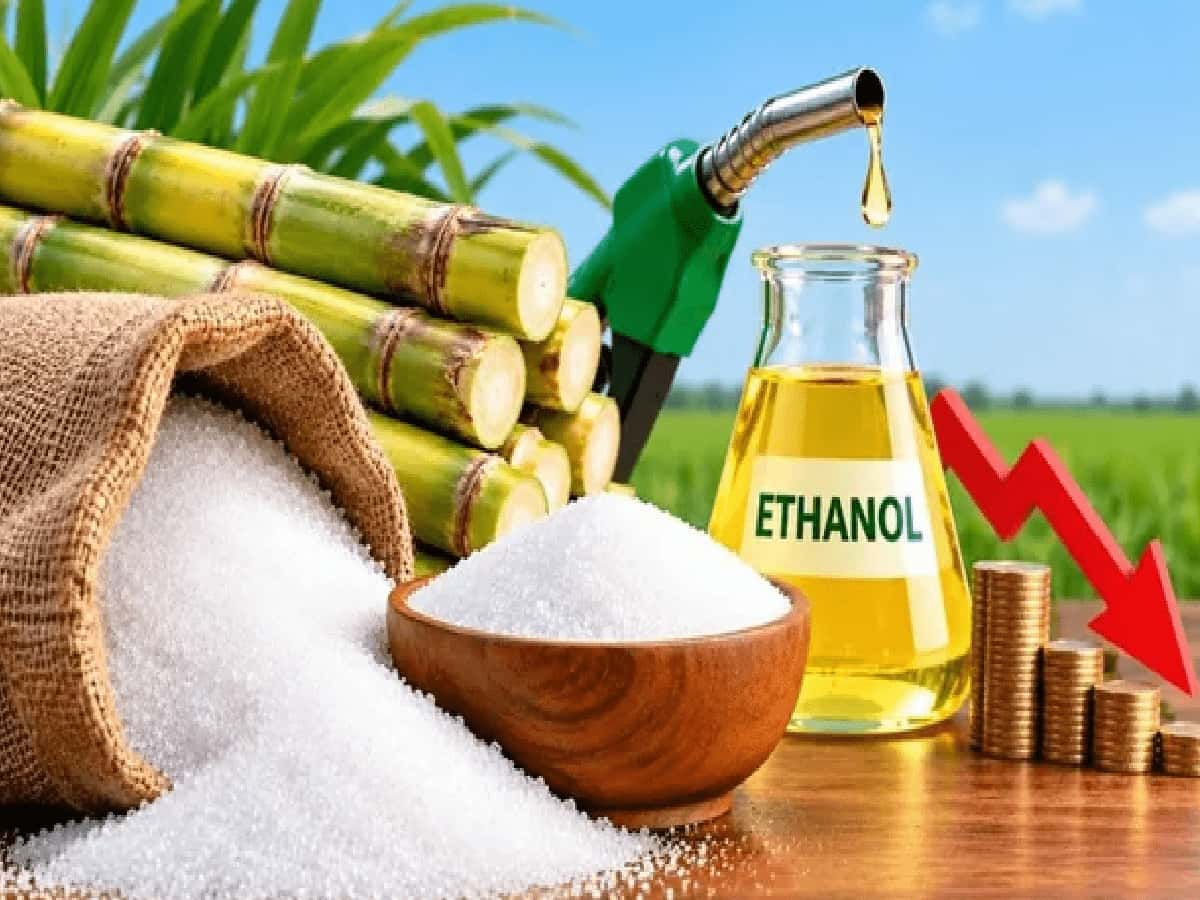
Centre Tweaks Ethanol Policy, Restricts Juice & B-Heavy Molasses Procurement
In a decisive market intervention aimed at stabilizing retail kitchen budgets and bolstering domestic availability, the central government has overhauled its ethanol procurement rules for state-owned Oil Marketing Companies (OMCs). Under the updated mandate, public sector fuel retailers will no longer purchase ethanol distilled directly from sugarcane juice, sugar syrup, or B-heavy molasses, effectively halting the diversion of sweet feedstock into fuel tanks. The regulatory pivot comes against the backdrop of a sharp spike in domestic sugar prices over the past month, prompting authorities to prioritize table sugar production over biofuel output after roughly 2.9 million tonnes of sugar were diverted toward ethanol manufacturing during the preceding cycle.
1,100-Crore-Litre Tender Pivot: Green Light for Grains, FCI Rice, and C-Heavy Molasses
The strategic policy correction was formalized through fresh tender documentation rolled out by state oil refiners to meet national blending targets:
-
Excluded Feedstock Channels: The latest mega-tender floated by OMCs for 1,100 crore litres of ethanol strictly excludes purchase quotes for ethanol distilled from pure sugarcane juice, sugar syrup, and B-heavy molasses.
-
Permitted Sourcing Pathways: State-run fuel marketing companies will continue sourcing volumes manufactured from feedstocks that do not compromise table sugar availability, including maize, broken food grains, surplus rice released via the Food Corporation of India (FCI), and C-heavy molasses.
-
Why C-Heavy Molasses Remains Intact: Unlike B-heavy molasses or direct juice, C-heavy molasses represents the terminal byproduct of the sugar extraction process, containing negligible extractable sugar content and ensuring that its distillation into alcohol does not diminish the country's consumable sugar reserves.
El Niño Deficits and Crop Risks: Bridging the 2-Million-Tonne Output Gap
The decision to insulate the national sugar reserve is driven by agricultural disruptions across premier sugarcane-producing states:
-
Drought and Weather Disruption in the South: Irregular rainfall patterns and lingering El Niño conditions have severely constrained cane yields and crushed output estimates across major agrarian belts in Maharashtra and Karnataka.
-
Floods and Pest Outbreaks in the North: Intense localized flooding combined with red rot and pest infestations in key growing pockets of Uttar Pradesh and Bihar have dampened cane recovery rates for the upcoming crushing season.
-
Supply-Demand Deficit: India’s annual domestic consumption hovers near 30 million tonnes, whereas national output projections for the current cycle are pegged at around 28 million tonnes, necessitating swift policy safeguards to plug the projected two-million-tonne deficit before festive demand strains retail inventories.
Dual Policy Balancing Act: Managing Mill Profitability and Food-vs-Fuel Tradeoffs
While the feedstock recalibration safeguards consumers from inflationary spikes, it introduces operational and economic challenges across energy and agro-processing sectors:
-
Revenue Adjustments for Sugar Mills: Private and cooperative sugar factories that injected heavy capital expenditure into modern distillery units designed explicitly for B-heavy molasses and cane juice processing face sudden revenue realignments, requiring rapid adjustments in sales projections and operational plans.
-
Grain-Based Ethanol Pressures: Shifting blending volumes aggressively toward grain-based distilleries raises procurement demand for maize and broken rice, presenting a secondary challenge of protecting animal feed supplies and staple grain affordability.
-
Protecting Foreign Exchange Reserves: With the central government committed to scaling ethanol-blended petrol (EBP) to curb expensive crude oil imports, authorities face the delicate task of sustaining fuel blending momentum without imperiling basic food security across the country.




