







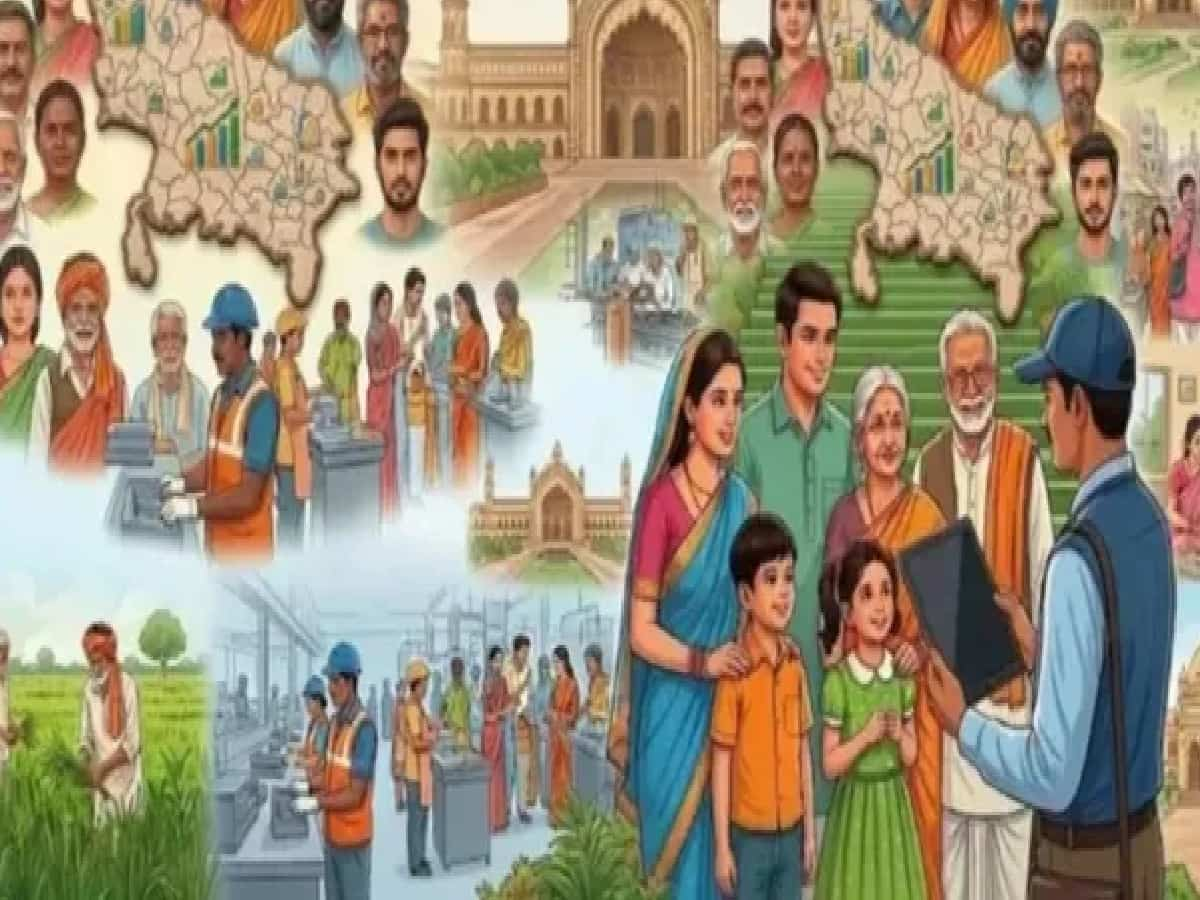
Census 2027 to Span Record 50 Days With 40 Questions, Caste Count
India’s forthcoming Census 2027 is set to mark a historic operational shift in demographic data gathering, with the Union Ministry of Home Affairs notifying an extended 50-day window for the population enumeration phase—the longest in the nation’s history. Spanning nearly a month and a half from January 10 through February 28, 2027, the exercise departs significantly from past benchmarks such as the 2011 census, where Phase 2 door-to-door counts were traditionally compressed into a 20-day timeframe between February 9 and February 28. Anchored to a national reference date of March 1, 2027, followed by a dedicated revision round from March 1 to 5, the expanded operational window accommodates a modernized hybrid format combining independent digital participation with comprehensive door-to-door field audits.
50-Day Marathon & 15-Day Self-Enumeration: How the 2027 Phase Differs From Past Censuses
The unprecedented timeline for Census 2027 introduces an inaugural 15-day self-enumeration window scheduled from January 10 to January 24, 2027, allowing citizens across urban and rural belts to upload verified household information through dedicated digital portals before enumerators arrive. Following this self-reporting phase, administrative teams will commence a 35-day door-to-door verification exercise from January 25 to February 27, 2027. This expanded duration directly responds to the increased complexity and analytical breadth of the questionnaire, which has expanded from 29 queries deployed during Census 2011 to a robust set of 40 targeted questions. The broadened data spectrum includes pivotal entries regarding caste, spouse details, parental lineage, declared nationality, permanent residential address, COVID-19 vaccination center records, the total count of operational bank accounts, driving licence ownership, as well as voluntary entries for mobile contact numbers, voter identity cards, Aadhaar identification, and valid Indian passport records.
State-Wise Schedules and Exceptions: Manipur On Hold as Poll-Bound States Take Priority
While the pan-India enumeration rollout unfolds in late January, specific administrative and regional exceptions govern several territories. The enumeration process has been placed on hold in Manipur following demands from multiple civil society organizations and community representatives insisting on the prior completion of the National Register of Citizens (NRC) verification. Concurrently, specialized advance scheduling applies to poll-bound states including Uttar Pradesh, Uttarakhand, Goa, and Punjab, where field operations are aligned to avoid overlap with assembly elections slated for early 2027. Similar localized modifications remain standard for the Union Territory of Ladakh as well as high-altitude, snowbound zones across Himachal Pradesh and Jammu and Kashmir, where seasonal weather constraints require earlier completion dates. By pairing advanced digital self-reporting with an exhaustive 40-question framework, Census 2027 aims to deliver the country's most precise socio-economic and demographic baseline to date.




