







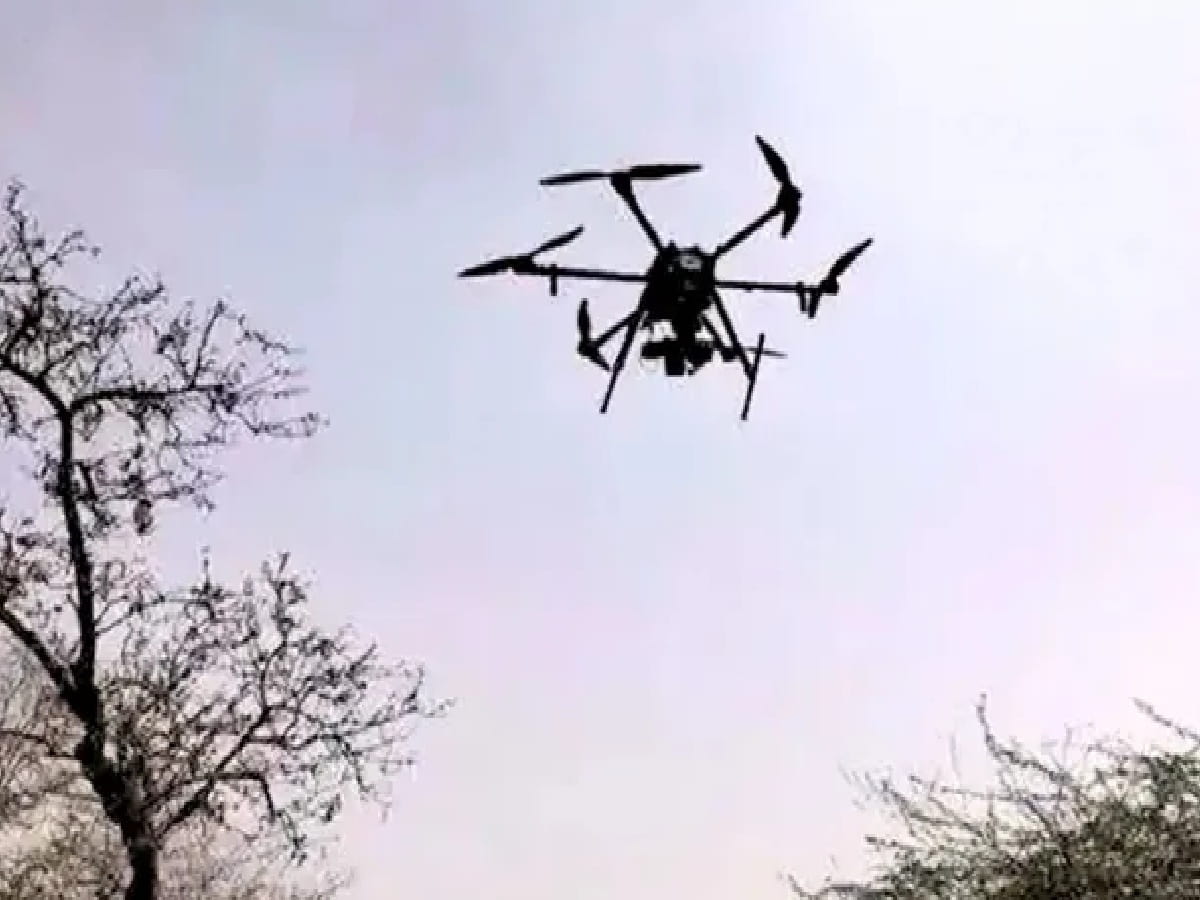
580 Army Drone Tenders Specify Chinese Parts, DFI Warns on Security
A sharp national security and defence-indigenisation debate has erupted in New Delhi on Sunday, November 22, 2026, after India's apex unmanned aviation industry association, the Drone Federation of India (DFI), formally warned top defence leadership that hundreds of government procurement tenders—overwhelmingly floated by Indian Army units—have explicitly specified Chinese-origin drones or critical Chinese components on the Government e-Marketplace (GeM). Representing over 1,000 domestic drone and counter-drone companies, the DFI submitted a detailed memorandum to Defence Secretary Rajesh Kumar Singh and Chief of Defence Staff (CDS) General N.S. Subramani on Friday, backed by an exhaustive audit of 689 GeM tenders published between March 10, 2021, and November 19, 2026. According to the federation's findings—also shared publicly across a series of posts on X—580 of those 689 tenders (84%) originated from Indian Army units, while the pace of such requests surged dramatically in 2026: 355 tenders were floated between January and November 19, 2026 alone, nearly double the 190 tenders recorded across all of 2025. Particularly alarming to industry leaders is that 328 of this year's tenders came from Army formations, including 104 floated after August 14, 2026, when the Army inaugurated its dedicated AASHVAST laboratory to screen unmanned systems for hardware and cyber vulnerabilities. Identifying 16 China-headquartered brands frequently named in tender documents—led by DJI and RadioMaster (which appeared in 450 of the 689 tenders) alongside SpeedyBee, HGLRC, GEPRC, Skydroid, T-Motor, EMAX, RunCam, Caddx, Hobbywing, Holybro, Foxeer, iFlight, FlySky, and SIYI—the DFI cautioned that specifying Chinese flight-control, radio, or first-person-view (FPV) parts means "once a tender names a Chinese part, the risk is already inside our system". Responding to the concerns, defence officials stated that GeM is a neutral, L1 price-discovery portal where buyers define technical requirements without selecting vendors, adding that Army-level verification checks and strict blacklisting penalties apply if suppliers misrepresent Chinese origin. For defence manufacturers, startups, policy analysts, and citizens across New Delhi, Kanpur, Lucknow, Unnao, Bengaluru, Hyderabad, Pune, and Chennai, the controversy highlights the urgent need to align grassroots unit procurement with India's Atmanirbhar Bharat drone security framework.
DFI Audit of GeM Drone Tenders (2021–2026): Key Data, Brands & Policy Demands
To bring together the verified figures from the Drone Federation of India's review of 689 GeM tenders, the shift from complete Chinese drones to Chinese FPV and flight-control components, and the official response from defence authorities, the tables below summarize the core facts:
Tender Breakdown & Timeline Analysis (March 10, 2021 – November 19, 2026)
| Audit Parameter | Verified Figures (DFI Memorandum & Data) | Strategic & Security Significance |
| Total GeM Tenders Flagged | 689 tenders across Army, security forces, and government bodies (March 10, 2021 – November 19, 2026). | Explicit references to Chinese drone platforms or China-headquartered component brands inside tender specifications. |
| Share from Indian Army Units | 580 tenders (84% of total) originated from Indian Army units; remaining tenders came from state police (including J&K Police) and other agencies. | Demonstrates widespread decentralised procurement of tactical and training drone parts at the unit level. |
| 2025 vs. 2026 Surge | 190 tenders in full-year 2025 vs. 355 tenders between Jan and Nov 19, 2026 (nearly double; 328 from Army in 2026). | Includes 104 Army tenders raised after the August 14, 2026 launch of the AASHVAST drone vulnerability-screening lab. |
| Shift Toward FPV & Core Subsystems | Tenders naming FPV component brands jumped from 109 in 2025 to 270 in 2026; RadioMaster (137 tenders) overtook DJI (96) in 2026. | Shows units shifting from buying finished Chinese drones to assembling drones locally using Chinese flight controllers, motors, ESCs, and radios. |
Most-Cited Chinese Drone & Component Brands vs. Industry & MoD Positions
| Dimension | Key Details & Stakeholders | Core Argument / Safeguard |
| 16 China-Headquartered Brands Cited | DJI and RadioMaster (in 450 of 689 tenders), plus SpeedyBee, HGLRC, GEPRC, Skydroid, T-Motor, EMAX, RunCam, Caddx, Hobbywing, Holybro, Foxeer, iFlight, FlySky, and SIYI. | DFI noted these are not peripheral accessories—they govern flight control, telemetry, radio links, and data transmission. |
| DFI's Three Core Warnings |
1. Cyber/Data Security: Risk enters at the tender specification stage. 2. Supply-Chain Vulnerability: China imposed export licensing on drone motors, ESCs, autopilots, and radios from Nov 18, 2026. 3. Domestic Industry Growth: Over 200 Indian component makers need military orders to scale. |
Demanded a zero-Chinese-parts rule in defence drone procurement, preference for indigenous subsystems, and mandatory Country of Origin declarations in every bid. |
| Defence Officials' Response on GeM | Officials stated GeM is an impartial platform that matches buyer specifications with lowest-cost bids without letting buyers favor specific sellers. | Emphasized that Army-level checks and balances screen deliveries and any vendor caught misrepresenting Chinese components faces blacklisting. |
Why FPV Components and Supply-Chain Rules Heighten the Security Concern
In its representation to Defence Secretary Rajesh Kumar Singh and CDS General N.S. Subramani, the Drone Federation of India highlighted a crucial structural shift: rather than procuring ready-to-fly Chinese quadcopters, many units have begun ordering individual subsystems to assemble first-person-view (FPV) and tactical drones in-house—driving FPV-linked tenders from 109 in 2025 to 270 in 2026. Because components from brands such as RadioMaster, SpeedyBee, Holybro, SIYI, and DJI manage flight controllers, electronic speed controllers (ESCs), radios, and video/data links, DFI warned they pose direct electronic and data-security risks. Compounding the vulnerability, China tightened export licensing controls on drone motors, ESCs, autopilots, and radios effective November 18, 2026, underscoring the danger of relying on adversarial supply chains.
Balancing GeM Procurement Rules With Indigenous Drone Manufacturing
While defence officials maintained that GeM prevents buyers from handpicking vendors and enforces strict blacklisting against suppliers who falsify component origins, industry leaders argue that tender specifications themselves must stop naming foreign brands or architectures. With over 200 Indian drone component manufacturers and vibrant defence-tech hubs across New Delhi, Bengaluru, Hyderabad, and Kanpur's Defence Corridor building indigenous motors, flight controllers, and communication links, mandating Country of Origin disclosures and indigenous component preference could simultaneously close cyber loopholes and accelerate self-reliance in unmanned warfare.




