






3200-Year-Old Bowl Unearthed in Tamil Nadu May Decode Indus Valley Script
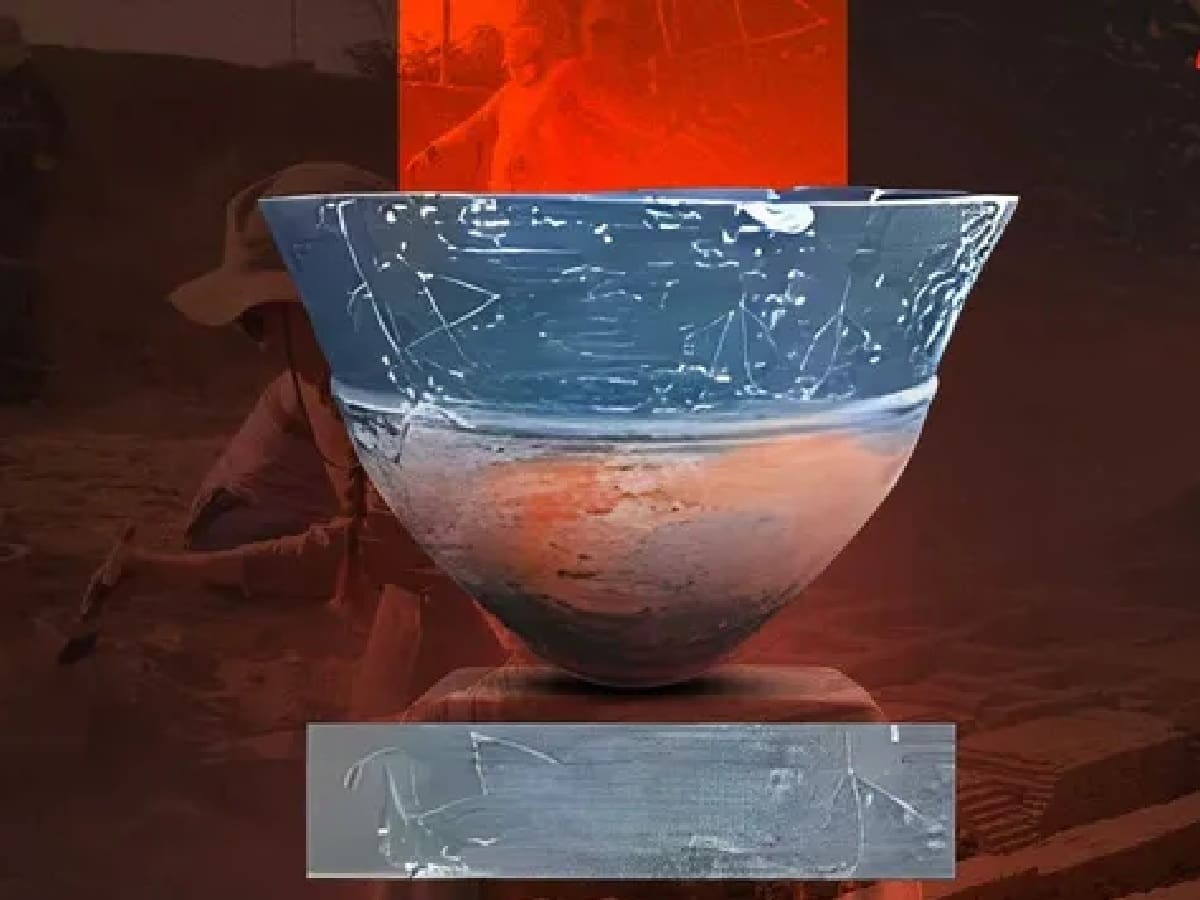
In a landmark archaeological breakthrough, researchers from the Tamil Nadu Archaeological Department have unearthed an intact, 3,200-year-old black-and-red ware bowl bearing a sequence of five distinct graffiti symbols at Telunganur, a submerged locality within the Mettur Dam reservoir near Salem. Etched from left to right, the five-symbol inscription represents the longest continuous sequence of pottery markings ever documented on ancient artifacts in Tamil Nadu. The discovery provides archaeologists and epigraphists with critical physical evidence that could unlock early communicative scripts, bridging the gap between the twilight of the Indus Valley Civilization and the genesis of early Tamil-Brahmi writing systems.
Decoding the 5-Symbol Inscription and the Indus Valley Civilization Link
The presence of the five symbols in two distinct arrangements across different ceramic vessels strongly suggests an organized, intentional writing system rather than random artistic carvings, potentially representing an archaic precursor to Tamil-Brahmi script that flourished by the sixth century BCE. Telunganur and its neighboring site Mangadu represent twin Iron Age habitations occupied between 1600 BCE and 1200 BCE, directly overlapping with the mature-to-late phases of the Indus Valley Civilization (3300 BCE to 1300 BCE). According to K. Rajan, academic advisor to the state archaeological department, the find expands upon 1960s discoveries by the Archaeological Survey of India (ASI) at Sanur near Chengalpattu, which yielded only three graffiti marks. With more than 16,000 graffiti-inscribed pot-sherds recovered across southern sites including Keeladi, Kodumanal, Thulukkadpatti, and Kilnamandi, comparative epigraphical studies show up to 90 percent structural similarity with Indus Valley script signs, pointing to enduring linguistic and cultural continuities across the subcontinent.
Rare 1200 BCE Steel Weaponry and 1.9-Meter Iron Spear Uncovered
Beyond prehistoric epigraphy, the excavation has illuminated early metallurgical expertise in southern India through a vast cache of sophisticated weaponry and metal implements. Excavation director S. Paranthaman revealed that teams recovered a massive 1.9-meter-long iron spear, accompanied by an array of specialized iron arrowheads, battle axes, daggers, knives, fasteners, and finely cast copper artifacts. Crucially, researchers also identified potential high-carbon steel swords from the site. Telunganur previously gained global scientific attention when an excavated steel sword yielded radiocarbon dating back to 1200 BCE, positioning the region among the earliest verified centers of advanced crucible steel production in the ancient world.
Iron Age Skeletons and Four Distinct Burial Traditions Unearthed
Excavation teams have also recovered two intact human skeletons dating to the Iron Age, offering vital bioarchaeological data for ongoing anthropological and ancient DNA research. Equally notable is the documentation of four diverse mortuary traditions within the same archaeological horizon: pit burials, stone cists (chests), urn interments, and terracotta sarcophagi. According to director Paranthaman, the simultaneous presence of four distinct burial customs reflects a complex, socio-culturally layered community that maintained continuous habitation and cultural vitality throughout the transition from the Early Iron Age to the Late Iron Age.