







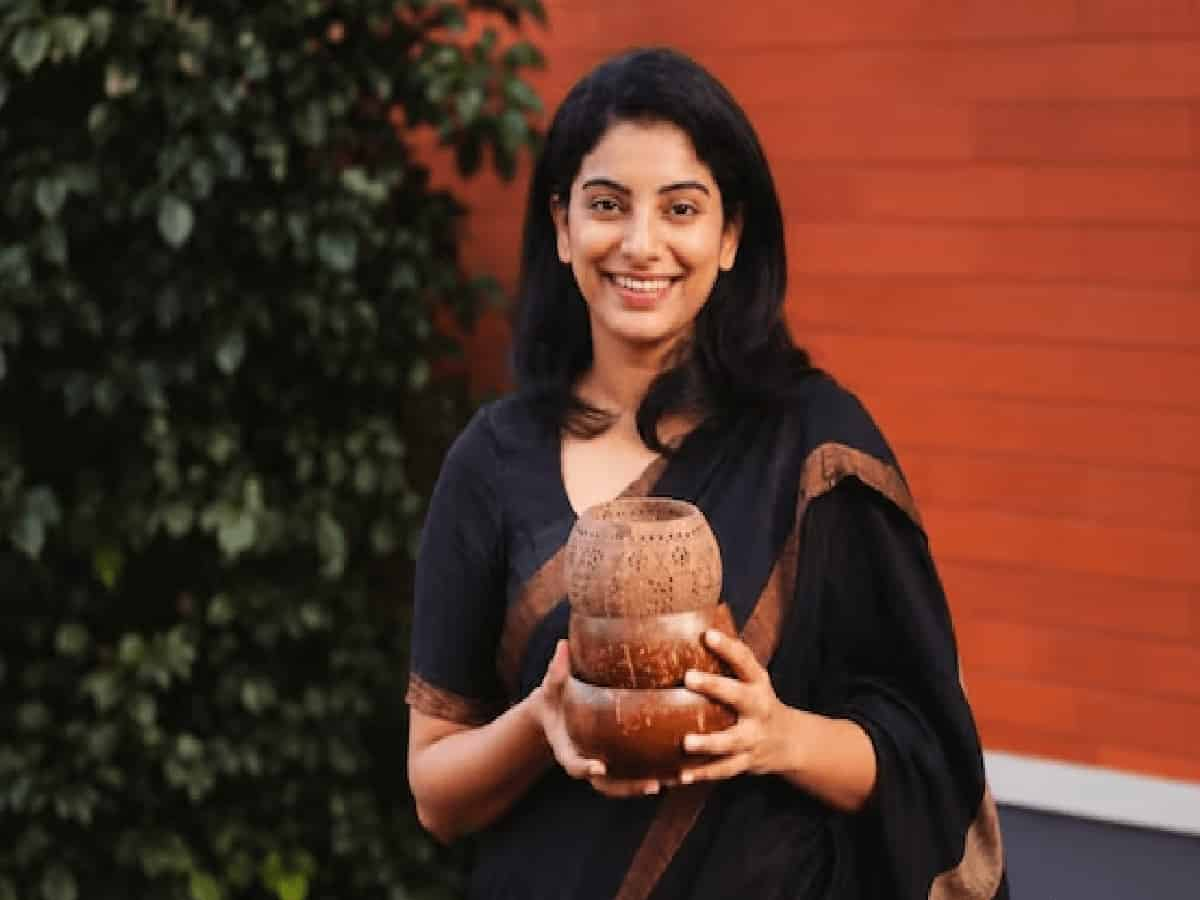
Kerala Woman Quits Startup Job for Coconut Shells, Earns ₹3.5 Cr
What most people toss aside as kitchen or processing waste—hard discarded coconut shells—became the unlikely foundation of a thriving ₹3.5 crore annual business for Kerala entrepreneur Maria Kuriakose. After earning an MBA in Spain and returning to India with a goal of combining environmental sustainability with commercial viability, Maria stepped away from her startup job and launched Thenga Coco in 2019 with an initial investment of just ₹1 lakh. Armed at first with simple sandpaper and a drop of coconut oil rather than a factory or large capital pool, she turned an accidental experiment into a growing homegrown brand offering over 110 stock-keeping units (SKUs) across tableware, home decor, candles, gifting hampers, and corporate merchandise while creating livelihoods for rural artisans in Kerala. Across Uttar Pradesh—especially in state capital Lucknow and neighboring commercial, academic, and craft hubs such as Unnao, Kanpur, Prayagraj, and Varanasi, where eco-conscious gifting, plastic-free dining, and MSME-led circular manufacturing are gaining steady traction—Maria's journey shows how upcycling agricultural byproducts can scale into a high-impact venture.
From Initial Market Research to an Accidental Coconut Shell Breakthrough
When Maria began mapping out her venture in 2019, coconut shell craft was not even on her radar. Her early market study explored categories such as coconut water, coir, and palm leaf items, only to find stiff competition in coconut water and sharp price competitiveness from neighboring Tamil Nadu in coir. After briefly testing palm leaf products, a chance encounter with discarded coconut shells changed her direction: rubbing a shell's exterior with sandpaper and smoothing it with a touch of coconut oil revealed a rich, durable natural finish that looked far more refined than raw waste:
| Journey Milestone | Key Details & Business Progression |
| Starting Capital & Year | Launched Thenga Coco in 2019 with ₹1 lakh after completing an MBA in Spain and leaving a startup role |
| Early Experiment & First Order | Tested sanding and coconut oil on discarded shells; pitched eco-conscious buyers in Bengaluru, Delhi, and Chennai and won an initial order of 200 units at ₹60 each |
| Sourcing & Craft Challenge | Learned that shell curvature and thickness vary—flat-based shells suit bowls while deeper contours fit teacups—requiring careful sorting and pricing refinement |
| Product Scale & Revenue | Expanded to 110+ SKUs—including smoothie bowls, teacups, ice cream cups, soap dishes, planters, candles, and custom corporate/school items—reaching over ₹3.5 crore in annual revenue |
Reviving a 500-Year-Old Kerala Craft With Modern Tools and Local Artisans
Beyond building a sustainable consumer brand, Maria's work reconnected modern design with a centuries-old coastal tradition. Historical accounts of Kerala's coconut shell craft trace the art back roughly 500 years to Koyilandy, where Yemeni merchants are noted to have introduced shell-craft techniques. As plastic and metal wares gradually edged out traditional crafts, Maria attended agricultural gatherings and partnered directly with local artisans—including women in rural districts such as Palakkad—to adapt shell craft into contemporary everyday essentials like smoothie bowls and teacups. Her engineer father also stepped in to build practical workshop tools, including a sanding disc fitted to a drill and a buffing cloth wheel, while finishing touches with coconut oil and beeswax brought out the natural grain without harsh synthetic coatings.
Circular Impact: Turning Discarded Shells Into Lasting Everyday Goods
By sourcing shell leftovers from coconut processing units that might otherwise be burned as rudimentary fuel or dumped in landfills, Thenga Coco demonstrates how circular design can protect the environment while supporting skilled hands. Hard, dense, and naturally resilient when properly finished and cared for, repurposed coconut shells offer an authentic alternative to single-use plastics—proving that a modest ₹1 lakh experiment rooted in local resources and patience can grow into a ₹3.5 crore enterprise.




