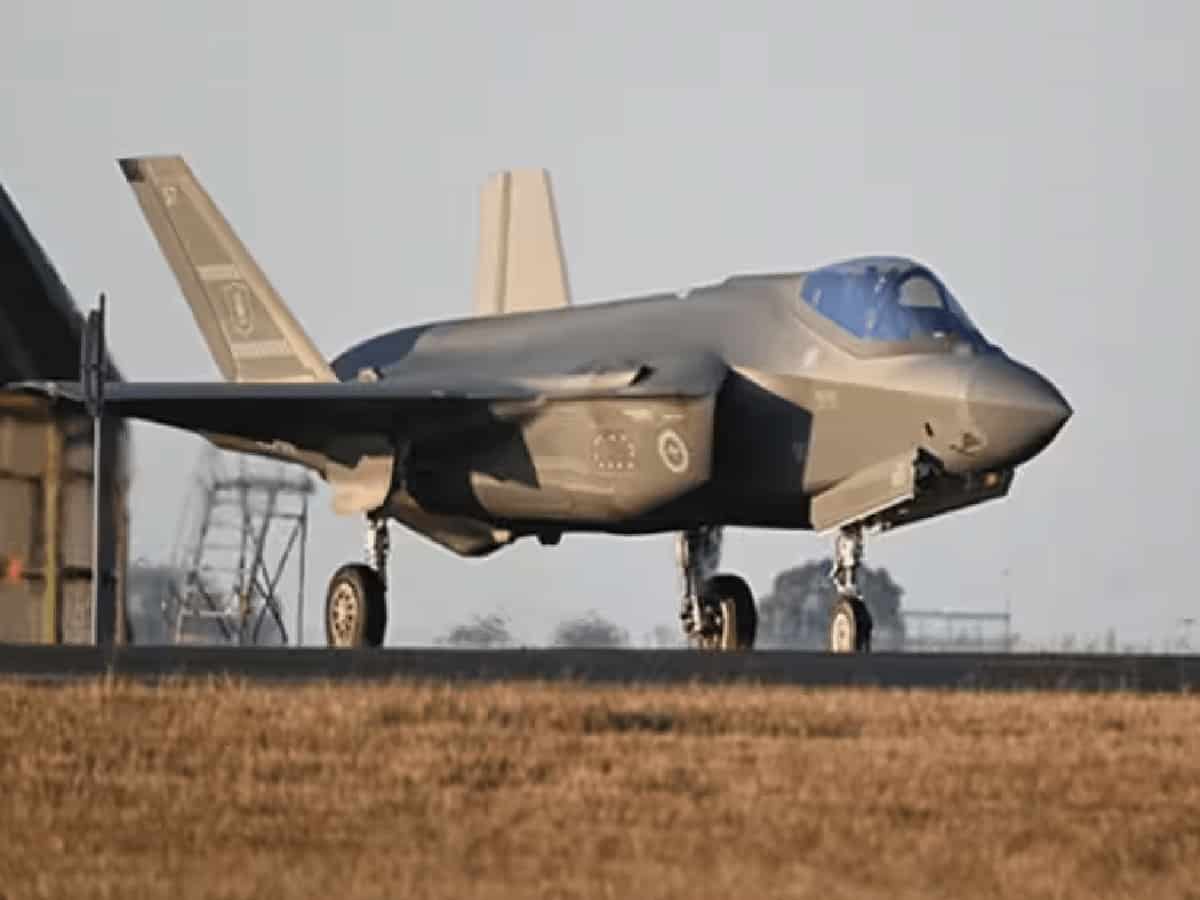
US Clears $24.3B Saudi F-35 Deal Amid China Spy Fears
The United States government has formally advanced a monumental $24.3 billion foreign military sales package to supply 48 fifth-generation F-35 Lightning II stealth fighter jets alongside supplementary propulsion powerplants to the Kingdom of Saudi Arabia. According to notifications issued by the US State Department, the landmark procurement program aims to fortify Riyadh’s aerial combat capabilities against emergent Middle Eastern security threats, positioning Saudi Arabia to become only the second nation across West Asia—alongside Israel—to deploy the Lockheed Martin stealth airframe. However, the multi-billion-dollar transaction has ignited intense counter-intelligence friction across Washington's national security apparatus, with classified US intelligence findings warning that expanding defense and telecommunications integration between Riyadh and Beijing could inadvertently expose America's most classified aviation hardware to Chinese military espionage.
Pentagon Warns of Base Infiltration: Vulnerabilities Surrounding Chinese Tech, Huawei, and ZTE
A comprehensive risk evaluation compiled by the Pentagon’s Defense Intelligence Agency (DIA) has raised serious technical alarm bells regarding the vulnerability of secured hangars, radar suites, and avionics bays intended to host the fifth-generation stealth jets. Intelligence officials specifically flagged the physical presence of Chinese defense attachés at several Saudi military installations, alongside the Kingdom's deepening collaboration with Beijing on ballistic missile development programs. Furthermore, the extensive integration of Chinese telecommunications giants Huawei and ZTE across Saudi Arabia's digital and dual-use logistics infrastructure has triggered fears that sovereign data links, active electronically scanned array (AESA) radar profiles, and electronic warfare signatures could be compromised, prompting US oversight officials to demand strict access limitations barring foreign personnel and untrusted hardware from any facility housing F-35 systems.
30-Day Congressional Review Window Opens Amid Bipartisan Resistance and Israeli Security Concerns
The executive determination to move forward with the arms package follows long-standing diplomatic pushes by Saudi Crown Prince Mohammed bin Salman, initially crystallized when President Donald Trump greenlit the roadmap ahead of high-level bilateral summits. Following the formal executive notification, Capitol Hill lawmakers now hold a 30-day statutory window under the Arms Export Control Act to examine the terms of the transfer or introduce joint resolutions of disapproval, a countermeasure requiring a two-thirds supermajority in both chambers to overcome an executive veto. Opposition is already surfacing, with House Intelligence Committee member Raja Krishnamoorthi publicly criticizing the transaction by stressing that transferring fifth-generation assets while intelligence agencies actively flag Chinese espionage vulnerabilities poses severe strategic liabilities. Concurrently, defense planners in Tel Aviv have voiced quiet apprehensions regarding the erosion of Israel’s statutory Qualitative Military Edge (QME) across West Asian airspace, drawing direct parallels to the stalled UAE F-35 procurement pipeline that was suspended following similar counter-intelligence controversies over Abu Dhabi's technical ties with Beijing.