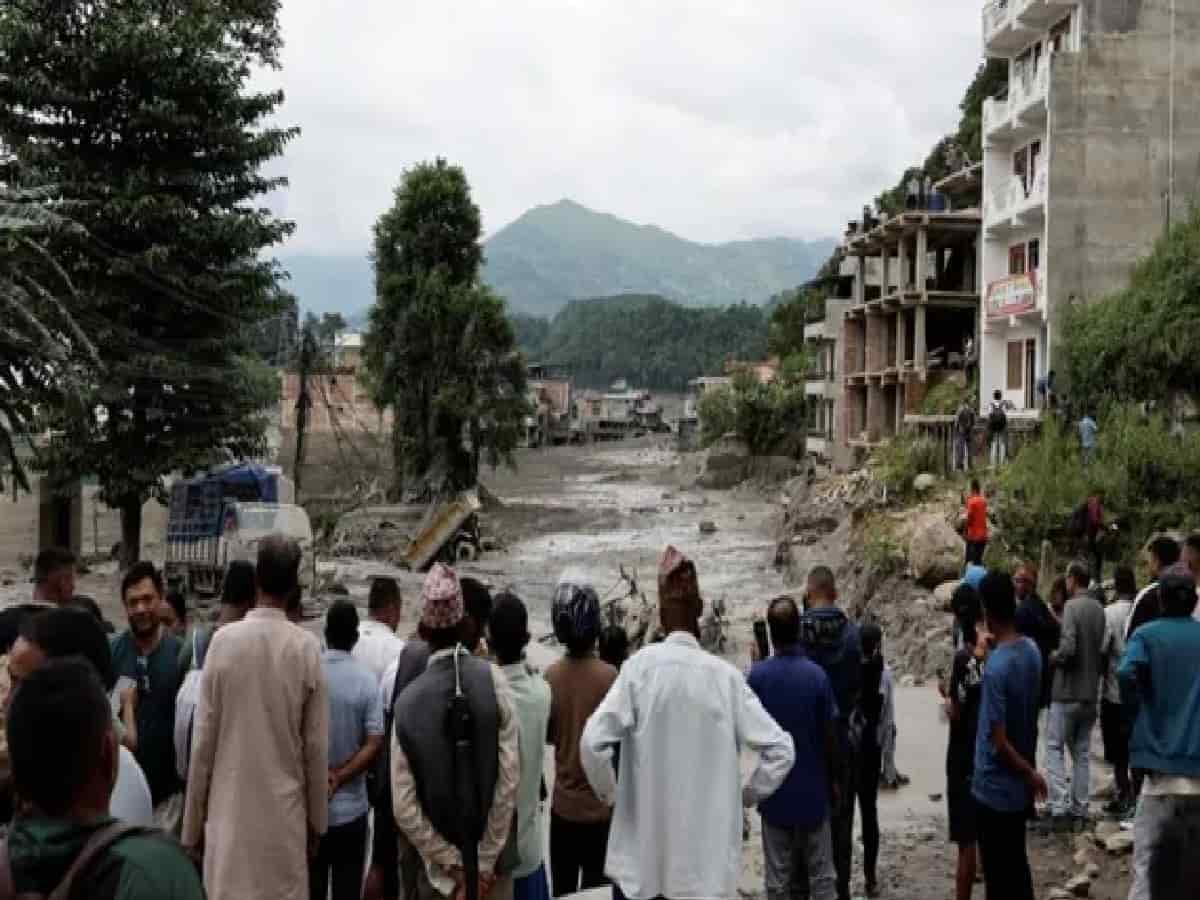
Devastating Nepal Floods Destroy 260-Year-Old Himalayan Trade Corridor Connecting India, China, and Tibet
Recent catastrophic flash floods in Nepal have triggered widespread devastation, severely hitting the historic Himalayan corridor—particularly the critical Rasuwagadhi border crossing. For over 260 years, this trans-Himalayan route has served as the primary geopolitical and economic bridge between India, China, and Tibet. The disaster has not only halted modern trade and stranded hundreds of transport containers but also washed away crucial infrastructure, including the iconic Friendship Bridge.
Centuries of History: From Mule Caravans to Modern Trade
Long before heavy trucks navigated the rugged terrain of the Bhote Koshi Valley, this high-altitude corridor functioned as a bustling economic highway. Mule caravans historically transported grains like rice northward from Nepal to Gyirong, exchanging them for highly prized Tibetan salt and wool, which were subsequently traded southward into India. Newar merchant communities famously established settlements across Tibetan trading hubs to manage this cross-border commerce.
The corridor also holds deep strategic and historical significance. In 1744, the Gorkhas captured Nuwakot primarily to secure control over the lucrative Tibetan trade routes. Later, in 1855, Prime Minister Jung Bahadur Rana constructed the formidable Rasuwagadhi Fort on the border to safeguard regional interests. Although modern roads and 20th-century political shifts gradually replaced the traditional caravan economy, the route evolved to facilitate contemporary cross-border commerce.
Rasuwagadhi: A Modern Gateway for Electric Vehicles and Imports
In recent decades, the Rasuwagadhi-Gyirong border crossing transformed into a vital hub for modern consumer goods, textiles, electronics, and footwear. Most notably, it emerged as the primary entry point for the surging influx of electric vehicles (EVs) into Nepal. According to official Rasuwa Customs data, more than 6,500 Chinese electric cars, SUVs, and vans entered Nepal through this specific crossing during the 2025-26 period, turning the mountain settlement into a bustling vehicle transit depot.
Catastrophic Impact of Recent Floods
The vulnerability of the narrow valley was starkly exposed when torrential flash floods swept through the region, carrying away heavy shipping containers parked along the Timure River. Acting like battering rams, these drifting containers smashed into bridge piers, highway curbs, and power transmission towers.
Crucially, the disaster destroyed the historic Mitari Sanghu (Friendship Bridge) spanning the Lhende/Koshi River. Originally rebuilt following the 2015 earthquake and subsequently repaired after the 2025 seasonal floods, the bridge's structural abutments collapsed within seconds, completely severing the overland trade and transit link between Nepal, China, and the broader regional network.