Why Western UP's Behat Seat is a Key Battleground for 2027 Elections
With political preparations heating up for the upcoming 2027 Uttar Pradesh Assembly elections, attention has firmly turned toward the state's crucial regional constituencies. As the old political adage suggests, the path to power in New Delhi famously runs through Uttar Pradesh, making every single one of the state's 403 assembly seats a high-stakes battleground. Each constituency features a unique social makeup, population distribution, and geographical footprint, where local issues, development demands, and intricate caste equations dictate electoral success. In this detailed ground report, we examine the highly talked-about Behat Assembly constituency in the Saharanpur district of western Uttar Pradesh, analyzing its changing voter dynamics, past electoral trends, and political prospects for 2027.
Electoral History and 2022 Assembly Results in Behat
Occupying the prominent spot as constituency number one in the Uttar Pradesh Legislative Assembly, Behat falls entirely within the Saharanpur Lok Sabha region. During the 2022 assembly elections, the constituency witnessed a decisive victory for the Samajwadi Party (SP), whose candidate Omar Ali Khan secured a massive 134,513 votes, riding high on an alliance with the Rashtriya Lok Dal (RLD). The Bharatiya Janata Party (BJP) candidate, Naresh Saini, finished runner-up with 96,633 votes, followed by Bahujan SamajParty (BSP) candidate Raees Malik with 45,075 votes, and Congress candidate Poonam Kamboj with 1,632 votes, cementing the SP's grip on the seat at the time.
Impact of the 2026 Special Intensive Revision (SIR) on Voter Numbers
The political landscape in western Uttar Pradesh has shifted significantly since 2022. Most notably, the RLD has parted ways with the Samajwadi Party to form an alliance with the BJP, altering political alignments on the ground. Furthermore, the Special Intensive Revision (SIR) conducted in 2026 has reshaped the constituency's electoral rolls. Prior to the SIR, voter strength in Behat during the 2024 Lok Sabha elections stood at 374,730. However, post-SIR updates have reduced total voters to 347,520, reflecting a net reduction of 27,210 voters that could influence winning margins in close contests.
Samajwadi Party's Dominance and 2024 Lok Sabha Trends
A closer look at recent voting statistics highlights the challenges facing the opposition in Behat. In 2022, the Samajwadi Party won the seat by a comfortable margin of 37,880 votes. This dominance was reinforced during the 2024 Lok Sabha elections, where the INDIA bloc alliance candidate Imran Masood pulled in a leading 133,394 votes from the Behat assembly segment. By comparison, the BJP-RLD alliance candidate Raghav Lakhan Pal Sharma secured 95,165 votes, while the BSP candidate managed 36,045 votes. The SP-Congress alliance's victory margin within Behat actually expanded slightly to 38,229 votes in 2024, proving that capturing this seat will require an aggressive, well-calculated strategy from the ruling BJP.
Demographics and Complex Caste Equations in Behat
The electoral arithmetic of Behat is defined by a diverse and delicate demographic balance. Estimated population figures indicate approximately 130,000 Muslim voters, 45,000 Scheduled Caste (SC) voters, 40,000 Saini voters, and 45,000 Kashyap voters. Additionally, the constituency is home to roughly 20,000 regional voters, 12,000 Gurjars, and a combined 30,000 voters from communities such as Pal, Dhobi, Khatik, and Banjara. Smaller but impactful communities include roughly 8,000 Brahmins and 3,000 Jats. While Behat functions as a Muslim-majority constituency demographically, the cumulative Hindu population outnumbers Muslim residents, and Other Backward Classes (OBCs) hold a fiercely decisive role. Historically, the BJP has preferred fielding candidates from the Saini community here, making candidate selection a critical factor for the 2027 race.
Who Has the Upper Hand in the 2027 Showdown
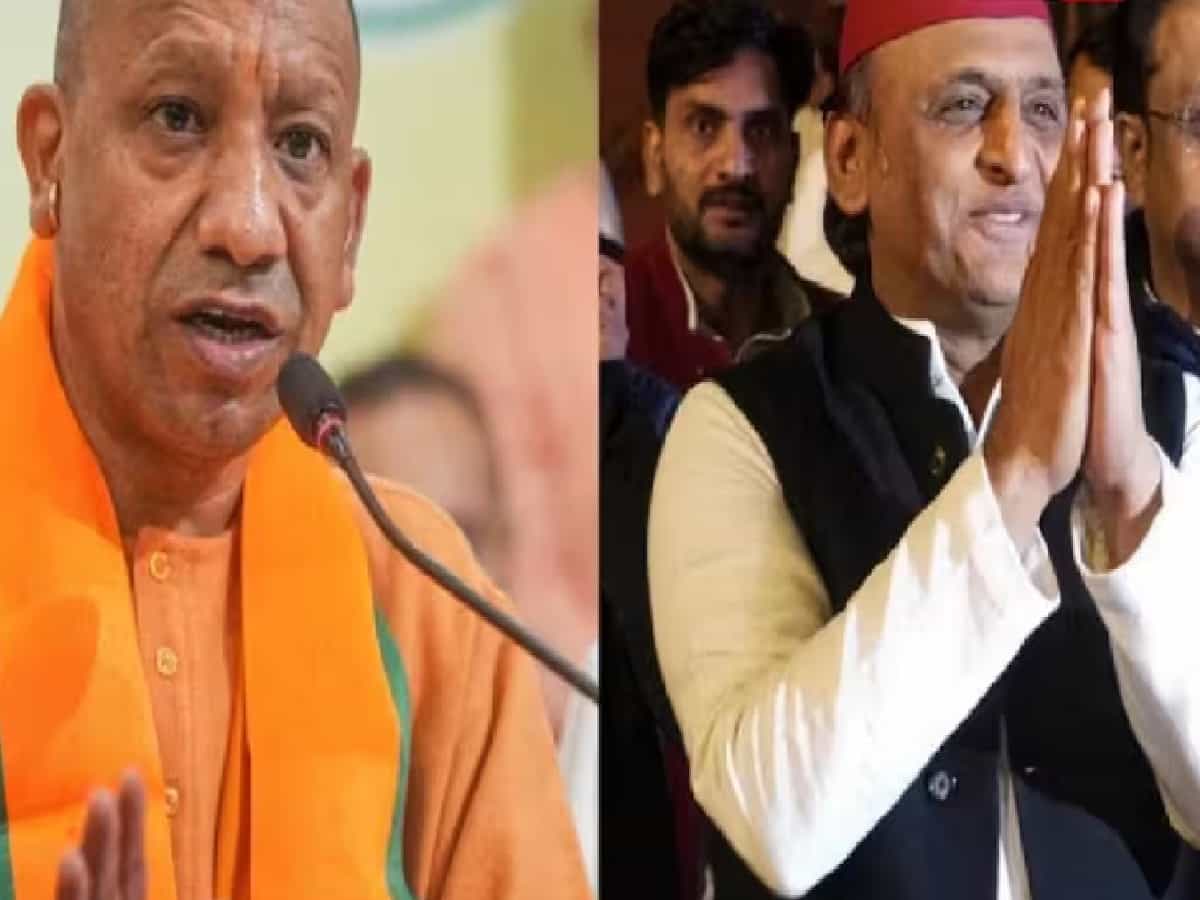
As the 2027 Uttar Pradesh assembly elections draw closer, both major political forces—the BJP and the Samajwadi Party—are gearing up for a deeply caste-driven electoral battle. The BJP-RLD alliance hopes to consolidate Jat and non-Yadav OBC votes, while the Samajwadi Party aims to leverage its PDA (Pichhde, Dalits, Alpsankhyak) formula to galvanize backward communities and SC voters. With 27,210 voters trimmed from the rolls and local candidate dynamics set to shift, the contest in Behat remains fiercely competitive. Only the ballot boxes in 2027 will ultimately reveal whether the Samajwadi Party retains its stronghold or if the BJP-RLD combine successfully reclaims the seat.