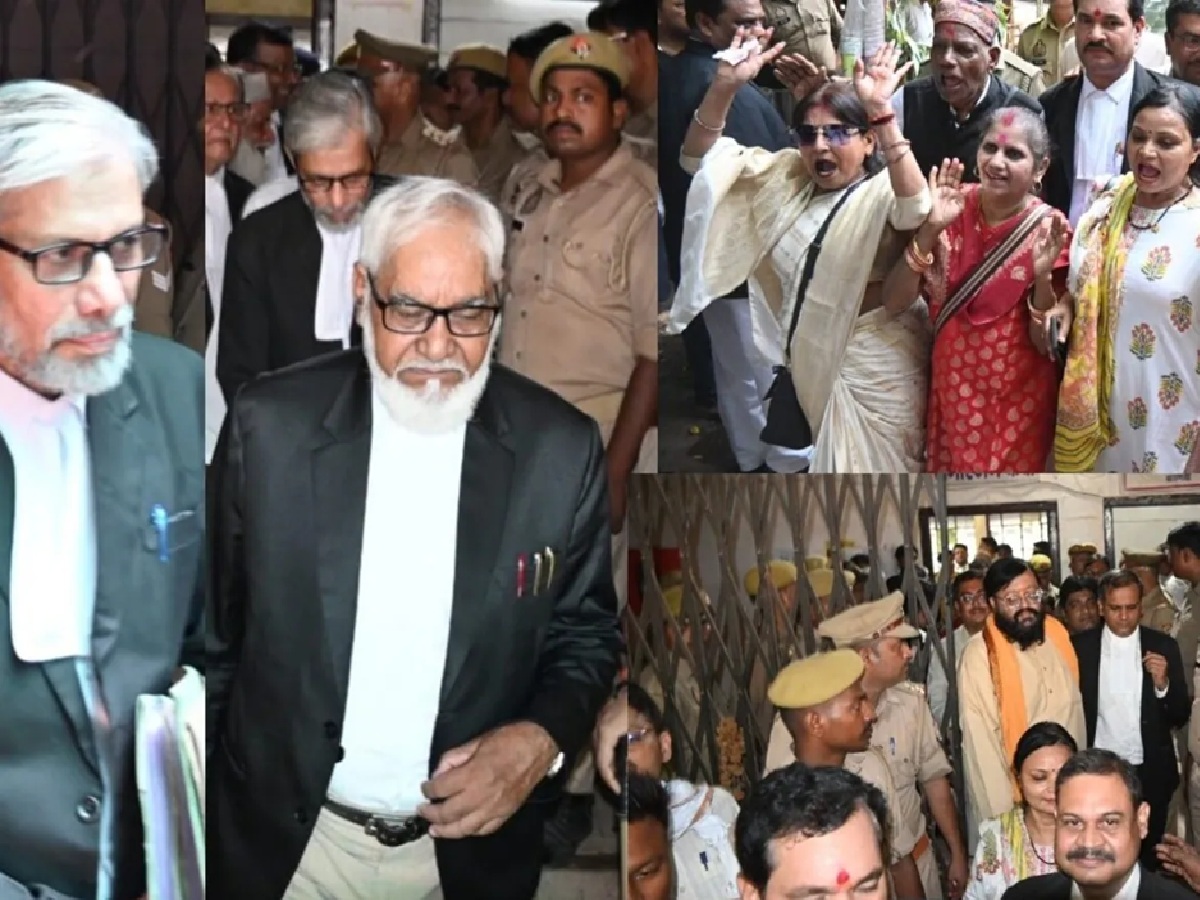
Supreme Court-Backed Gyanvapi Mediation Collapses in Under 20 Minutes: Both Sides Stand Firm, Reject Dialogues
Hopes for an amicable, out-of-court settlement in the highly sensitive Kashi Vishwanath-Gyanvapi dispute have hit a major roadblock. Acting on the explicit initiative and directives of the Supreme Court of India, representatives, plaintiffs, and legal counsels from both the Hindu and Muslim communities gathered at the Varanasi Collectorate on Tuesday to engage in structured mediation. However, the much-anticipated dialogue session proved short-lived, concluding in less than 20 minutes as both parties refused to budge from their entrenched historical and legal positions, effectively declaring that the matter will find resolution solely through formal judicial rulings.
Inside the Failed Judicial Committee Meeting
The high-stakes negotiation took place before a designated three-member judicial committee comprising an Additional District Judge, the Secretary of the District Legal Services Authority, and a Special Chief Judicial Magistrate, monitored closely by a panel of Supreme Court advocates under heavy local security deployment. During the brief session, female plaintiff Rekha Pathak and her legal team asserted that Gyanvapi has historically belonged to Lord Adi Visheshwar since ancient times, demanding that the Muslim side relinquish claims and apologize for the occupancy. Conversely, counsels representing the Anjuman Intezamia Masjid countered that revenue records explicitly classify the site as a mosque, arguing that the Hindu side was manufacturing avoidable friction. With neither faction willing to compromise, the mediation table was abandoned almost as quickly as it was convened.
The Supreme Court's Mediation Initiative
The diplomatic push was orchestrated following the Supreme Court's intervention, which encouraged both litigants to explore a negotiated compromise through a special Lok Adalat framework rather than relying strictly on protracted litigation. Tuesday, July 14, 2026, was fixed as the milestone date for this dialogue. Despite the apex court’s optimistic push for a harmonious resolution, the deep ideological and documentary divide between the parties proved insurmountable during this initial round.
Massive Legal Backlog Across Varanasi and High Court
The collapse of talks places the spotlight back on the expansive and complex web of active litigation surrounding the site. Currently, no fewer than 36 distinct legal matters remain pending before various courts in Varanasi, while another six active petitions are undergoing review at the High Court level. These span the jurisdiction of the Civil Judge Senior Division, Fast Track Courts, and the District and Sessions Judge, where core proceedings—including demands for comprehensive subterranean surveys and the restoration of unbroken worship rights dating back to 1991—now await formal judicial determination.